Article
Can a silicone coating avoid a roof replacement on a building for sale in Portland?
See the $3,559 repair option and $26,372 silicone coating quote for one Northeast Portland roof, and what brokers should explain to buyers before closing.
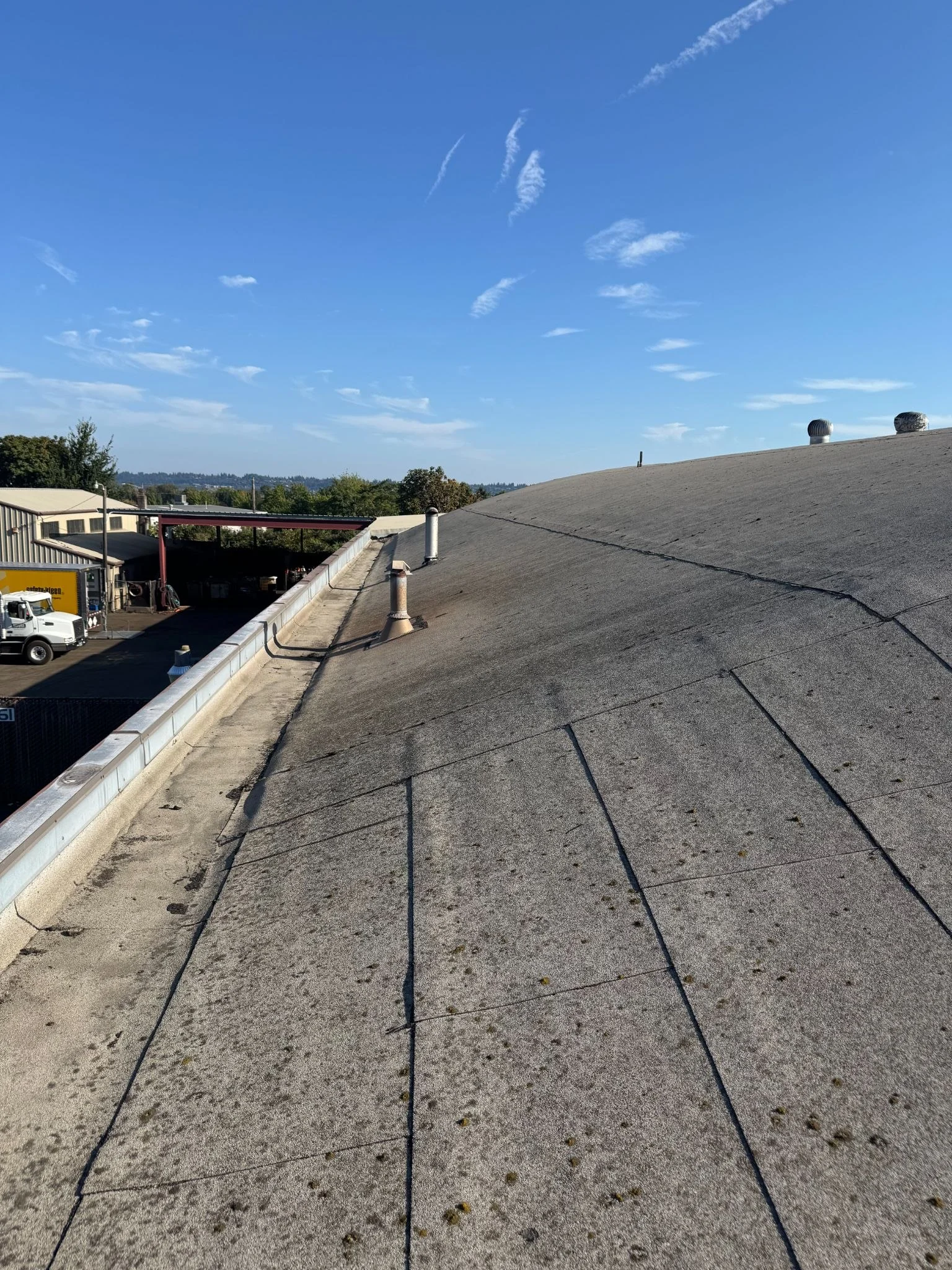
Yes, if the existing roof is suitable for coating. A silicone coating can keep a serviceable roof in use, but it cannot fix damaged decking or wet insulation. Some roofs only need repairs for now.
On one Northeast Portland building, FRSG found an estimated 3–5 years of life remaining in the existing roof. The customer had two options: $3,559 to clean and repair it, or $26,372 for a full silicone reseal of the same section.
FRSG inspected several roofs for this buyer. Here, we’re focusing on one building in the Lombard corridor of Northeast Portland, near Portland International Airport. It has 12,895 square feet of torch-down roofing, made from asphalt-based sheets joined with heat.
It’s often not the roofing material.
Look at the image below. The surface is starting to look a little fuzzy in places, but most of the roofing material is still in good shape. We weren’t seeing widespread cracking through the sheets themselves. That helped support our estimate of 3–5 years of remaining life.
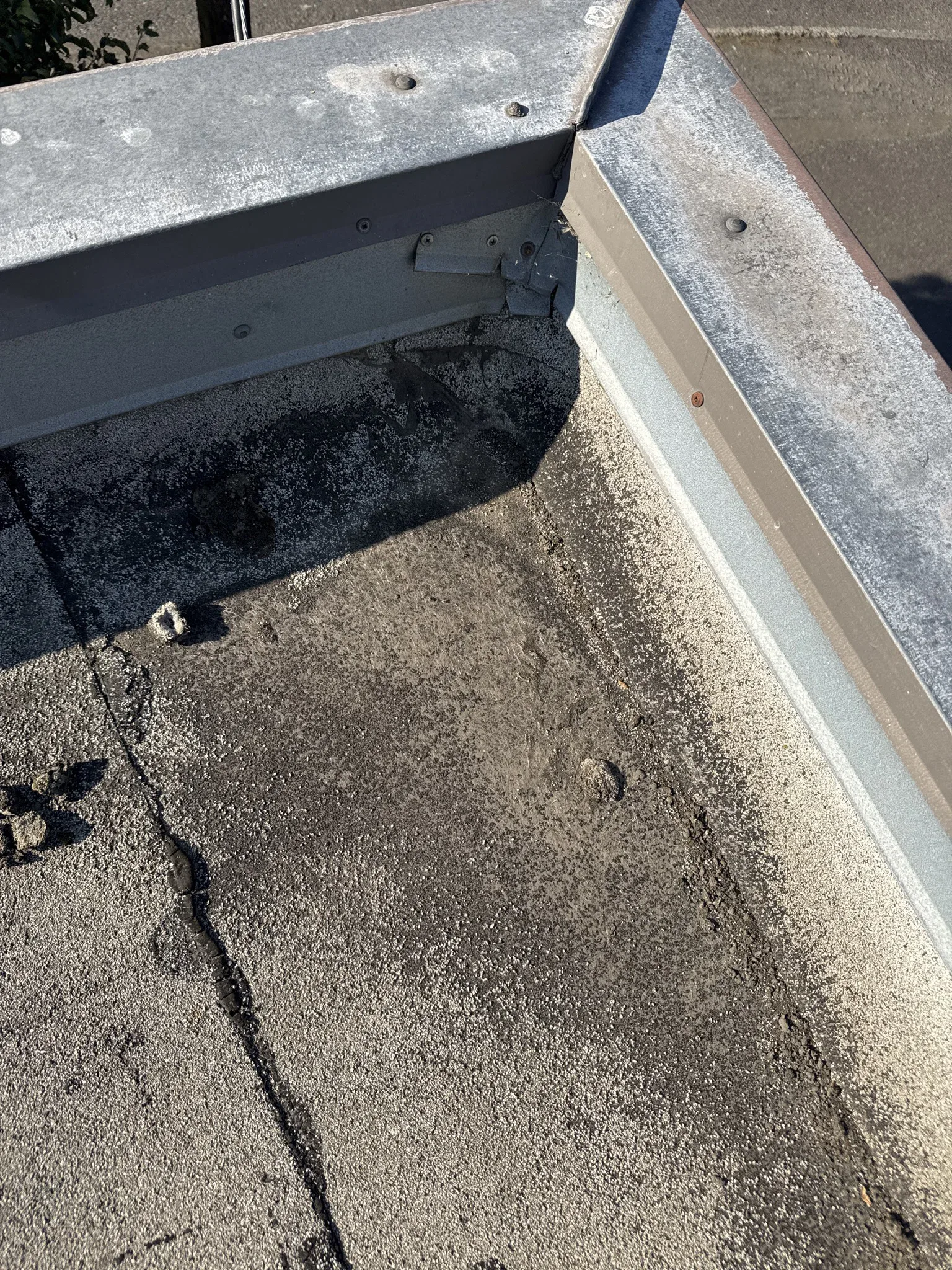
A roof can look aged and still do its job. The wear here was consistent with a roof that had been in service for years. Looking worn does not mean the material is used up or the whole roof needs replacing.
Seams and penetrations are where most aging happens.
With the main roofing material in good shape, we look at where the sheets join and where vents and pipes come through. A roof can have good material and still need repairs at these connections. Often, the work is sealing those gaps and patching a few damaged spots.
Look at this vent’s base. The old seal is cracked and pulling away, leaving a gap for water. A local repair with reinforcing fabric and silicone can close it while keeping the surrounding roofing in place.
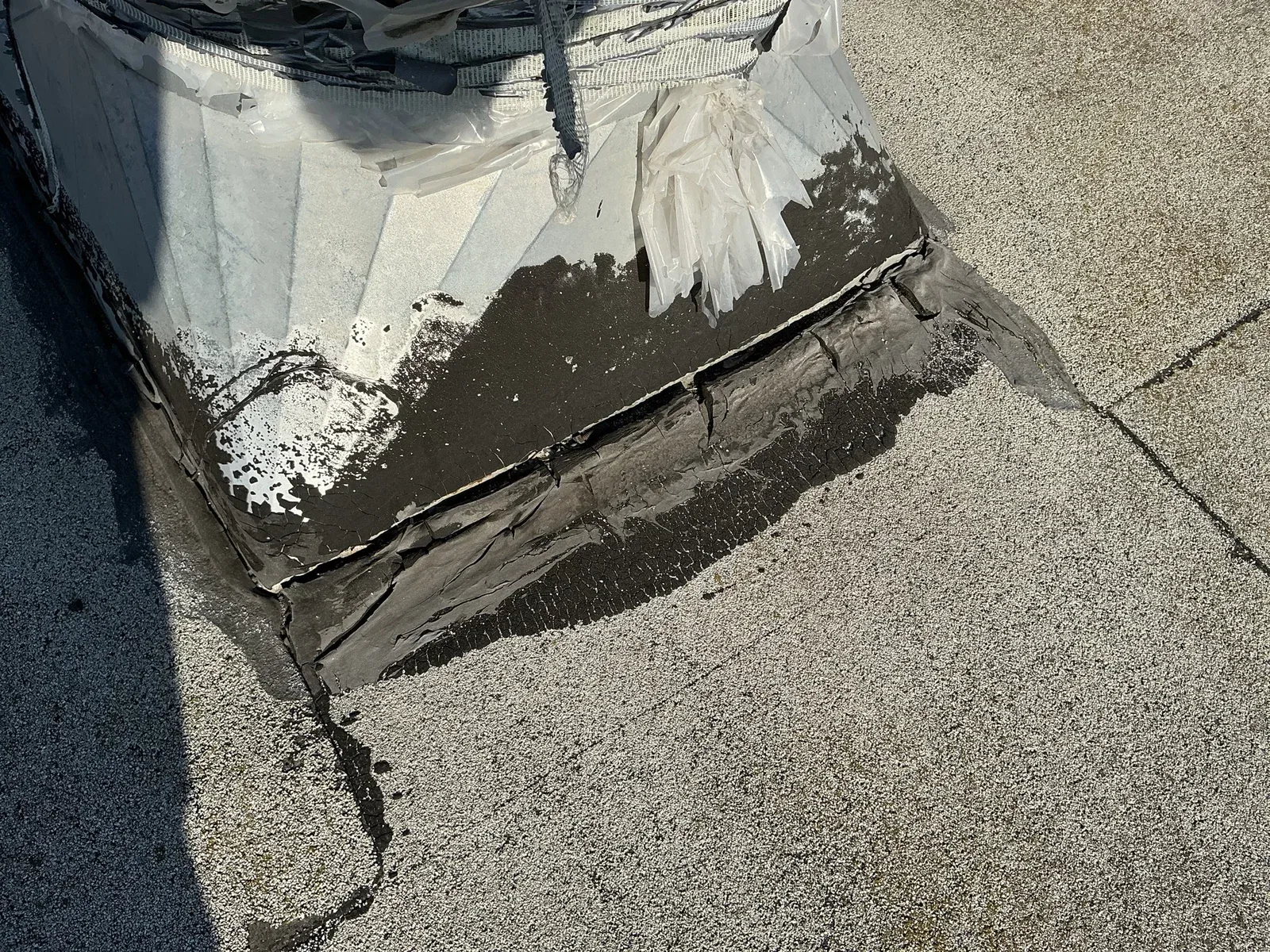
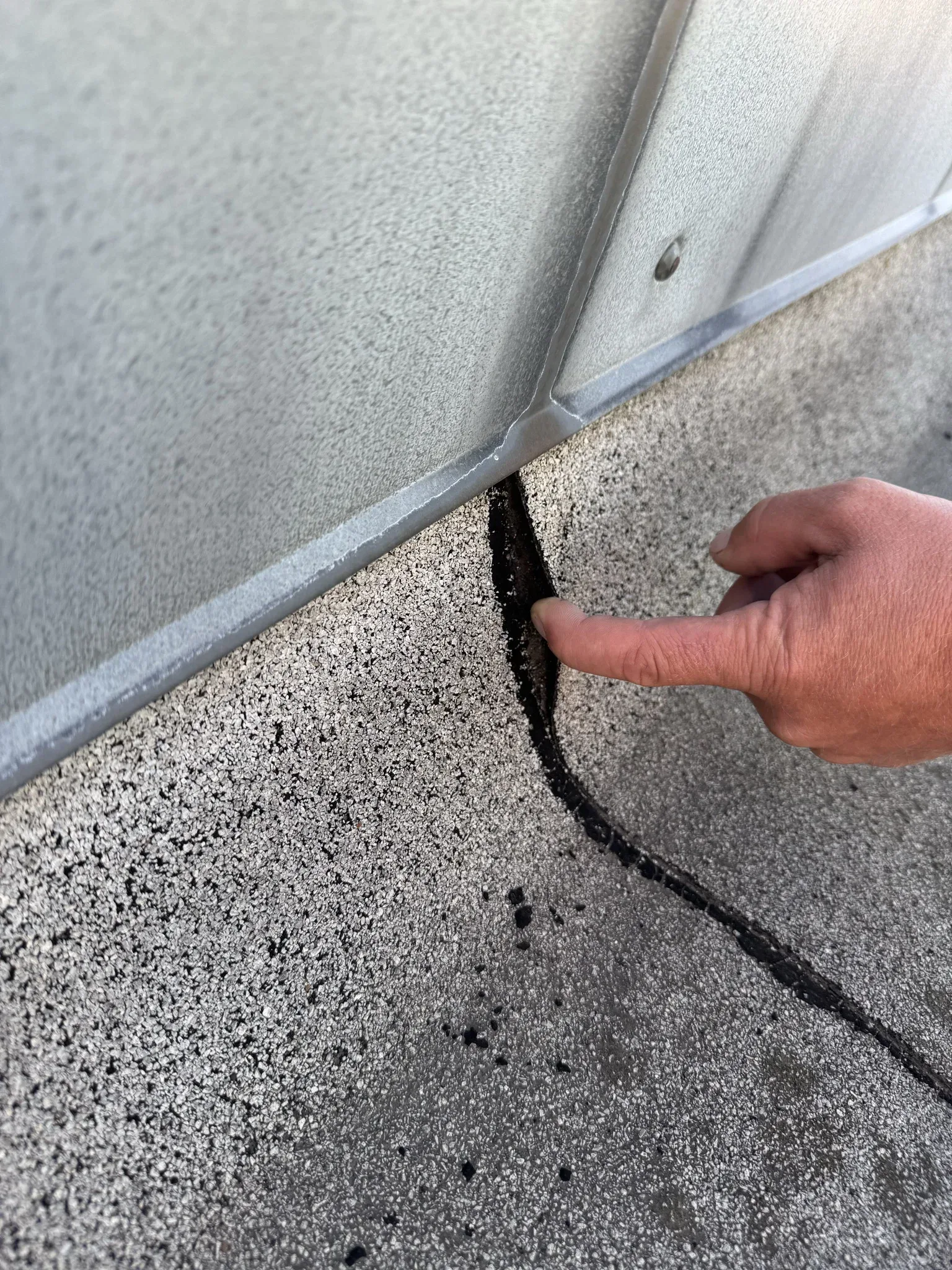
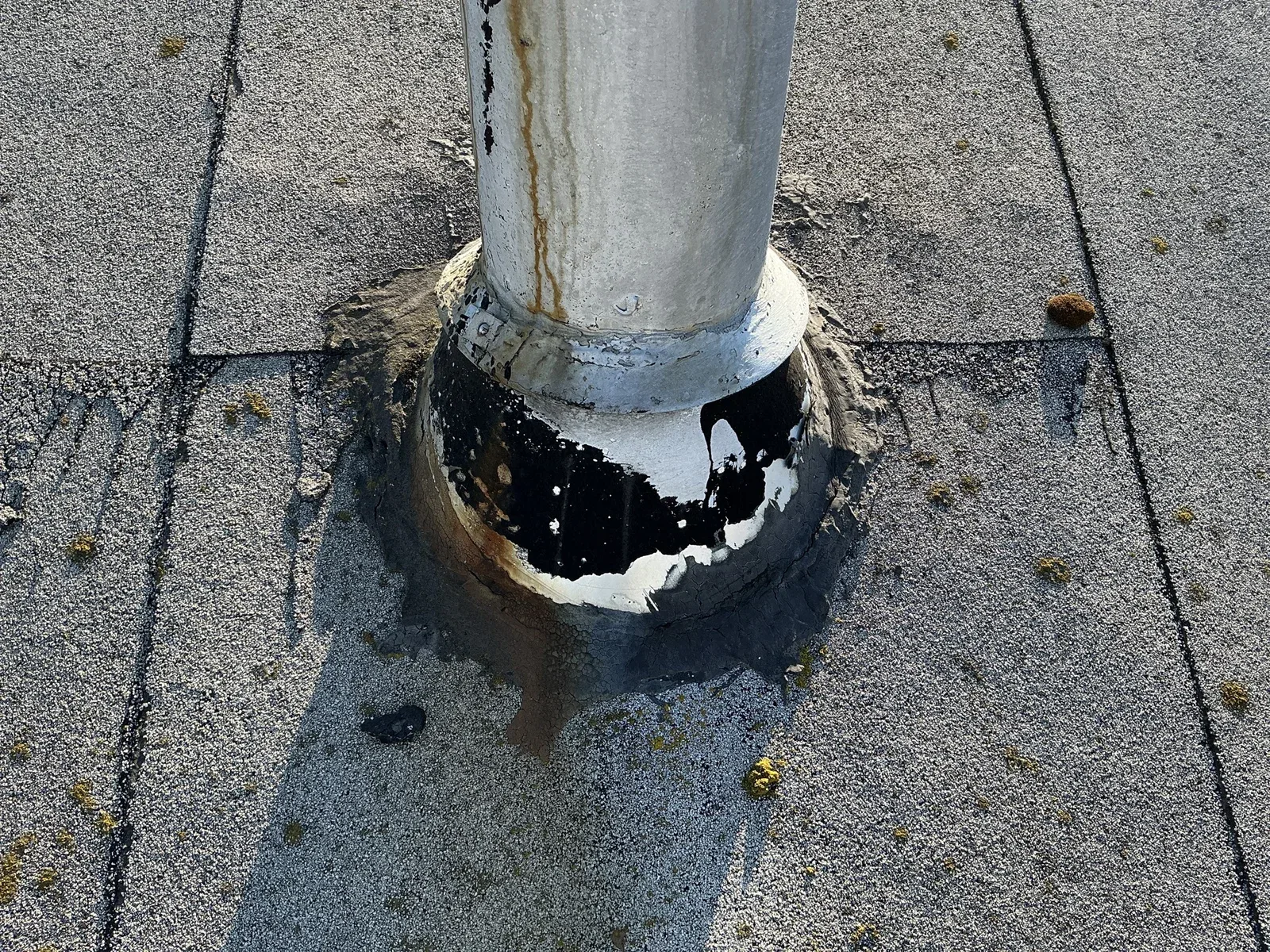
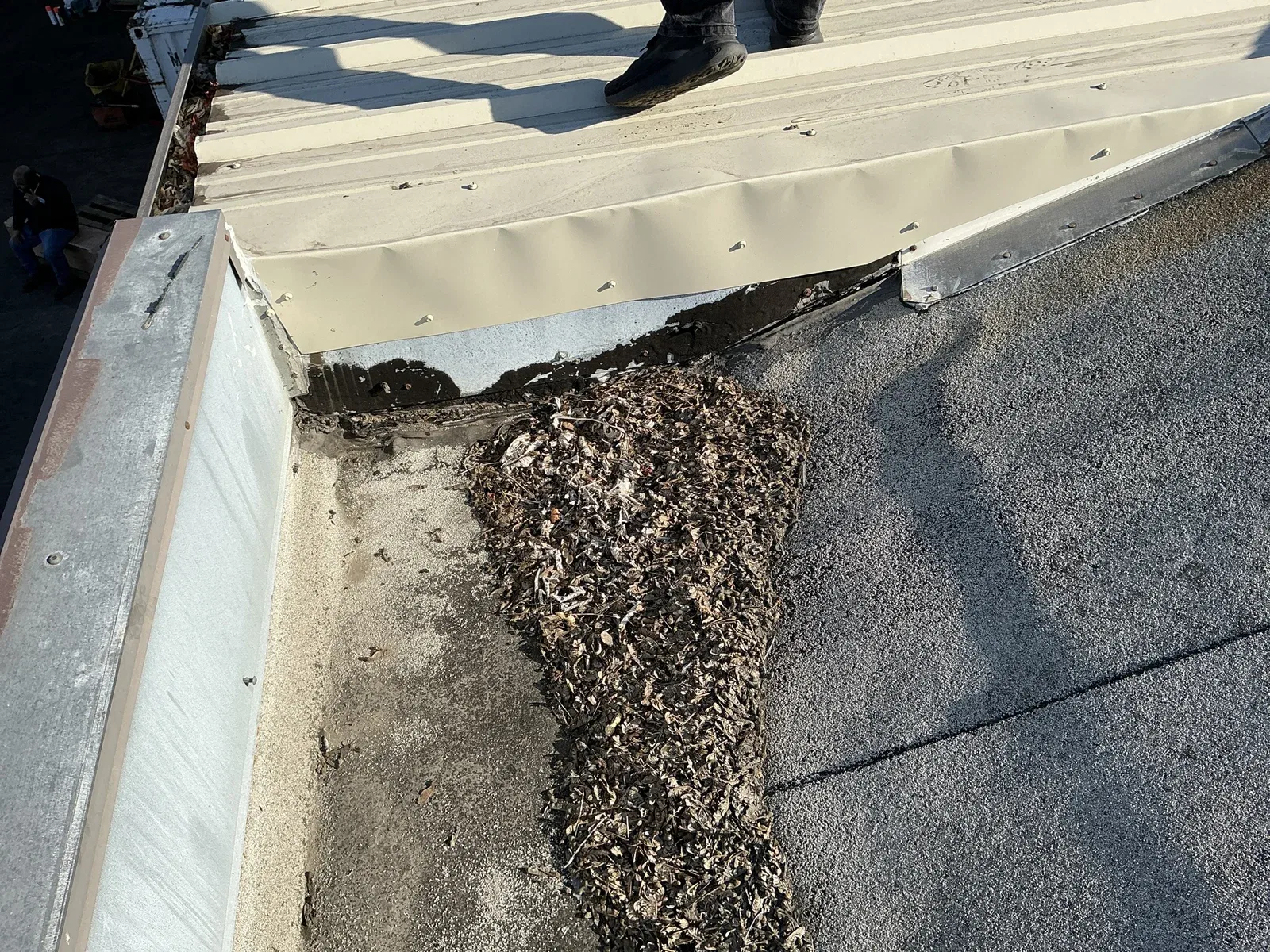
The same idea applies to the open seam and worn pipe seal shown in the carousel. These spots may not be leaking yet, but they need attention before water gets in. Clearing the debris is routine maintenance too.
That’s how we arrived at the two options mentioned at the start: $3,559 to clean the roof and repair these weak spots, or $26,372 for a full silicone reseal. With the roofing material still in good shape, our recommendation was to handle the repairs now and plan for a full reseal in 3–5 years. Keep the good material and take care of the areas that need attention.
The buyer also had vinyl roofs, which are a different story. We wouldn’t approach those seams and penetrations with the same silicone sealing method shown here. The repair approach needs to fit the roofing system; these options were for the torch-down roof.
When would silicone make sense?
Sometimes a roof needs more than a few repairs. A full silicone coating can make sense in two situations:
The surface is aging, but the roof is still sound. The roof may be old enough that you’re thinking about replacing it, even though the material is still securely attached and the structure underneath is good. If the roof is dry and suitable for coating, we can repair the worn areas and add a new waterproof layer over it. You keep the roof you have and extend its useful life without a full tear-off.
Water keeps collecting on the roof. If there’s a lot of ponding water and certain areas are starting to deteriorate, silicone can be a good option once those areas are repaired. A properly installed system such as Enduris 3500 is designed to resist ponding water. That matters in Portland: the airport averages about 37 inches of precipitation a year, based on the National Weather Service’s 1991–2020 normals.
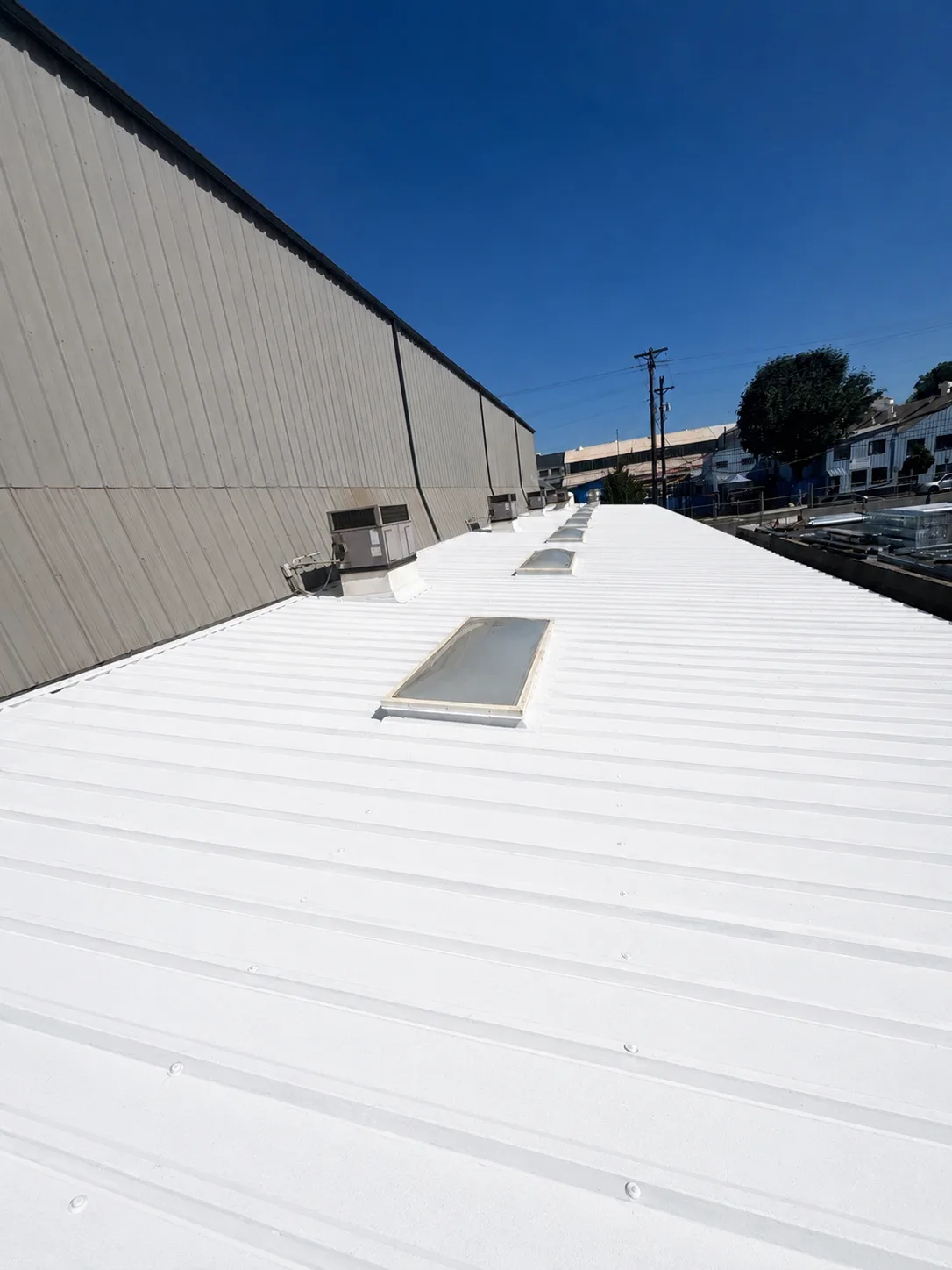
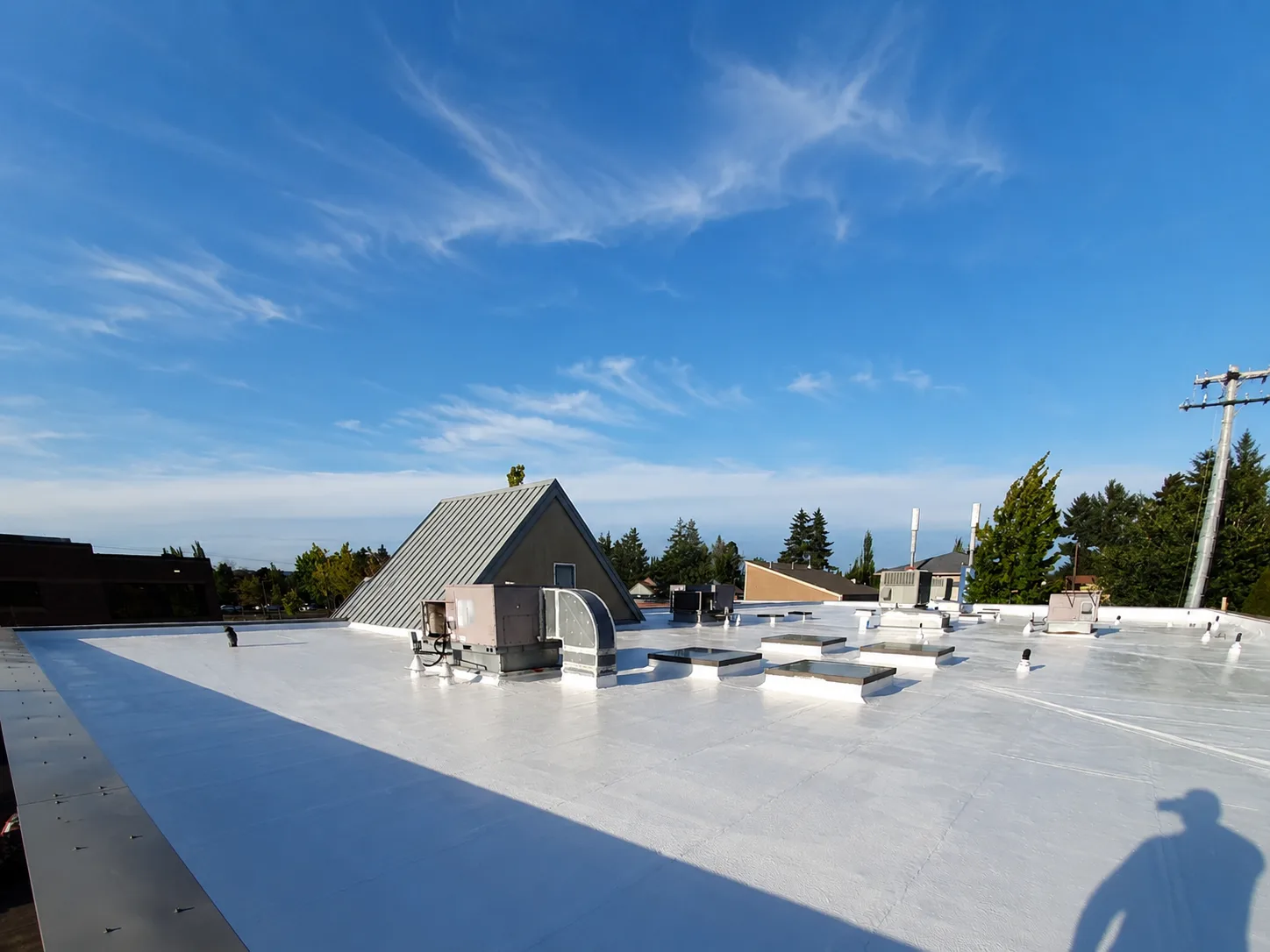
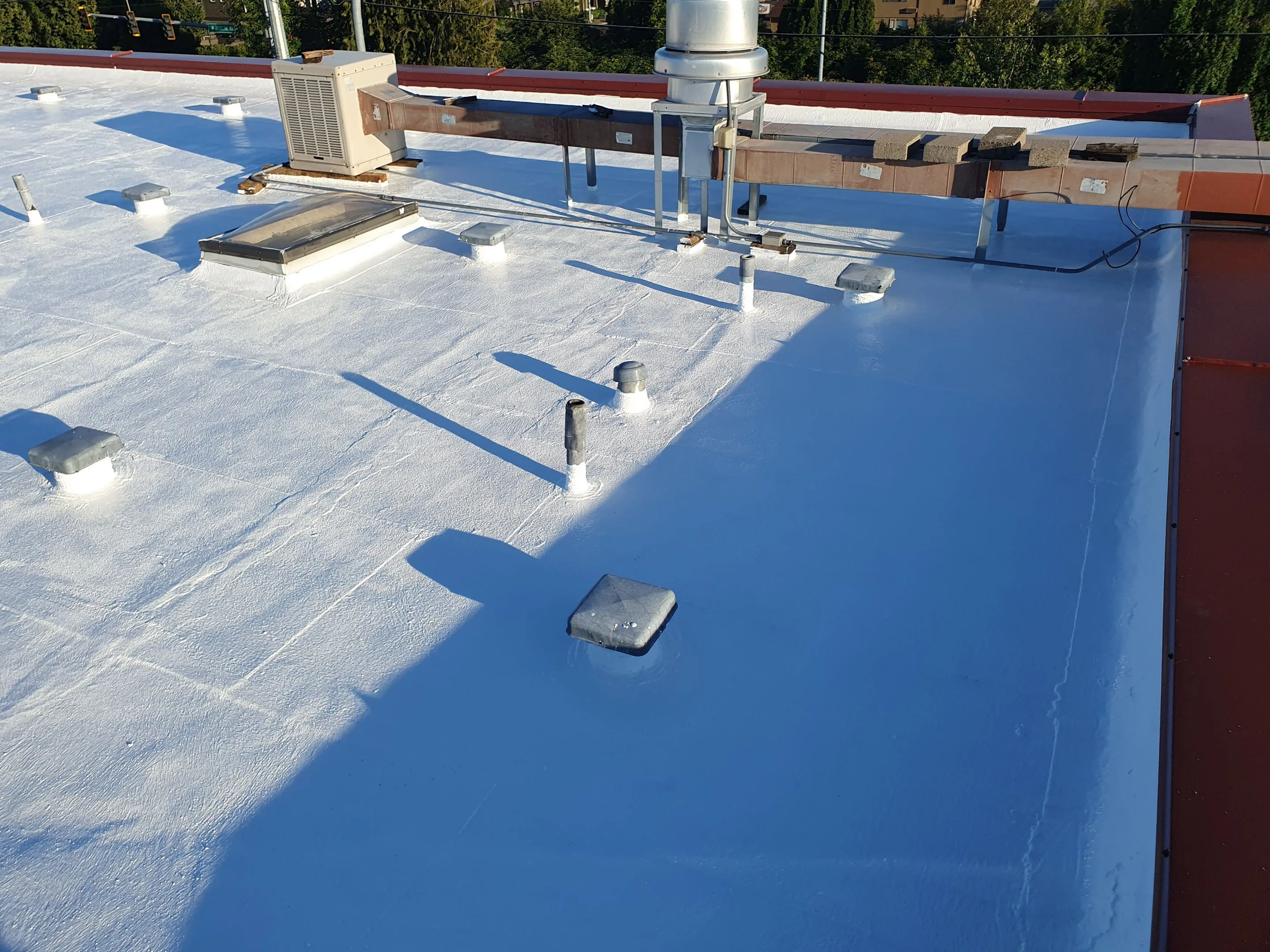
The coating doesn’t change the roof’s slope or clear a blocked drain. It gives a suitable roof a waterproof surface that can handle standing water while helping you avoid a full tear-off. Any wet insulation or damaged decking still needs to be addressed first.
Check the whole system before choosing the fix.
It’s easy to see an aging roof and jump straight to a reroof or silicone reseal. Before you help your buyer budget for either, get the whole system checked: the roofing, seams, drains, vents, and connections around walls and equipment.
Water could be getting in through a failed connection while the roofing itself still has life left. A new coating won’t solve a problem outside the area being coated. The inspection should tell you what needs attention first. Then you can talk about which repairs, coating, or replacement actually make sense.
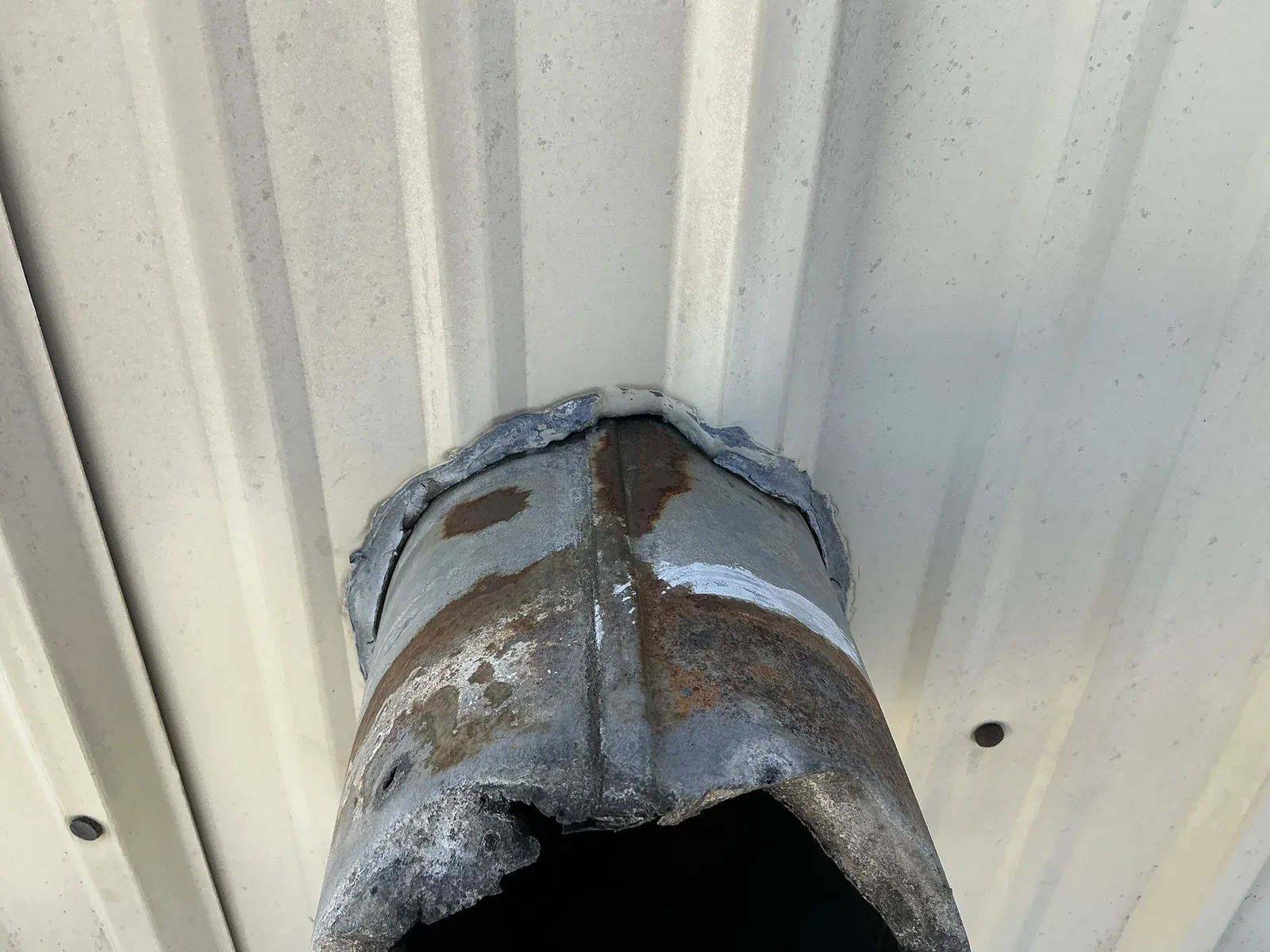
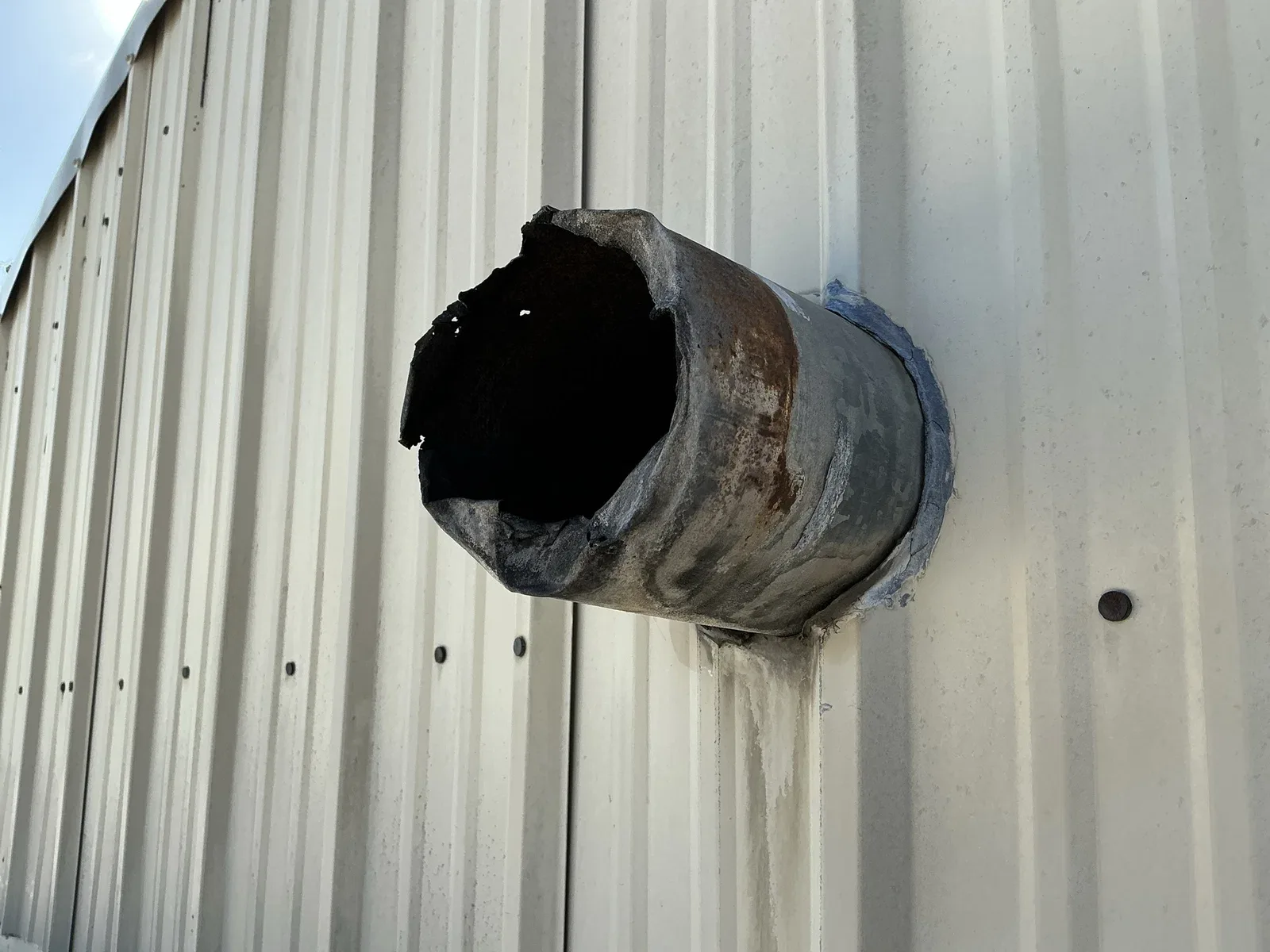
Take this pipe through the metal wall. The seal has pulled away, leaving a gap where water could enter. It’s outside the roofing material, but it still matters to the condition of the building.
The Roof Report includes details like this alongside the roof surface, so you can see the repair needs across the system before the sale.
The seller says the roof was coated. What should you verify?
Start with the written warranty. If the seller says the roof is covered, ask for a copy so your buyer can see who issued it, what it covers, how much time is left, and whether it can transfer to them. “It has a warranty” shouldn’t be something you’re left guessing about.
Can’t find the paperwork? Reach out to the roofing company. When you get an FRSG Roof Report, our team can help track down the warranty and verify the details with the contractor or manufacturer that issued it. You’ll have something concrete to walk through with your buyer, including anything that still needs confirming.
The inspection still checks the same essentials: the roof surface, seams, drainage, and connections around pipes and equipment. On a coated roof, we look closely for cracks or splits in the silicone, gaps, and places where it has pulled away. Those problems can be less obvious than damage on an uncoated roof, so a smooth-looking surface deserves a closer look.
And yes, an existing silicone coating can receive another silicone coat. Being coated already doesn’t rule that option out. We check the condition of the roof and coating, confirm the new product will bond, and identify the repairs and preparation needed first. Gaco’s recoating guidance describes that process for existing coating systems.
Does a 20-year coating warranty mean 20 years of roof life?
No. A 20-year warranty does not guarantee 20 years of remaining roof life. What matters is what’s covered, who stands behind it, and whether it transfers to your buyer.
The manufacturer’s product warranty covers the roofing material under its stated terms. The roofer’s workmanship warranty covers the installation under a separate set of terms. Your roofer should explain which coverage comes with the option you choose and put it in writing.
A roofer saying “there’s a warranty” isn’t enough to tell your buyer they’re covered. If the seller has nothing from the previous roofer, treat the warranty as unverified until you can get the documents and confirm the coverage. Don’t build your buyer’s plans around a verbal promise.
At FRSG, we work directly with the manufacturer to arrange the product warranty for the system and coverage you choose. That warranty is included in the price on our proposal. If we install a new roof, it comes with the warranty specified for that installation, with the coverage and term in writing. You’ll know what you’re getting before you approve the work.
How much does silicone roof coating cost in Portland?
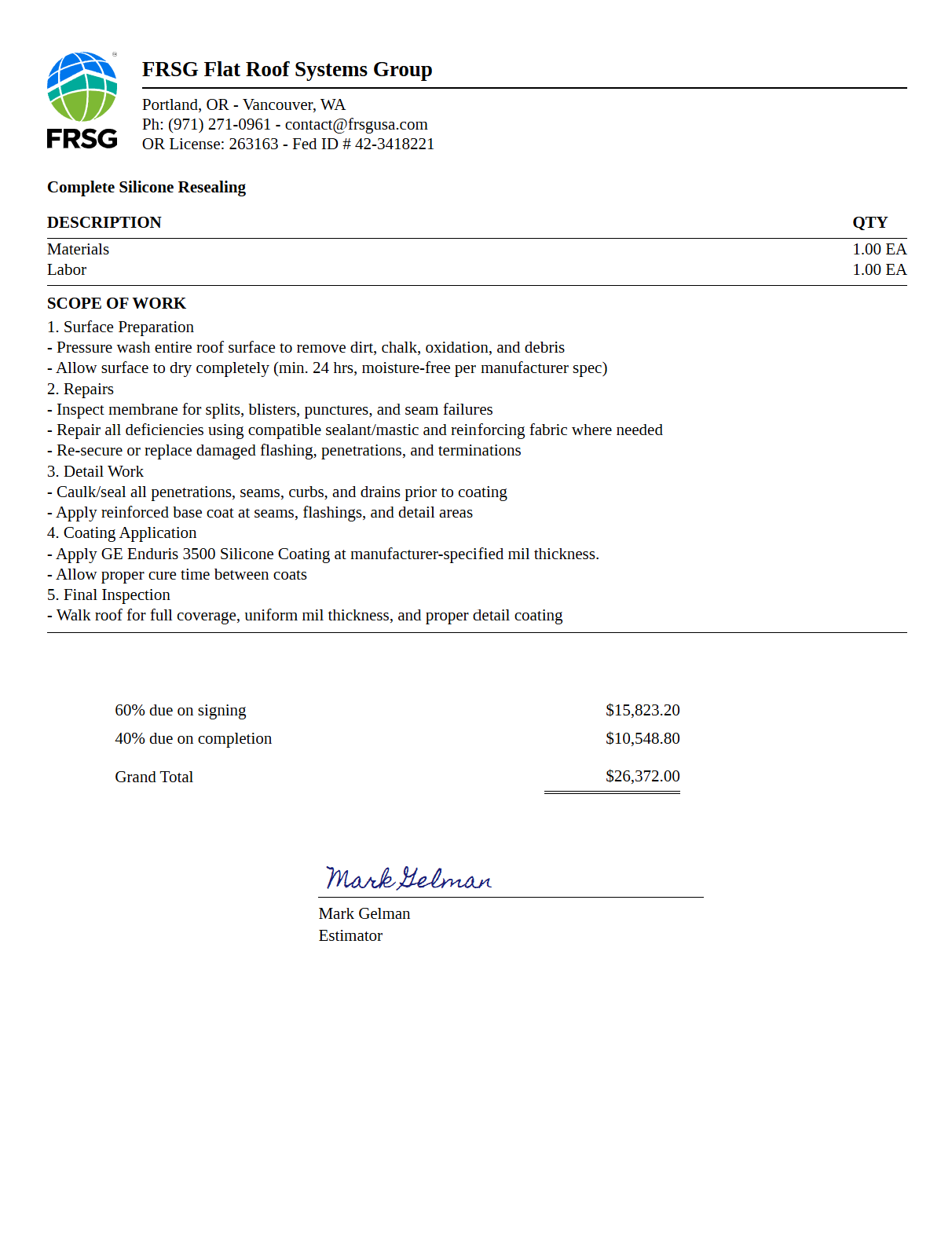
FRSG’s official September 2026 quote for the Northeast Portland roof was $26,372 for 12,895 square feet of torch-down roofing. That works out to approximately $2.05 per square foot for complete silicone resealing. The quote included surface preparation, repairs, detail work, silicone coating, and a final inspection, ready for the customer’s approval.
What should a silicone coating quote include?
The price should cover the work needed to get your roof ready for silicone, as well as the material and its application. Think back to the open seams and worn seals in the photos above. Those areas need repairs before the roof gets coated.
That preparation is often a big part of the cost. One roof may need cleaning and a few local repairs. Another may need more extensive work around seams, pipes, vents, or damaged areas. The condition of your roof determines how much work goes into it and helps explain why coating prices vary.
Ask for a written scope that spells out the cleaning, surface preparation, repairs, and detail work included in the price. It should also identify the roof area being coated, the silicone product, the required coating thickness, and the warranty. You and your buyer should be able to see what the contractor is fixing before the coating goes on.
Simply spreading silicone over existing problems can leave you with a roof that leaks again. A good proposal explains how those problems will be addressed, so you’re paying for a complete job and know what that job includes.
Have the roof answers ready for your buyer
Your buyer is picturing what they could do with the building. Then comes the roof question: “What am I going to have to spend on this?” Having an answer ready keeps that conversation moving.
You can hand them more than a roofer’s phone number. Bring FRSG in as your roof partner. We inspect the roof and put the findings, photos, recommended work, pricing, and timing into a Roof Report you can walk through together.
Arrange the inspection once, and you have something concrete to share with everyone considering the building. They can see what needs attention, what can wait, and what their options look like before they take ownership. You’ve already done the legwork for them.
Help your buyer see what fits their plans
You know your buyer. Are they getting ready to renovate, or looking for a building they can lease out and settle into owning? With the roof options in front of you, you can help them see how this building fits the future they have in mind.
Planning a renovation? On this roof, you could show them the $3,559 repair option: address the current problems and use the roof’s estimated 3–5 remaining years while they plan the bigger project. More seam and seal repairs may be needed as it ages.
Hoping to put the larger roof project behind them? You could walk them through the $26,372 silicone reseal and what completing that work now would mean for their plans. They can weigh that investment against repairs today and restoration later, with routine maintenance either way.
That’s a much easier conversation than leaving your buyer to chase down answers. You’re helping them picture owning the building, with one of their biggest questions already worked through. It gives them a reason to feel good about choosing your listing—and working with you.
Start with a Roof Report. We’ll handle the inspection. You’ll have the answers for your next showing.
Thanks for your feedback.
About FRSG
Flat Roof Systems Group (FRSG) is a commercial flat-roof repair contractor serving Property Managers across Oregon and Washington. FRSG stops active leaks, makes permanent Roof Repairs with clear documentation and predictable pricing, and proposes a Full Reroof only when an inspection shows that repairing would cost more than it saves. Every visit ends with a Service Record: the problem reported, the work done, and photographs of the roof as FRSG left it.