Article
PVC vs. TPO for restaurant roofs: a Portland case study
Kitchen exhaust grease breaks down TPO. For one Portland restaurant, we recommended PVC at about a 10% premium. Here's what the inspection found.
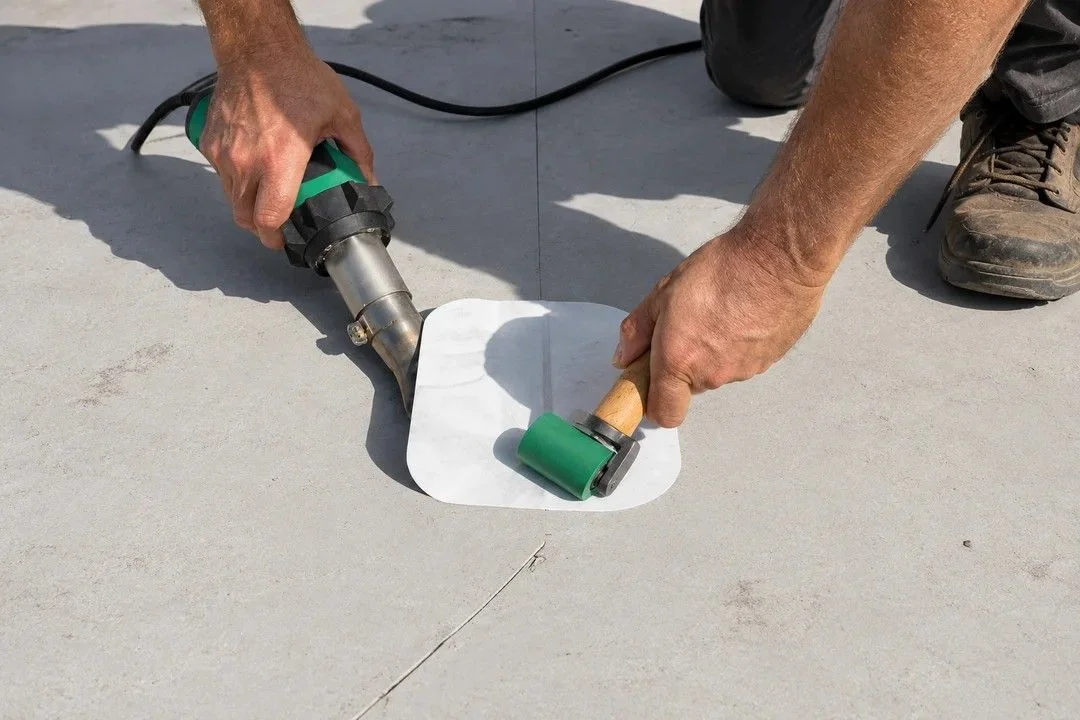
We recommended PVC over TPO for this Portland restaurant because our Roof Inspection found grease buildup and damage to the existing TPO membrane. PVC’s resistance to grease made it the better fit for the conditions we saw. The PVC option cost approximately 10% more, and we believed that premium was worth paying to reduce the risk of an early replacement.
The owner asked us to bid TPO
The restaurant already had a TPO roof. Another contractor was also preparing a TPO bid, so the owner asked us to price the same material.
That request made sense from their perspective. They knew what was already on the building and wanted to compare prices. They had no reason to know that a different membrane might suit the kitchen exhaust exposure better.
Once we inspected the roof, we needed to explain why we recommended changing materials. There was grease buildup around the exhaust equipment, and we observed membrane damage. Simply quoting another TPO roof would leave an important question unanswered: how would the replacement handle the conditions already affecting this roof?
Why PVC was our recommendation
TPO and PVC are both single-ply roofing membranes. For this restaurant, resistance to grease was a deciding factor.
PVC roofing is available with strong resistance to the fats, oils, and grease associated with kitchen exhaust. Carlisle’s restaurant roofing guidance identifies those exposures as a reason to choose PVC. Johns Manville also identifies oil and grease resistance among its PVC membrane’s features.
Our position on this roof was straightforward: choose a membrane suited to the grease exposure we found. PVC was our recommendation.
That does not mean every restaurant has identical requirements. The exact membrane, exhaust conditions, and manufacturer’s guidance matter. Grease containment and regular cleaning also belong in the plan; installing PVC does not make grease buildup acceptable.
What the extra 10% bought in our assessment
For this bid, PVC was approximately 10% more expensive than TPO. That was the difference between the options for this restaurant, not a general price rule for Portland roofs.
| Decision | Our assessment for this restaurant |
|---|---|
| Existing conditions | TPO membrane with grease buildup and observed damage. |
| Recommended material | PVC, selected for its resistance to grease exposure. |
| Upfront difference | Approximately 10% more than the TPO option. |
| Expected benefit | Longer useful life under these conditions, with appropriate installation and maintenance. |
Our project-specific estimate was that a properly specified and maintained PVC system could provide at least five additional years of service compared with the TPO option under the exposure we observed. That is an estimate, not a guaranteed five-year difference between the materials. Installation quality, grease control, and maintenance will affect the actual result.
The point of recommending the higher-priced option was to help the owner avoid paying for a roof that could need replacement sooner. A longer service life can make the higher upfront price the better long-term value.
The owner had never heard of PVC
When we explained the difference, the owner was grateful. They told us they had no idea what PVC was.
Restaurant owners are not expected to know roofing materials. Explaining the options is part of our job. If our inspection points toward a better choice, we need to say so—even when the customer originally asks for something else.
We want people to understand the reasoning before deciding whether to hire us. A bid should make the decision clearer, and the inspection should tell us what deserves to be in that bid.
Ask what the inspection changed
When comparing restaurant roofing proposals, ask what the contractor found around the exhaust equipment and how it affected the material recommendation. Ask how grease will be contained, what cleaning the selected membrane needs, and why the proposed system suits your building.
For a roof already leaking, our flat roof leaks guide explains the broader inspection and repair decisions.
On this Portland restaurant, we recommended spending the additional 10% on PVC and addressing the grease reaching the roof. A useful expert opinion should leave the owner understanding why.
Thanks for your feedback.
About FRSG
Flat Roof Systems Group (FRSG) is a commercial flat-roof repair contractor serving Property Managers across Oregon and Washington. FRSG stops active leaks, makes permanent Roof Repairs with clear documentation and predictable pricing, and proposes a Full Reroof only when an inspection shows that repairing would cost more than it saves. Every visit ends with a Service Record: the problem reported, the work done, and photographs of the roof as FRSG left it.