Article
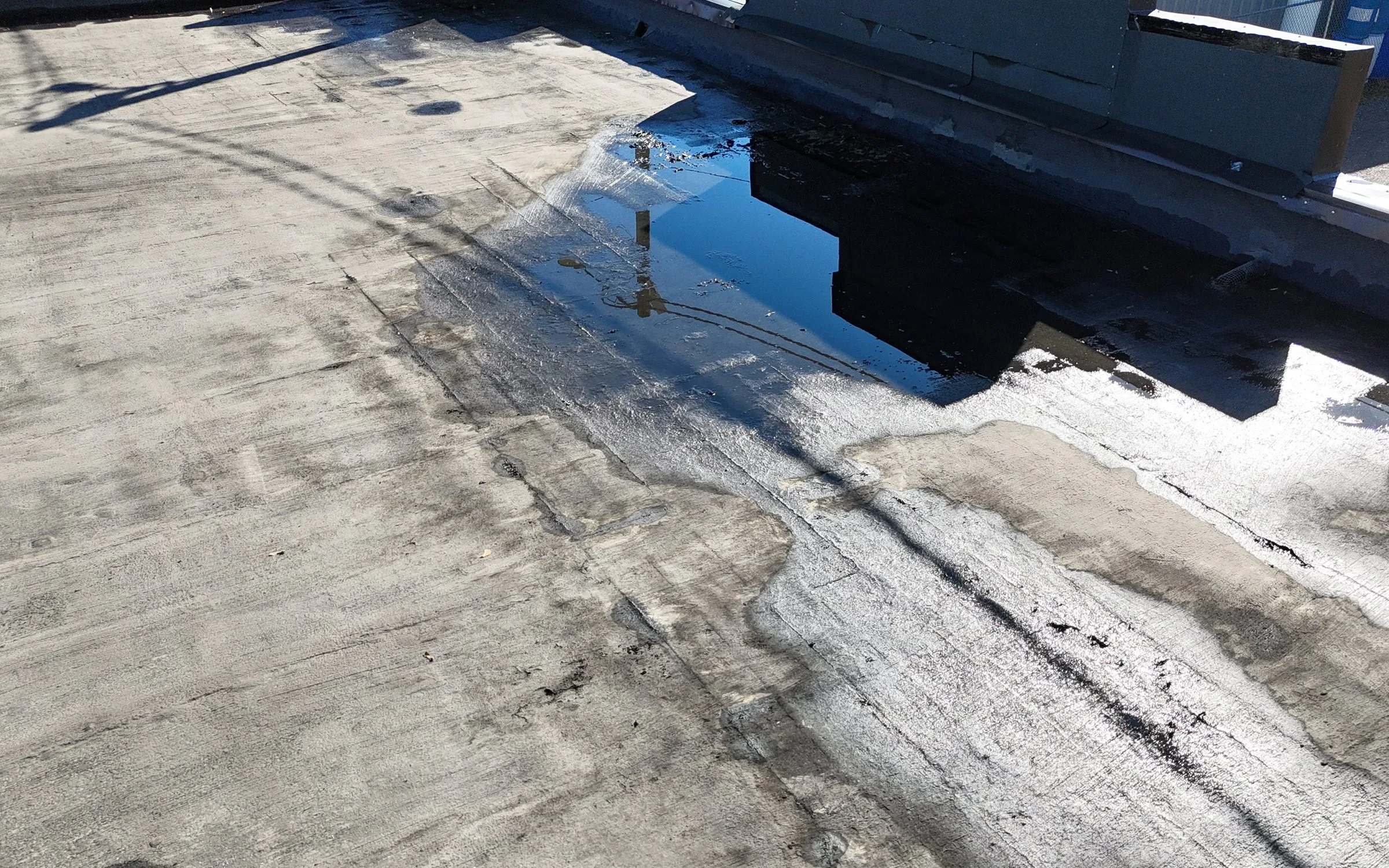
Standing water on a flat roof in Battle Ground, WA
Water still there two days after rain means the roof isn't draining. We flew 32 downtown Battle Ground roofs in October: 28% still had water after three dry days.
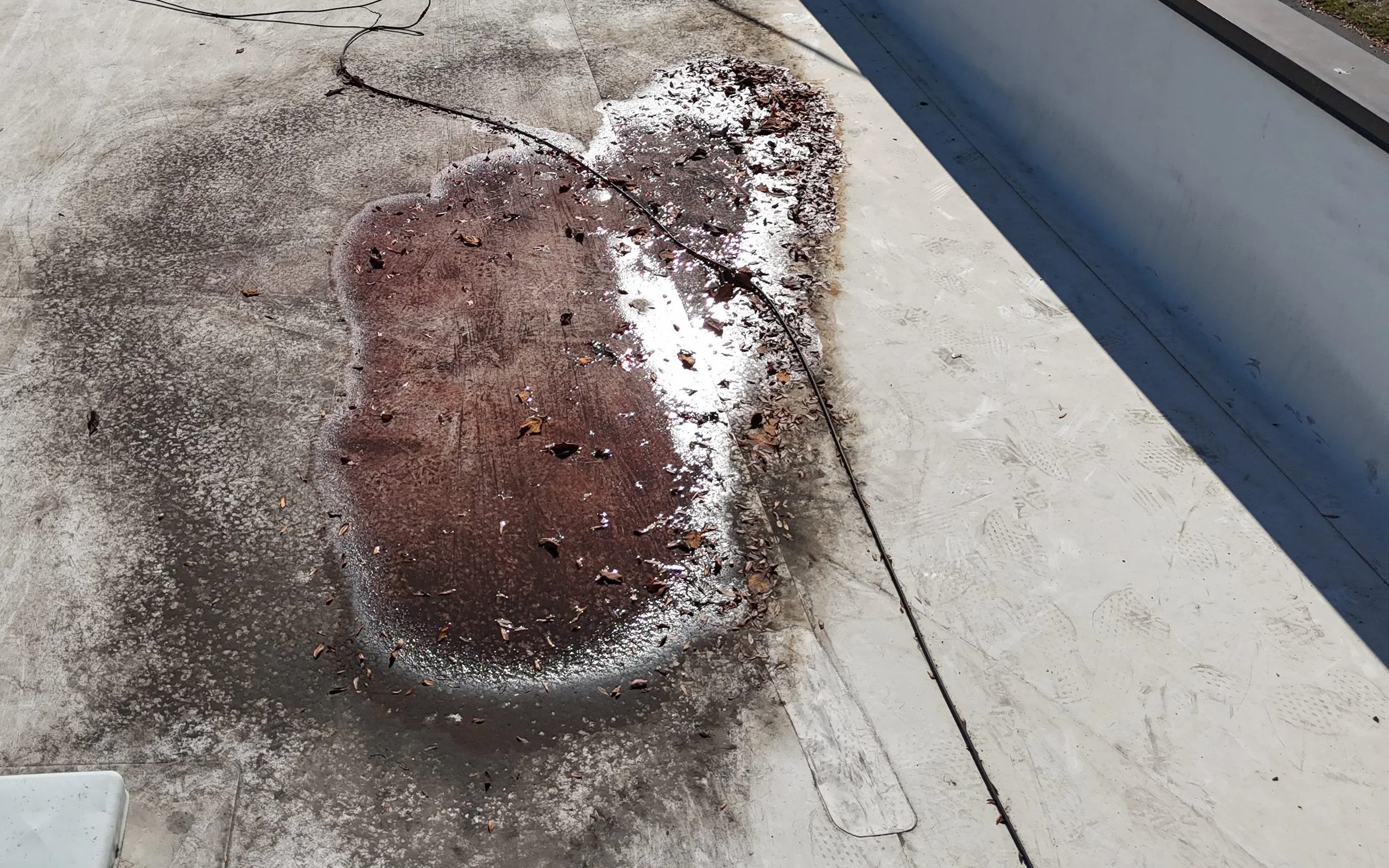
If the water is still there two days after the rain stops, the roof isn’t draining, and it’s worth fixing: in Battle Ground, a low spot that fills in October may not dry out until spring. Clear the drains first. If the water comes back after the next rain, that spot sits low, and it needs a repair.
On October 15, 2026, we flew a drone over 32 commercial roofs in downtown Battle Ground, most of them on Main Street. More than a quarter (28%) had water standing on them. A rain gauge just outside town had recorded no rain for three days, so that water had most likely been there at least that long.
On more than three in four (78%), leaves, moss, plants or dirt were collecting at the drains, gutters, walls or edges: the places water has to pass to get off the roof. From the street, you can’t see any of it. None of the photos could show whether a roof leaks; that takes a closer look, on the roof and inside.
Why standing water leads to leaks
A flat roof drains through a few small openings: drains in the roof, scuppers (openings through the low wall at the edge) and gutters. When leaves or dirt slow them down, or part of the roof sits lower than the rest, the water stays. Then it does three things:
- It keeps the seams wet. Flat roofing comes in wide sheets joined at seams. A small gap that lets in a few drops in passing rain lets in far more when water sits on it for days.
- It wears the roofing. Roofing and coatings usually crack and split first where water sits, and the dirt it leaves behind holds moisture after the water is gone.
- It’s heavy. Every inch of depth puts about 5 pounds on each square foot of roof.
That is how a puddle on the roof becomes a stain on a top-floor ceiling. Why is water leaking around a roof drain? shows how it plays out at a drain.
Does your roof look like this?
Three things the drone found on downtown roofs, and what to do about each.
Water along the base of a wall
Many downtown roofs sit inside a raised wall. The wall keeps the water in, so it has to find a drain, and whatever it carries collects along the base of the wall on the way. On nearly half the roofs we flew (44%), water, leaves or dirt was collecting there.
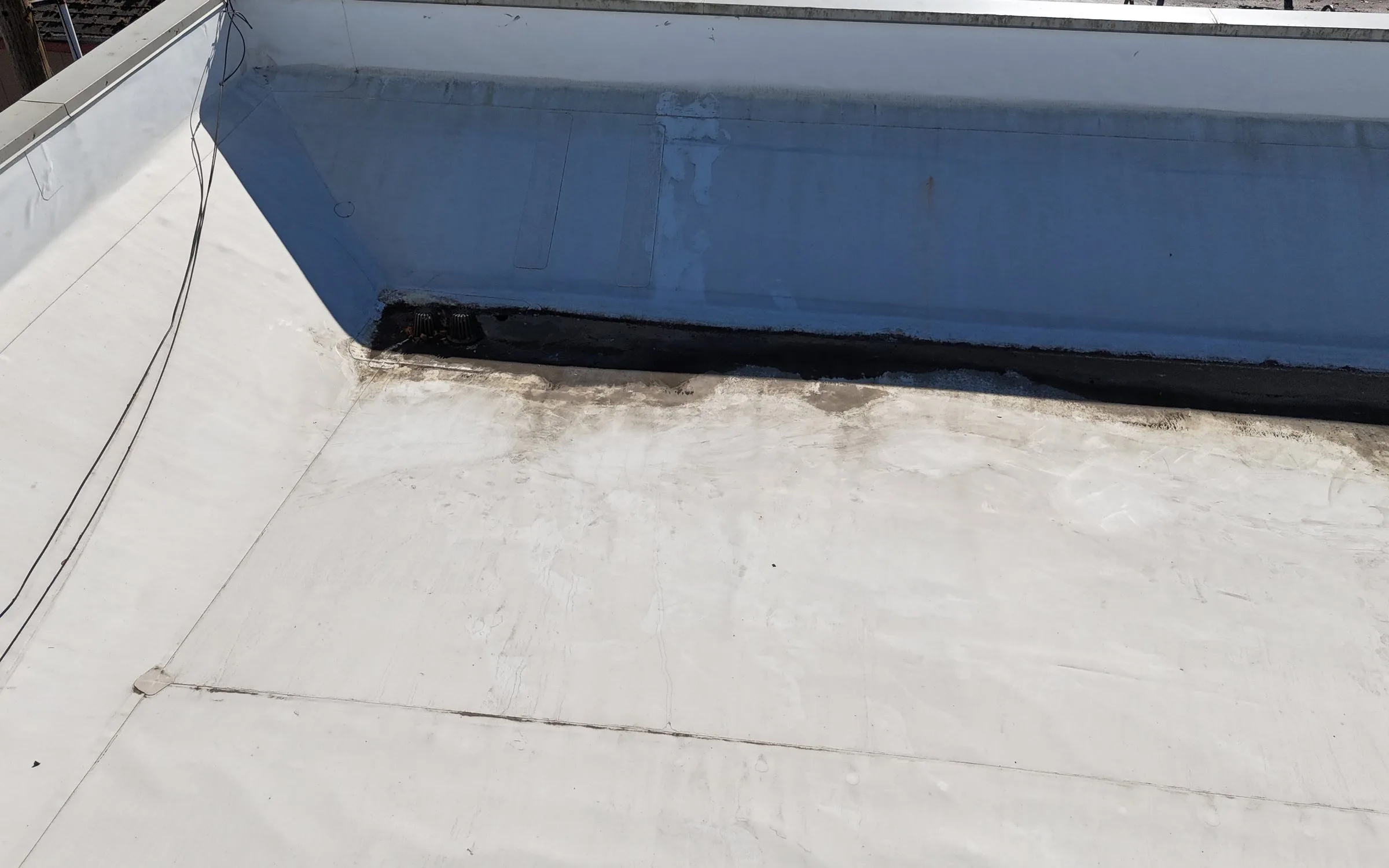
Where the roof meets the wall, the roofing turns up the face of the wall and is sealed at the top. That turned-up strip is the flashing. Water sitting against it, rain after rain, is hard on the seam where it joins the roof. On three roofs, the flashing was cracked, peeling or missing, which lets rain run in behind it.
What to do: clear the drains and the dirt along the wall. If water still stands there after the next rain, the roof dips at the wall. Either way, have a roofer look at the flashing; cracked or peeling flashing is a repair, not a cleaning.
A rust-red stain, even a dry one
Water carries dirt, grit and bits of leaves to the lowest spot, and when it dries, they stay behind. A stain as dark as the one below usually means many rounds of filling and drying. The color comes from whatever the water carried in. A dry stain is still a spot where water stands after rain.
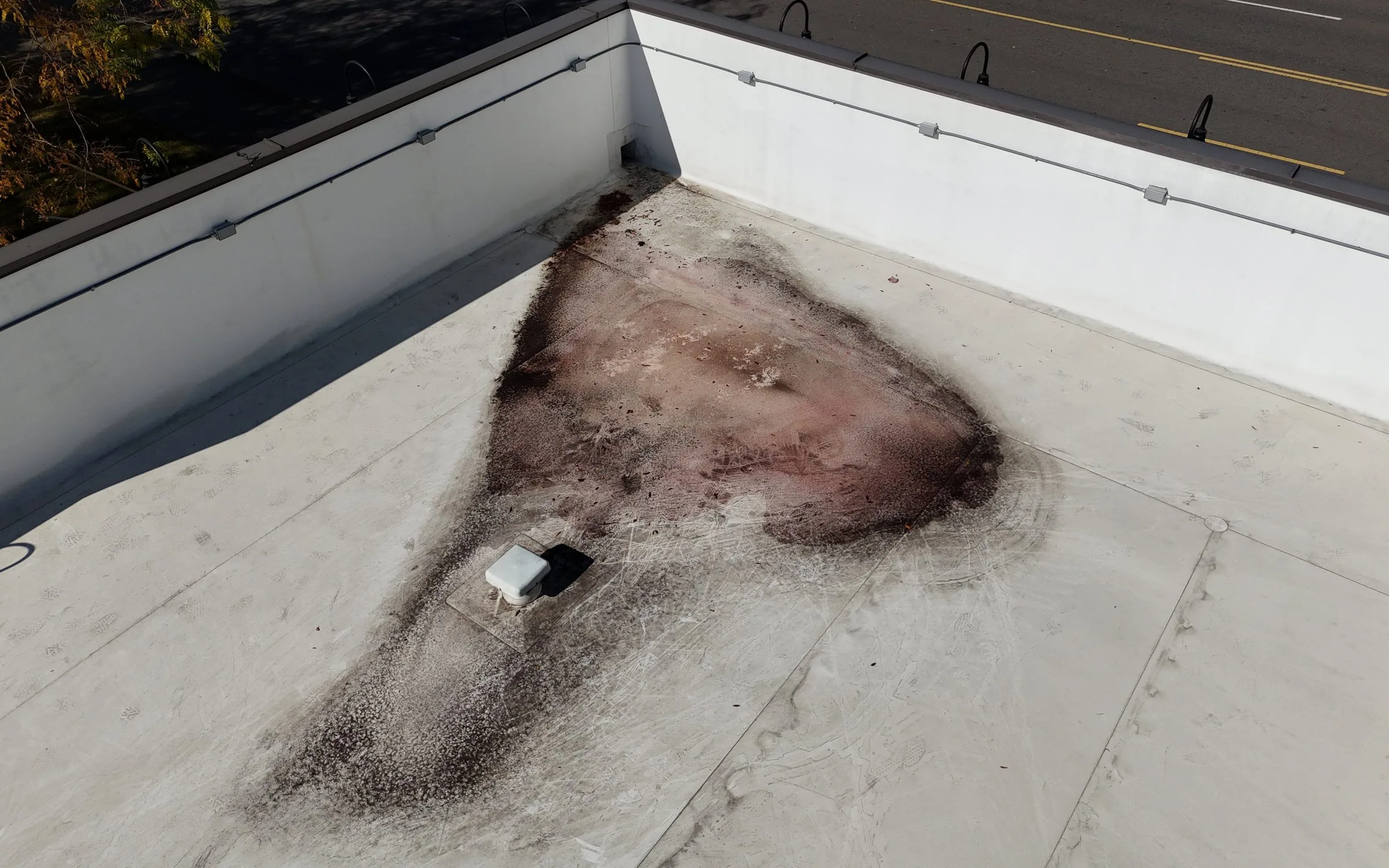
What to do: look at it a day or two after the next rain. If the water is back and the nearest drain is clear, the spot sits low. Our page on ponding water covers how a low spot gets fixed without a new roof.
Grass growing around the drains
About one in five of the roofs we flew (22%) had moss or plants growing on them. On the one below, they took root around the drains, where dirt and water collect. Water has to work through the roots and soil to get out, and the soil holds water against the roofing even on dry days.
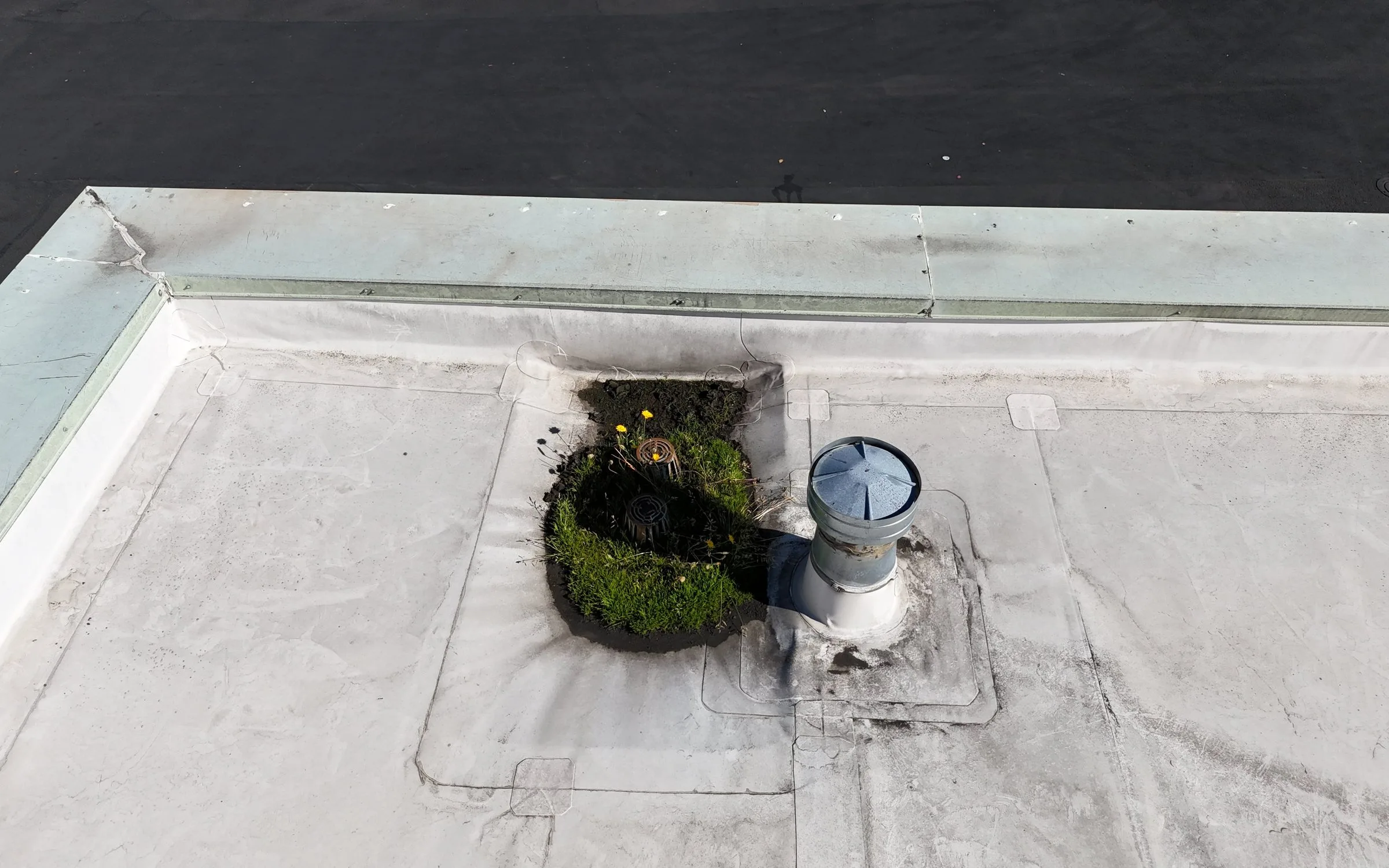
What to do: pull out the plants and the soil, clear the drain covers, and carry everything off the roof so the next rain can’t wash it back. On a roof under trees, do it before the rain starts and again once the leaves are down.
Why standing water matters more in Battle Ground
Battle Ground is wetter than Vancouver. Its own weather station averages about 52 inches of rain and snow a year; Vancouver’s, at Pearson Field, about 37. About three-quarters of Battle Ground’s falls from October through March, and November, December and January each average more than 7 inches.
More than a quarter of the downtown roofs we flew were already holding water in mid-October, with those three months still to come. On a roof with a low spot, that water may get no chance to dry out until spring.
How to check your own roof
Look a day or two after it rains. A puddle gone by then is normal. Water still there after 48 hours is what the National Roofing Contractors Association calls ponding, and it means the roof isn’t draining.
You may see the roof from an upper window or a taller building next door. From a roof hatch, look from the ladder; don’t walk out onto a wet roof. Look for:
- water standing anywhere, especially along walls and around drains
- rust-red or dark patches where water stood and dried
- leaves, moss, grass or dirt at the drains, gutters and the base of walls
- flashing cracked or peeling where the roof turns up a wall
- patches, or sealant spread over seams: places the roof has needed work before
- loose things wind can carry to a drain: a torn cover, plywood, plastic
Inside, the signs come later: a stain on a top-floor ceiling.
What each fix is, and what it costs
- Leaves, moss, grass or dirt at the drains, gutters and walls: a Roof Service visit. A technician clears the drains, scuppers and gutters, hauls off the debris and seals small cracks. $395 for 2 hours of work, sealant and small patches included.
- Water still standing once the drains are clear: the spot sits low. It gets a new drain where the water sits, or a silicone coating over the low spot, priced before any work starts.
- Flashing cracked, peeling or missing, or a seam that’s open: a Roof Repair, quoted for the job.
- Many patches, or you want to know how long the roof will last: a Roof Report: a drone map, a walk-on inspection and a core sample, opening with the roof’s years left and its repair and replacement budgets. $395 up to 30,000 sq ft, then $0.01 per extra sq ft.
- Water coming through a ceiling: stop the leak first. Flat roof leaks: what a Property Manager needs to know covers the first steps.
Planning a new roof in Battle Ground?
Nothing in our photos says any of these roofs needs replacing; a drone can’t judge that. If yours ever does, two rules apply.
A city permit. The City of Battle Ground requires a permit to reroof a commercial building, with the manufacturer’s specifications for the new materials.
Washington’s energy code. Depending on where its insulation sits, a roof replacement over heated or cooled space may have to be insulated as well as a new building. Thicker insulation raises the roof, so the flashing at walls and drains has to be rebuilt higher, and that adds to the cost: one more reason to fix low spots while the roof around them is sound. Can one section of a commercial roof be replaced? covers the middle ground.
Can’t see your roof?
Whatever your roof needs, the first step is seeing it. A flat roof inside a raised wall can’t be seen from Main Street, and often not from anywhere in the building. A free Drone Check shows it to you: we fly a drone over the roof and send you photos and a short summary of what we see, like the ones on this page, but of your own roof. It can’t tell whether a seam is still sealed or where a leak gets in; that takes someone on the roof.
On these 32 roofs, the most common problem was also the simplest to fix: leaves, moss and dirt sitting where the water needs to leave.
Thanks for your feedback.
About FRSG
Flat Roof Systems Group (FRSG) is a commercial flat-roof repair contractor serving Property Managers across Oregon and Washington. FRSG starts with a free Drone Check, fixes leaks and clears roofs with Roof Service, makes permanent Roof Repairs with clear documentation and predictable pricing, and proposes a Full Reroof only when repairing would cost more than it saves, with RoofCare to look after the new roof for up to 15years. Every repair ends with a Service Record: the problem reported, the work done, and photographs of the roof as FRSG left it.