Article
Why is water leaking around a roof drain?
Usually the seal between the roofing and the drain has failed. A clogged drain makes it worse. But a drip under a drain does not always mean the drain is where the water gets in.
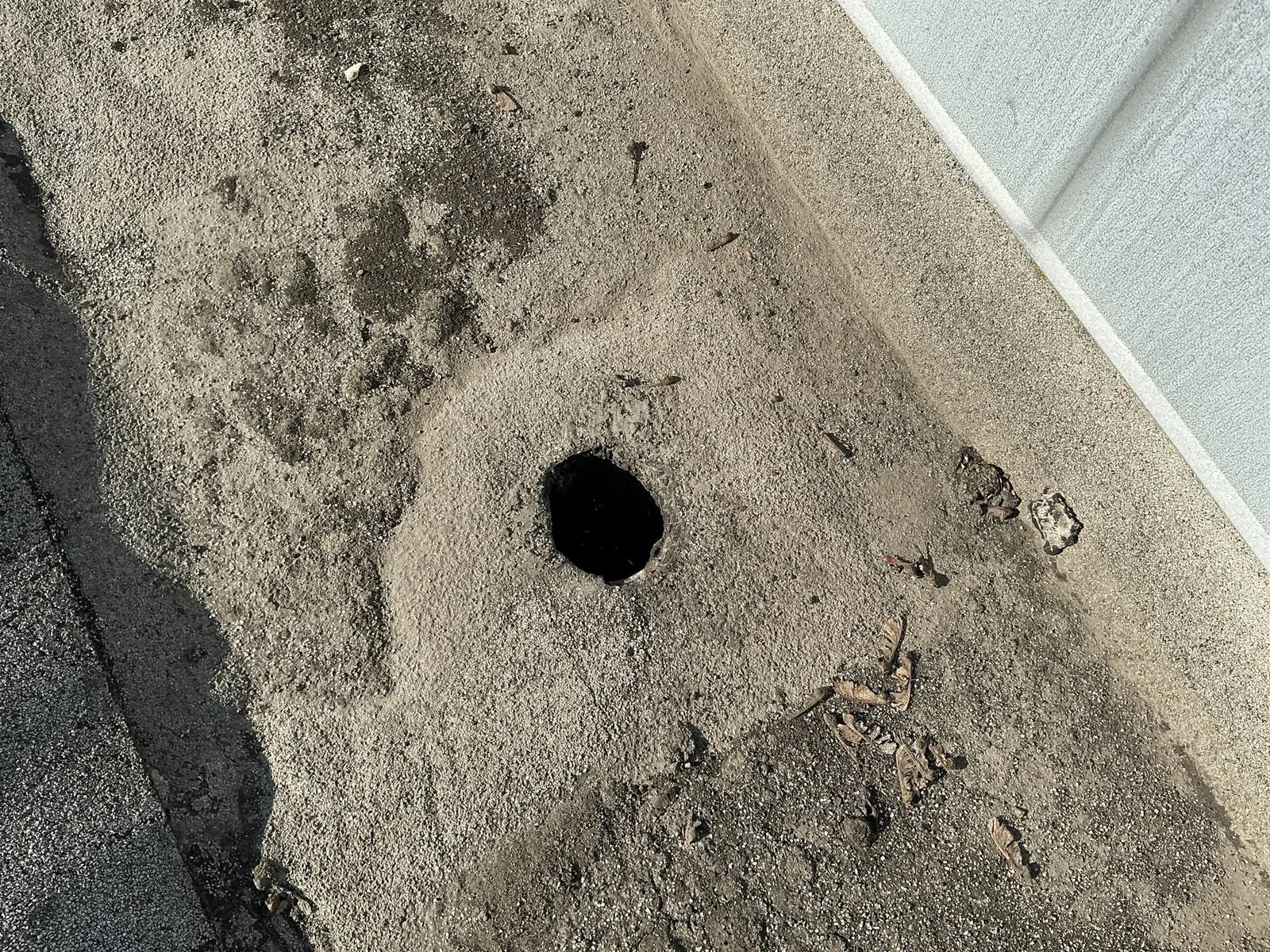
Usually because the seal between the roofing and the drain has failed. The roofing is clamped to the metal drain with bolts and sealant. When the bolts loosen, the metal rusts, or the roofing at the drain cracks, water gets between them and runs down the outside of the drain pipe into the building.
A drain is a bad place for a gap. All the water from that part of the roof ends up there, so a small opening at the drain takes in far more water than the same opening anywhere else. A clogged drain makes it worse. And sometimes the water only comes out next to the drain after getting in somewhere else entirely.
How a drain is sealed
A roof drain is a metal bowl set into the roof deck, connected to a pipe that carries the water down through the building. The roofing runs down into the bowl and lies on its rim. A metal clamping ring is bolted down on top, squeezing the roofing against the rim over a bead of sealant. A strainer dome sits on top of the ring to keep leaves out of the pipe. The roof around the drain is usually built up to slope into it, so the drain sits at the bottom of a shallow dish that roofers call the sump.
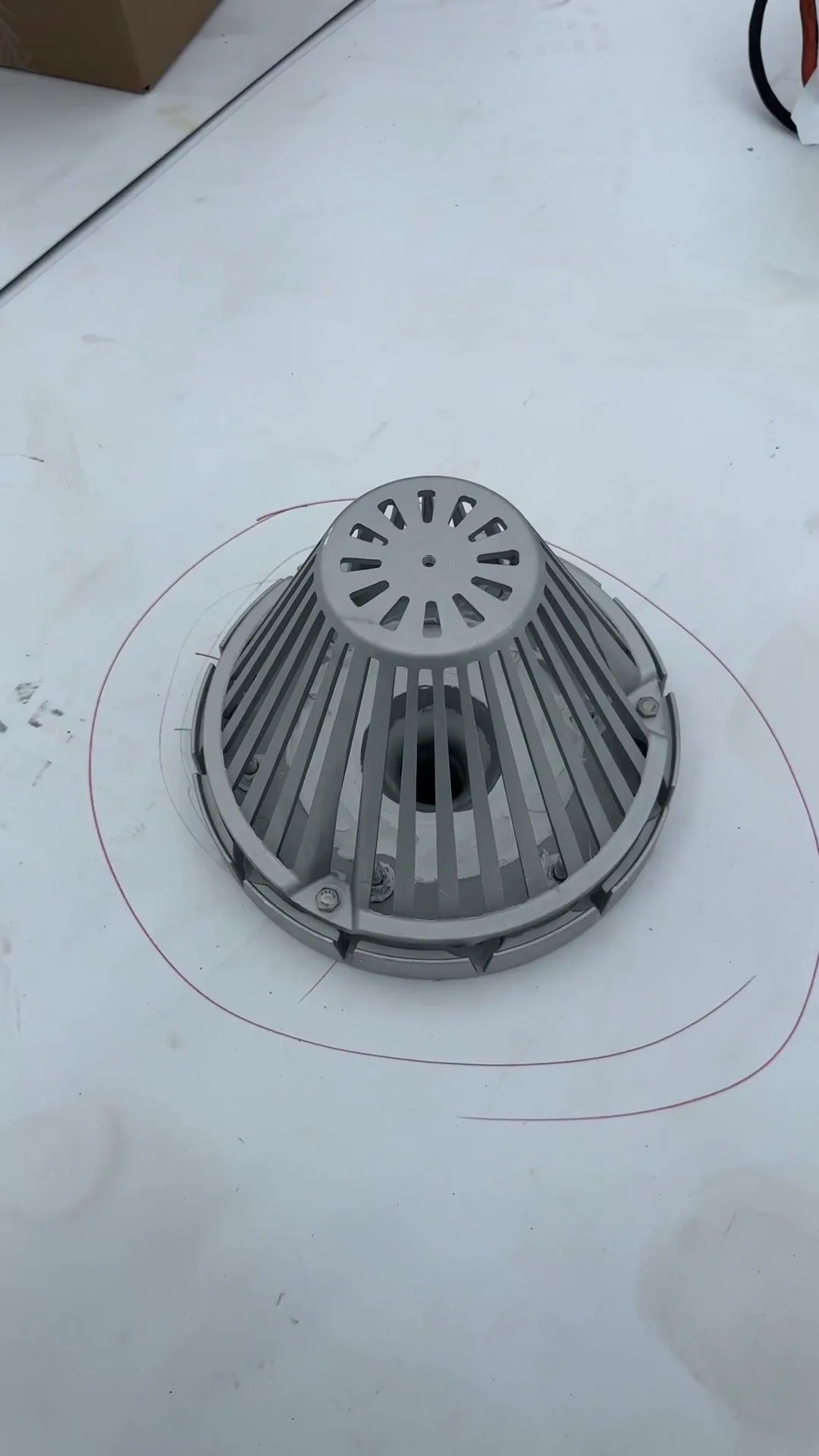
The watertight part is that squeeze: sealant, membrane, and metal pressed together all the way around. Manufacturers are specific about it. Tremco’s standard drain detail for its TPO roofs, for example, calls for a full tube of sealant under the membrane at every drain, the membrane to reach at least an inch past the bolt holes, and the clamping ring bolts to pass through the membrane. Anything that weakens the squeeze at one point along the ring opens a path for water.
Where the seal fails
The drain is the wettest place on the roof. Water reaches it in every rain and stands in the sump longer than anywhere else, so this is where the roof wears first.
The most common failure is the bolts. The ring only seals if every bolt is pulling it down. On older drains the bolts rust and snap, and they go missing when someone takes the ring off and does not put them all back. The GenFlex drain detail tells roofers working on an old roof to drill out and replace broken drain bolts, not to work around them.
The bowl itself can be the problem. Old cast-iron drains rust at the rim, right where the roofing is clamped. A pitted, flaking rim leaves nothing smooth for the sealant and membrane to seal against, however tight the ring is.
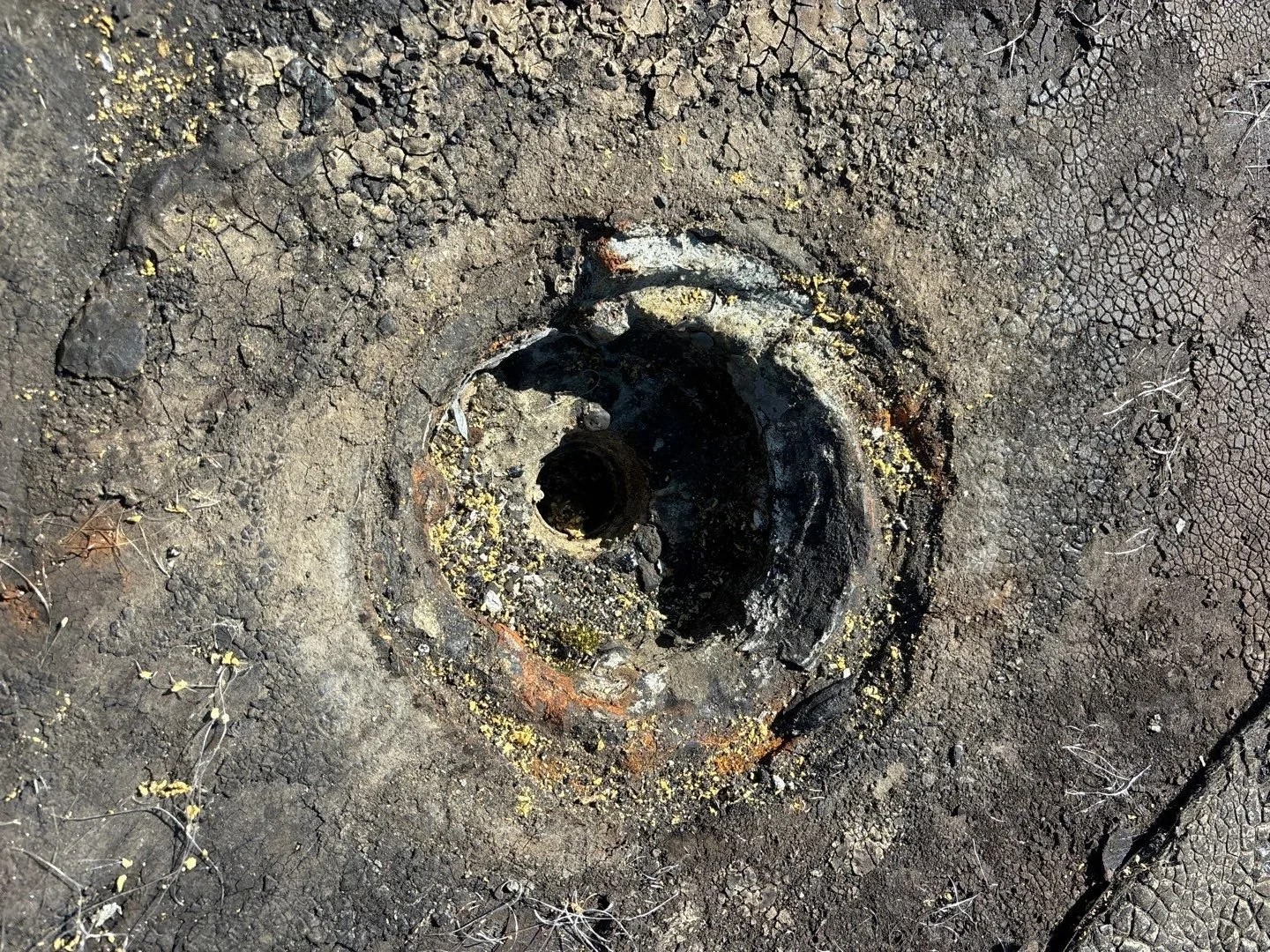
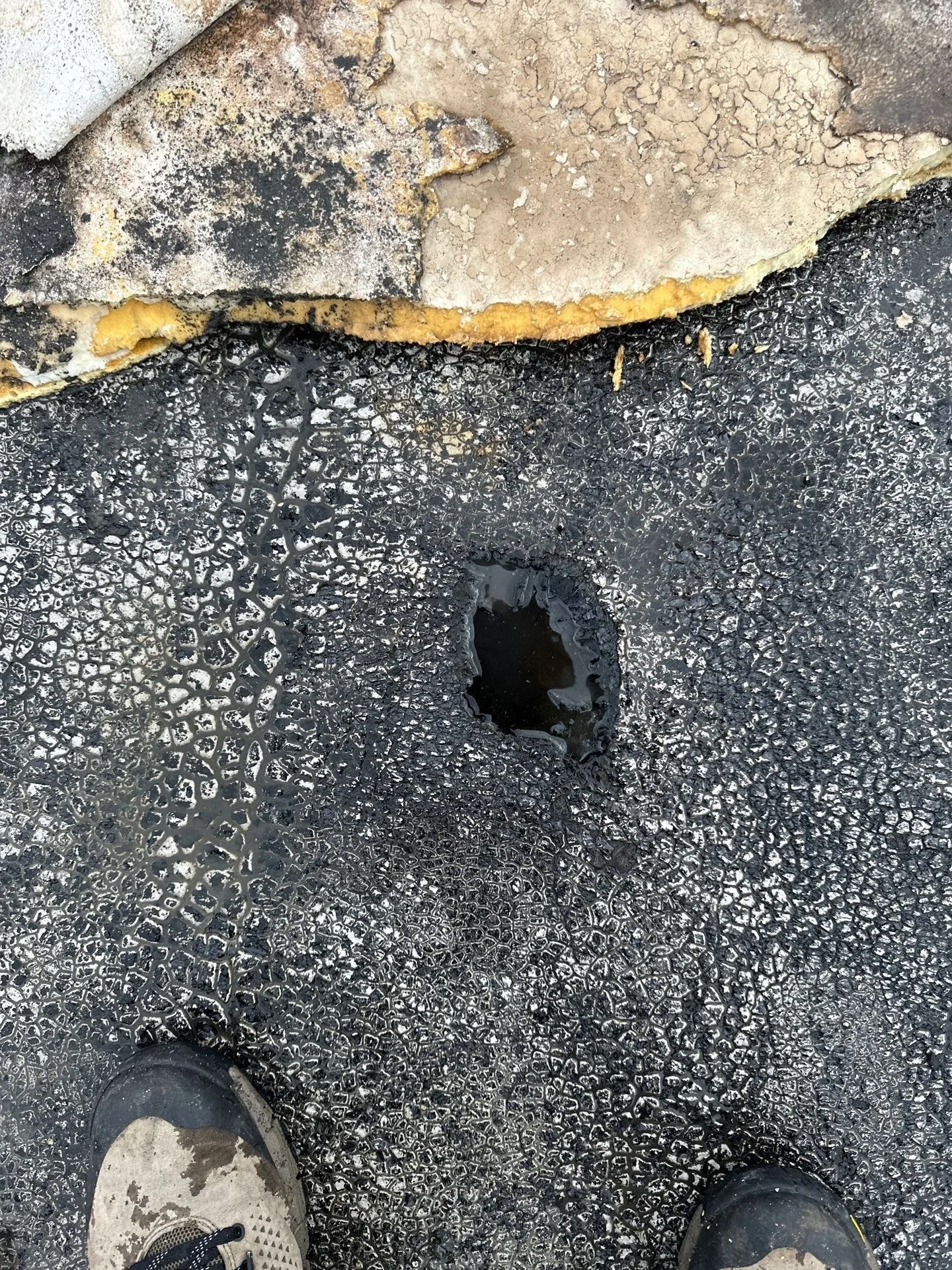
The roofing around the drain wears out too. The membrane or coating in the sump sits in water after every storm, so it usually cracks and splits there before anywhere else on the roof. Over the years, layers of roofing and flashing can also build up around a drain until it sits higher than the roof around it. Then water stands in a ring around the drain instead of running into it, soaking the edges of every layer.
A clogged drain puts more water on the seal
A drain that runs freely only has a film of water passing over the clamping ring. A slow or blocked drain has standing water on it, deeper and for longer. That water sits over the ring and bolts and spreads out over nearby seams and patches that would otherwise stay nearly dry. A small gap that lets in a few drops in a flowing rain lets in much more under a standing pool.
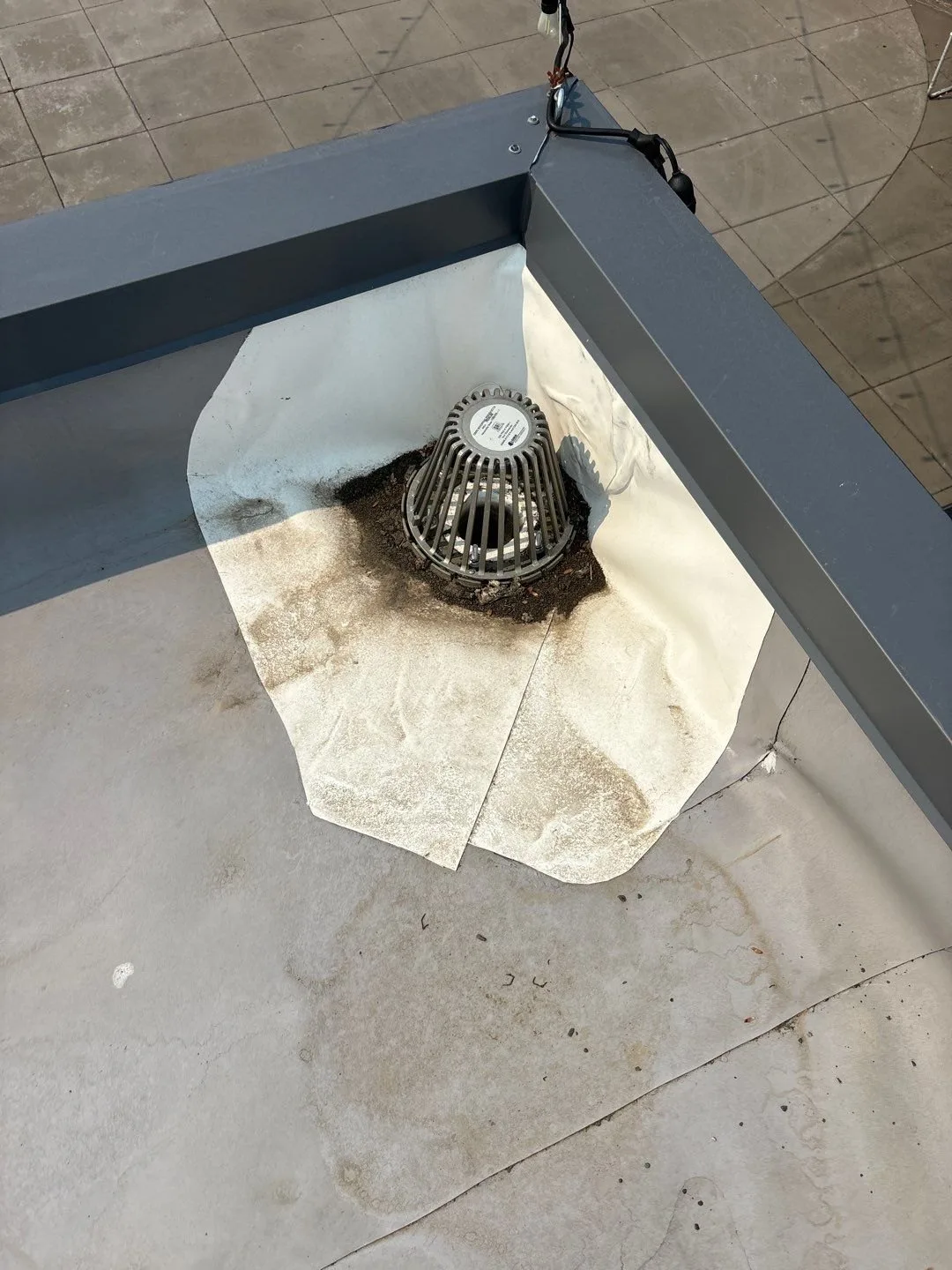
The strainer is the first defense. Without one, as in the photo at the top of this page, leaves, grit, and loose roofing granules wash straight into the pipe and build up where it bends. Even with a strainer in place, debris collects around the dome and slows the water down. In the Pacific Northwest, the leaves and needles come down in October and November, just as the wet season starts.
A drip under the drain does not prove the drain is leaking
The roof slopes toward the drain, and so does everything under the membrane. Water that gets in through a seam or flashing further up the slope runs along the deck toward the drain, just as it would on top of the roof. It comes out at the first gap it finds. That might be the hole cut in the deck for the drain bowl, or a joint between plywood sheets a few feet away.
So the stain by the drain tells you where the water came out. It does not tell you where it got in. Our roofers look at the leak inside the building first, to know where to start on the roof. Then they check the drain connection and the seams and flashings up the slope from it. A roofer who rebuilds the drain because the stain is under it, without checking up the slope, can leave the real opening untouched. Why does my flat roof keep leaking in the same spot? covers how water travels under a flat roof in more detail.
What a drain repair involves
A lasting repair is done at the connection, not over it. The clamping ring comes off, the old roofing at the drain is cut back to the metal bowl, and the rim is cleaned. Broken bolts are replaced. New membrane goes down into fresh sealant, and the ring goes back on with every bolt. The strainer goes back on top, and the pipe is cleared if it is slow. The GenFlex detail above sets out the same order for re-roofing over an old drain: remove the old flashing down to the metal bowl, and repair or replace broken drain parts.
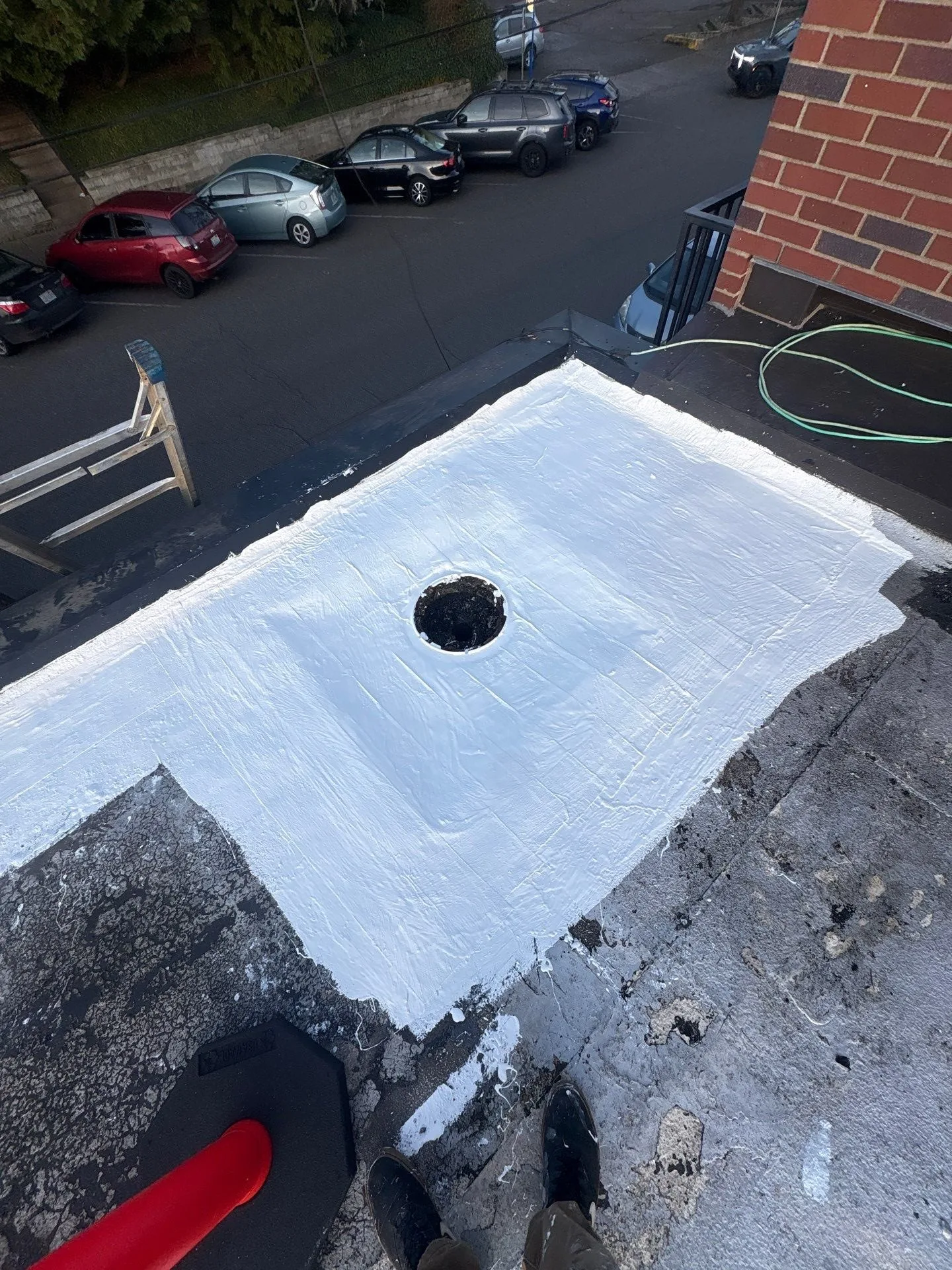
When the bowl is too corroded to seal against, there are two ways forward. A retrofit drain is a new drain body with its own clamping ring that fits down inside the old pipe. The other option is to replace the old drain body entirely.
Common questions
Can I just seal around the drain with roof cement?
It can hold for a season, but it does not fix the seal underneath. Roof cement smeared around a drain sits in standing water, cracks, and lets water back in. It also covers the ring and bolts, so the next roofer has to dig it out before they can see what failed.
How do I know if it is the roof or the plumbing?
Lift a ceiling tile near the drain if you can, and look at where the water is. Water running down from the underside of the roof deck around the drain points to the roofing. A wet joint on the pipe below the drain points to the plumbing. Beads of water along the whole length of the pipe usually mean condensation: in cold weather, rain and melting snow chill the drain and pipe, and warm indoor air condenses on them. Condensation tends to follow cold weather more than rain.
Why does it keep dripping after the rain stops?
Water that gets under the roofing can stay trapped in the insulation and on the deck, and keep draining out for hours or days. A drip on a dry day does not rule out the roof on its own.
What should I ask before approving a drain repair?
Ask whether the clamping ring is coming off, or whether new material is going on over it. Ask whether broken or missing bolts will be replaced, and what happens if the bowl turns out to be too corroded to seal against. Ask whether the drain line will be cleared and a strainer put back on, and whether you will get photos of the connection before and after.
What should I tell the roofer when I call?
When it drips: every rain, only heavy rain, or on cold days even when it is dry. How long it keeps dripping after the rain stops. Exactly where: on the pipe, around the pipe where it passes through the ceiling, or a few feet away. Whether you can see water still standing around the drain a day or two after rain, from a window or a neighboring building. Any past patches, drain cleaning, or plumbing work on the pipe. Photos of the ceiling stain help, and so does a photo of the pipe above the ceiling if a tile lifts out easily.
Thanks for your feedback.
About FRSG
Flat Roof Systems Group (FRSG) is a commercial flat-roof repair contractor serving Property Managers across Oregon and Washington. FRSG stops active leaks, makes permanent Roof Repairs with clear documentation and predictable pricing, and proposes a Full Reroof only when an inspection shows that repairing would cost more than it saves. Every visit ends with a Service Record: the problem reported, the work done, and photographs of the roof as FRSG left it.