Article
Can one section of a commercial roof be replaced while the rest stays?
Yes. It is common, and it is often the smart call when the rest of the roof is still dry and sound. Three things decide it: how far the damage goes, the joint between new and old, and where the water drains.
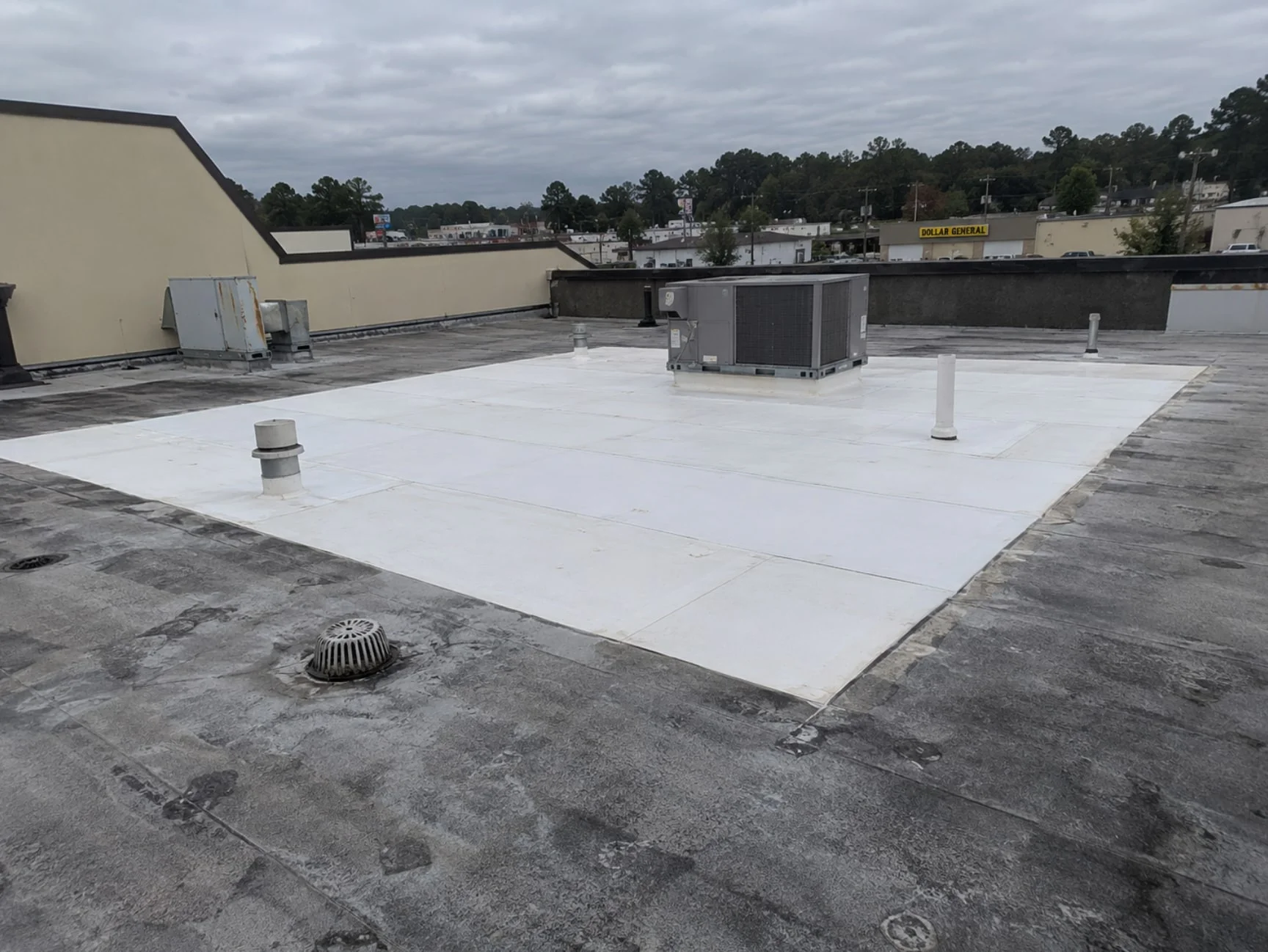
Most roofs wear out in one spot first
A flat roof rarely fails all at once. One area goes first, and the rest of the roof carries on.
Most often it is the area around a rooftop HVAC unit. Service techs walk across it, condensate drips on it, and tools get dropped on it. Low spots that hold water after every rain wear out early too. So does the patch of roof above a leak that ran long enough to soak the insulation.
When the damage stays in an area like that, and the rest of the roof is dry with its seams still holding, replacing that one section is money well spent. You pay for the part that failed, and the rest of the roof keeps working for years.
It stops making sense when the whole roof is going at once. If wet insulation runs under most of it, or the seams are opening everywhere, you will be back next year for the next section. And if a full replacement is already planned for the next few years, a section now just means paying twice.
The new section has to reach past the wet insulation
Water does not stay where it came in. It runs under the membrane and soaks the insulation well past the stain on the ceiling, or the soft spot you can feel underfoot.
So before anyone draws the line for the new section, the wet area has to be found. A moisture survey does that, with an infrared camera or small cores cut through the roof. The new section goes past the edge of what it finds. Stop short, and wet insulation is left sitting right next to the brand new roof.
Where it can, a good section ends at something that is already there, like a parapet wall, a curb, or a step in the roof. Every edge that ends at one of those is one less joint out in the open.
The joint is the part to watch
Everything in a sectional replacement is new except one thing: the line where the new roof meets the old one. That joint did not exist before. If the section ever leaks, it is the first place to look.
When both sides are the same material, the joint is straightforward. New TPO is heat-welded onto the old TPO once the old surface is cleaned, the same way a TPO patch is welded. New torch-down is torched onto the old torch-down.
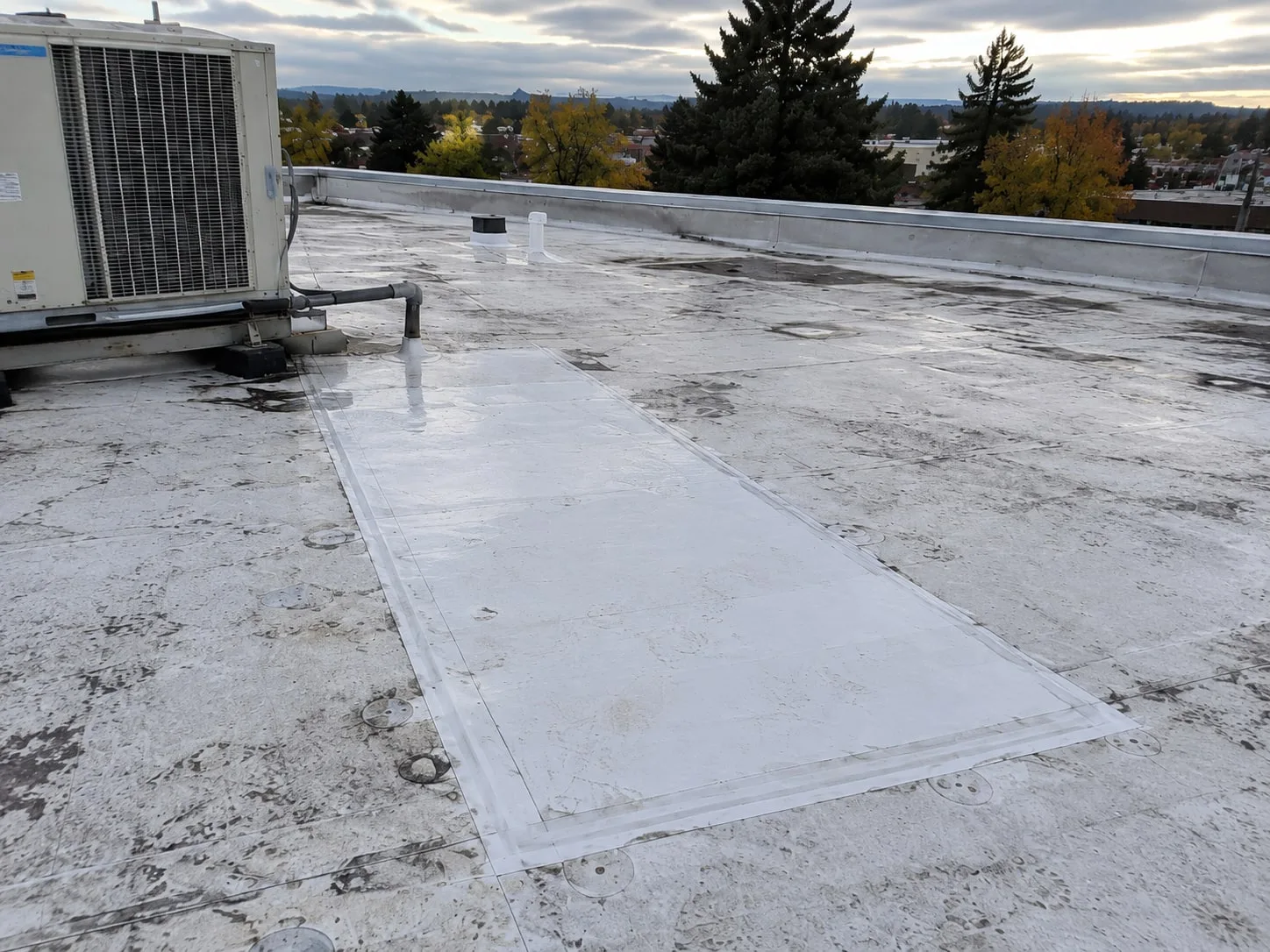
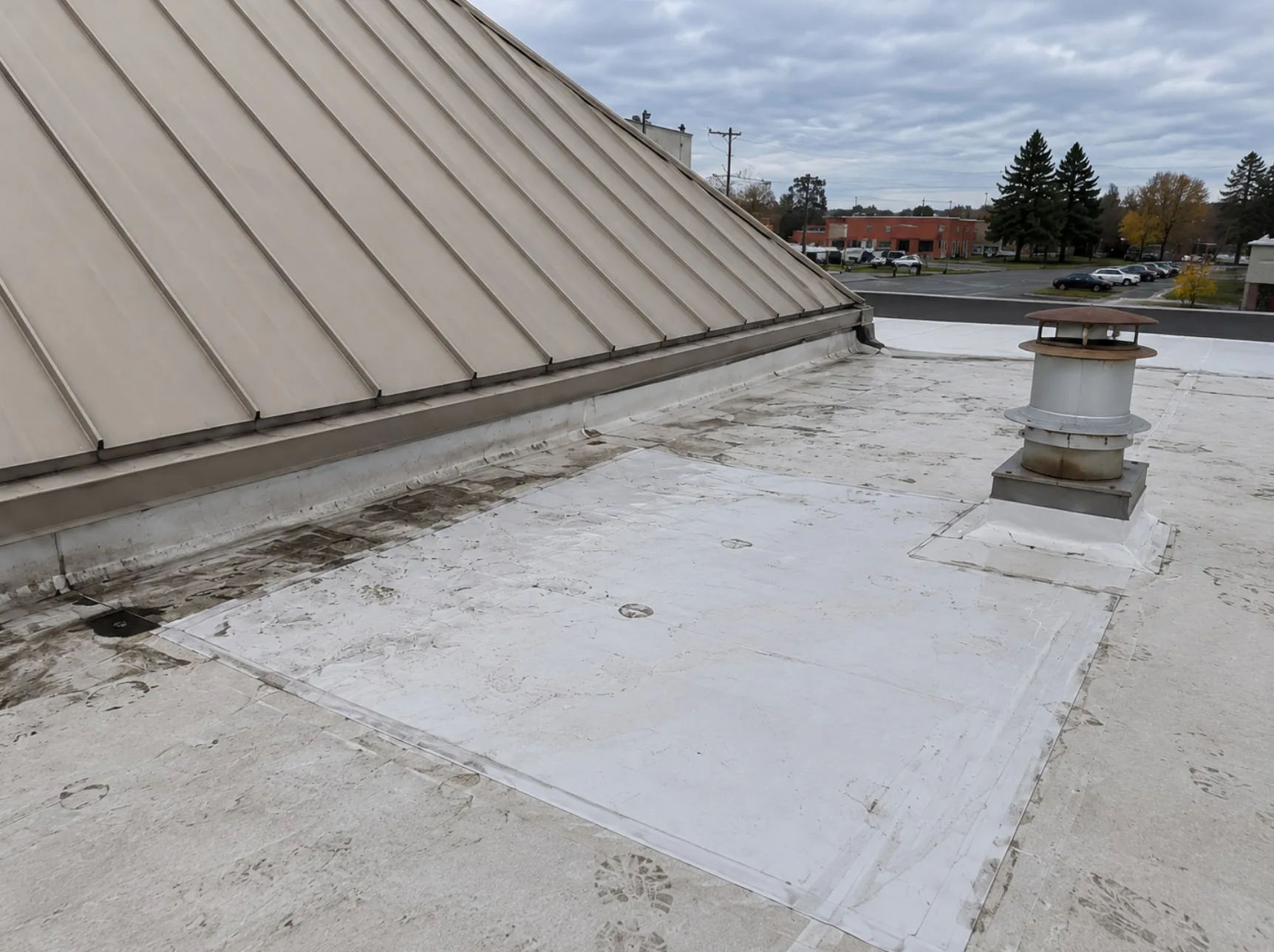
Different materials take more care. A white single-ply section in an old asphalt roof, like the one at the top of this page, needs a transition built into the joint. Some pairs cannot touch at all. PVC and asphalt break each other down: the asphalt softens and bleeds, and the PVC goes stiff and ages early. They have to be kept apart.
Then there is the water you cannot see. Water that gets under the old roof can travel along the deck and into the new section from below. A good tie-in seals the edge of the new roof right down to the deck, so it cannot.
Check where the water goes afterward
A new section does not change where the roof drains. It just adds a joint for the water to cross.
If the nearest drain sits outside the new section, every drop that lands on the section runs across that joint to get there. If the new section was built up with thicker insulation, it can sit higher than the old roof, and the step at its edge holds water against the joint. And any low spots on the rest of the roof are still there after the crew leaves.
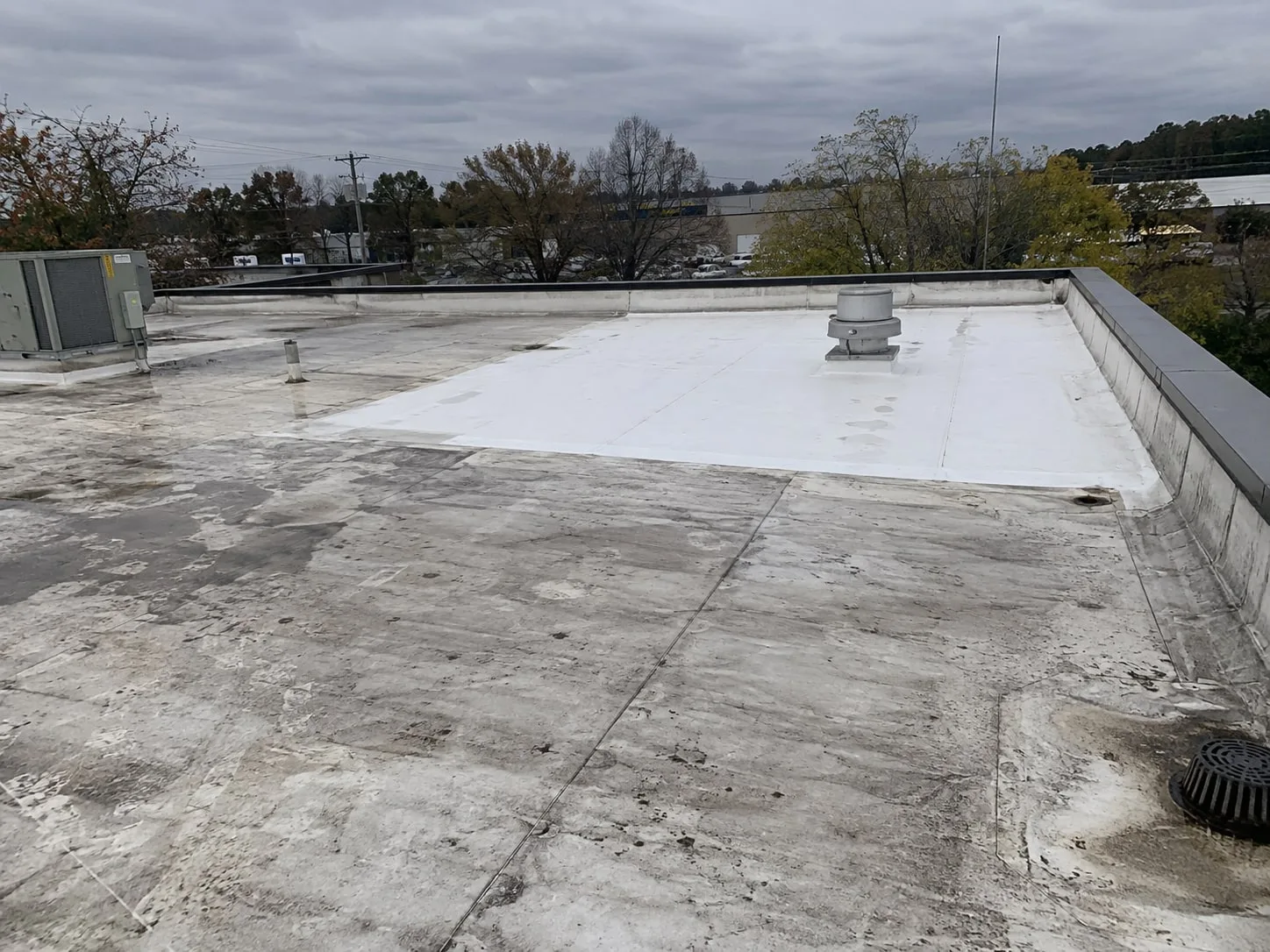
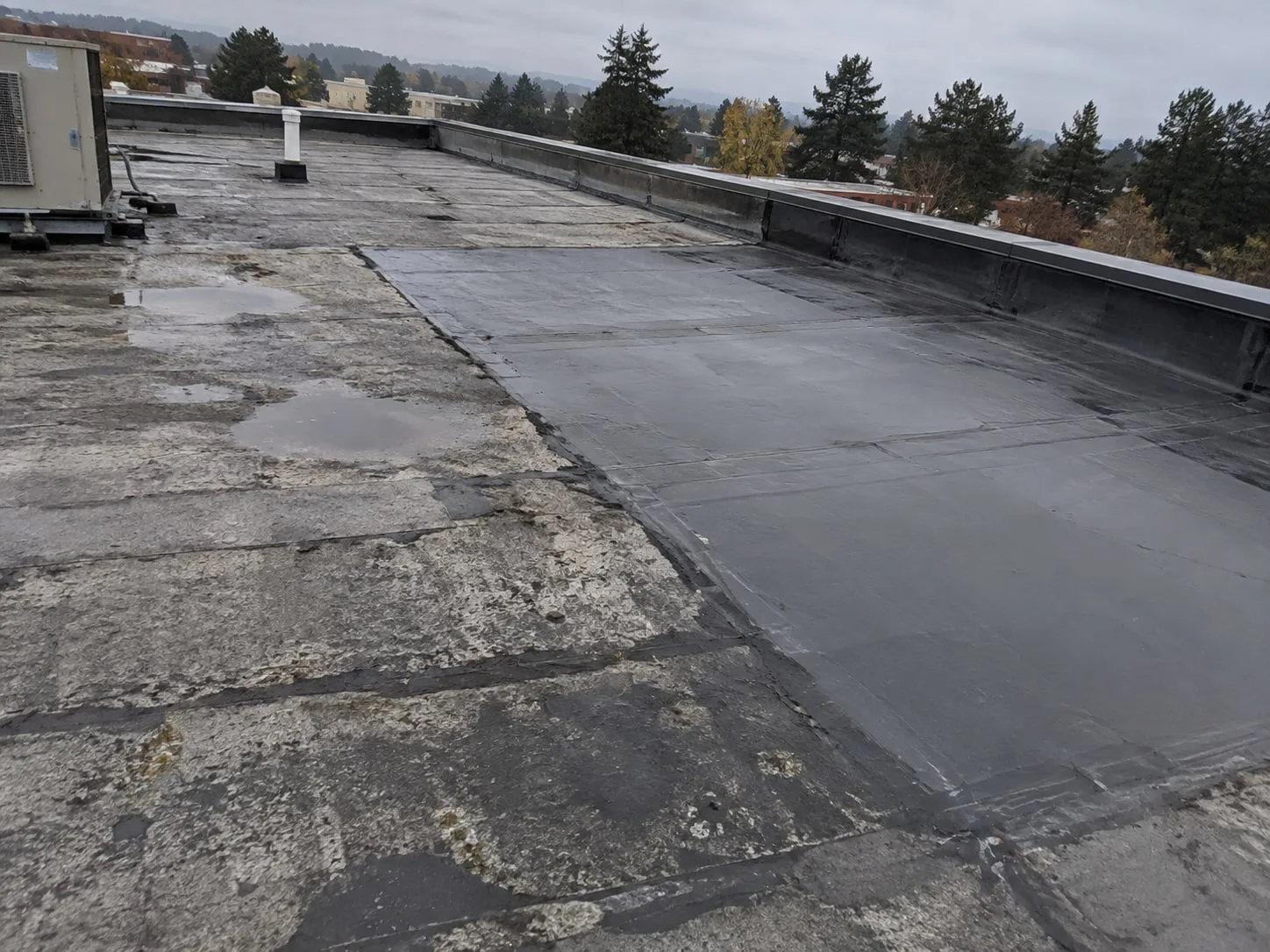
In Oregon and Washington, the rain tests that joint all fall, winter, and spring. A joint that made it through one dry summer has not really been tested yet.
You can also seal the section instead
Sometimes the section is worn out on top but still dry underneath. Then it does not have to come off. You can seal it.
Sealing is basically siliconing that part of the roof. The crew repairs the seams, drains, and pipes in the section, then coats the whole area in silicone. Nothing is torn off. The old roof stays where it is, and the silicone becomes its new surface.
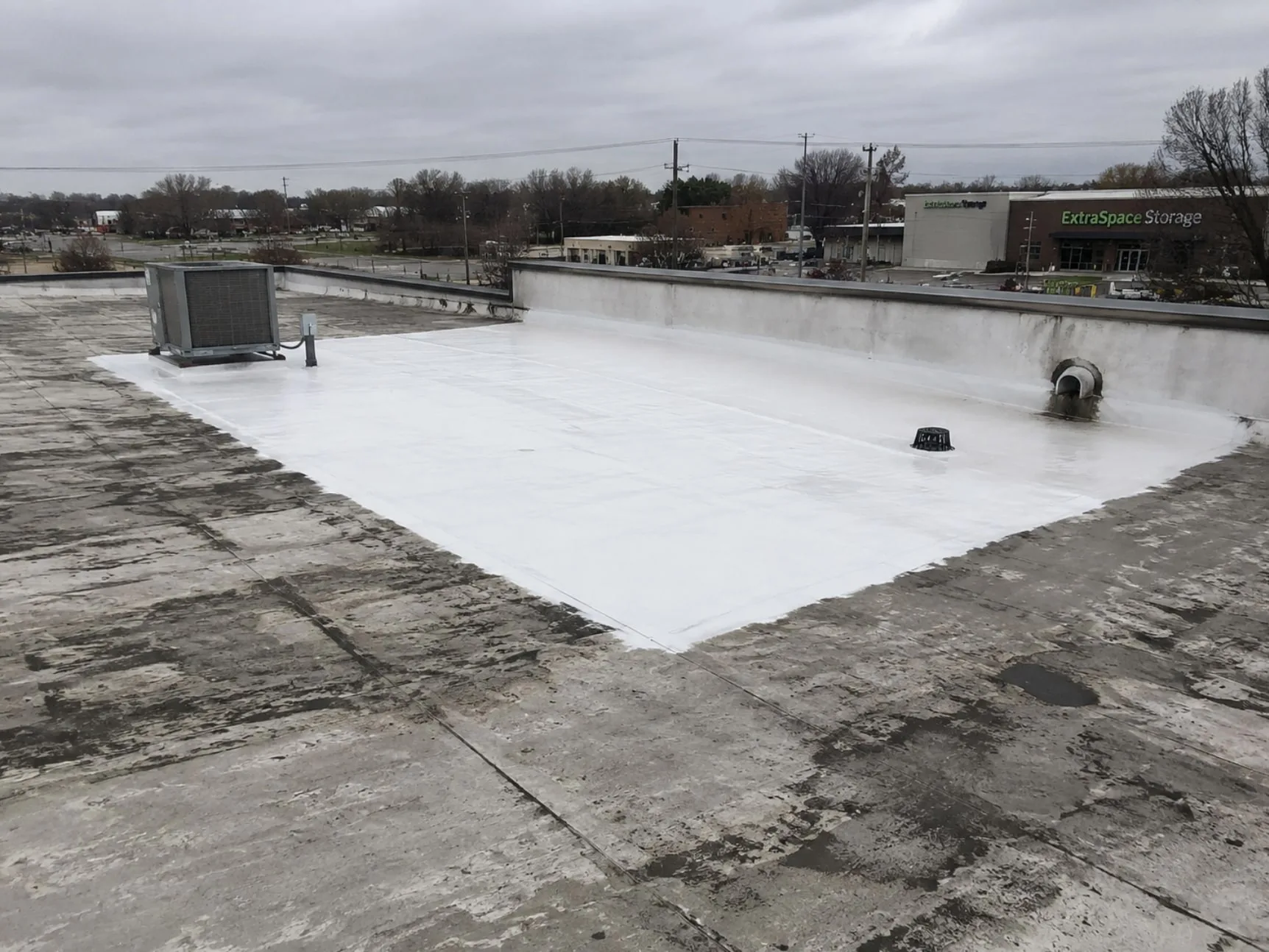
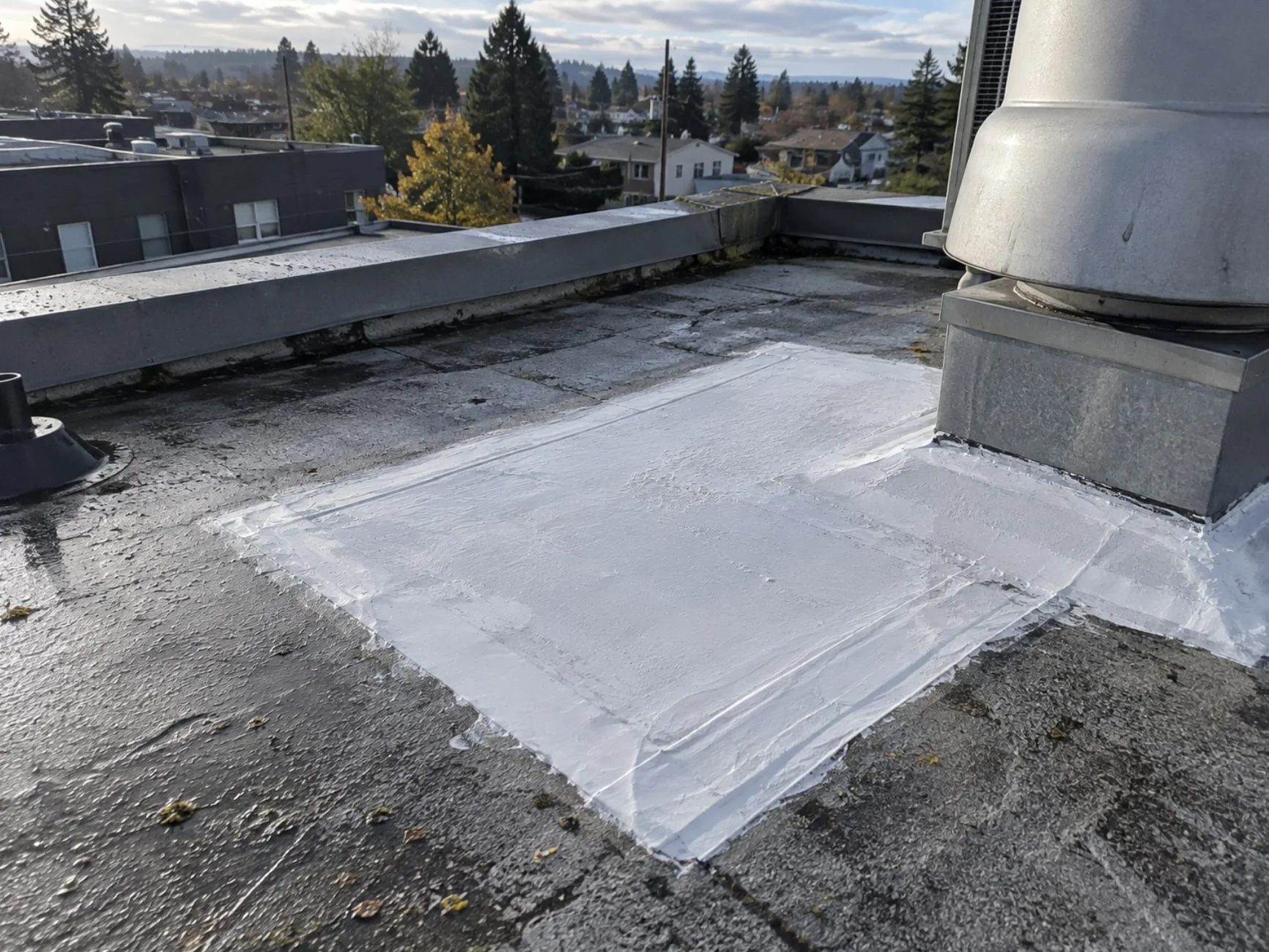
The same rules apply as with a replacement. The roof underneath has to be dry, because silicone over wet insulation just traps the water in. Coating makers require a moisture survey first, and any wet areas are cut out and replaced before the coating goes on. The coating also has to end somewhere water will not run back under it. And it will not fix a low spot, because it does not change the slope.
FRSG does silicone resealing for whole roofs or just one section. The torch-down roof case study shows a real one: a quote to reseal only the torch-down part of a roof.
Quick answers
Will the new section match the rest of the roof?
Usually not. It will be cleaner and brighter, and sometimes a different color entirely. That is only cosmetic. The joint and the drainage are what count.
Can the new section be a different material?
Yes, as long as the joint has a proper transition. PVC and asphalt have to be kept apart.
Does replacing one section affect the warranty on the rest?
It can. If the rest of the roof is still under a manufacturer’s warranty, check with the warranty holder before work starts. Get the warranty on the new section in writing too.
What should the quote tell me?
Where the new section stops and why, how the wet area was found, how the joint is built, and where the water from the new section drains. If any of that is missing, ask.
Is sealing the same as a repair?
No. A repair fixes one spot, like a seam or a pipe boot. Sealing fixes the problems across the whole section and then coats all of it.
Can a section be replaced in the rainy season?
Replacing a section opens up the roof, so it needs dry weather. In the Pacific Northwest, that can mean waiting for a break between storms, or for summer.
Thanks for your feedback.
About FRSG
Flat Roof Systems Group (FRSG) is a commercial flat-roof repair contractor serving Property Managers across Oregon and Washington. FRSG starts with a free Drone Check, fixes leaks and clears roofs with Roof Service, makes permanent Roof Repairs with clear documentation and predictable pricing, covers roofs all year with RoofCare, and proposes a Full Reroof only when repairing would cost more than it saves. Every repair ends with a Service Record: the problem reported, the work done, and photographs of the roof as FRSG left it.