Article
Case study: repairing a torch-down roof with 3–5 years of life left
Why FRSG recommended targeted repairs on an aging commercial roof. See the inspection photos and compare the $4,368 repair proposal with a broader coating option.
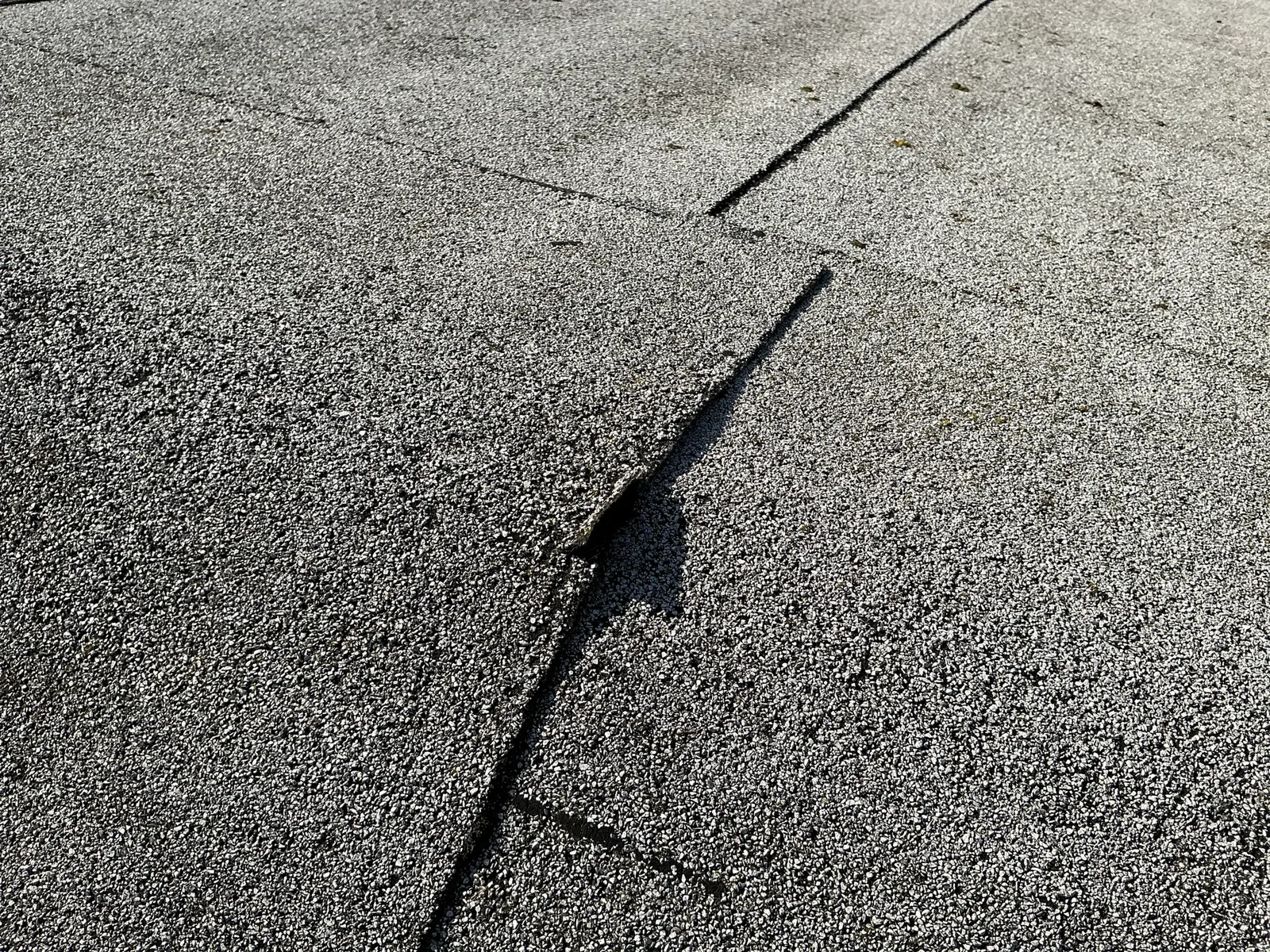
An aging roof can need repairs without needing replacement. On this Pacific Northwest commercial property, FRSG found worn corners, cracked seals around roof openings, and lifting seams. The roofing around those defects was still serviceable. With an estimated 3–5 years of useful life remaining in the torch-down section, the recommendation was to repair the weak points now and plan for a broader silicone overlay later.
The written proposals put real numbers beside that decision: $4,368 for repairs and cleaning across several roof areas, and $26,372 for complete silicone resealing of the designated torch-down section. Those prices cover different work. They show why understanding the scope matters as much as reading the total.
This case study follows the inspection findings and written proposals. The customer and property are anonymous; the photographs show close-up roof conditions. Prices are proposal figures from September 2026, not final invoices or a price list for other buildings.
The short version
| What mattered | What FRSG found or recommended |
|---|---|
| Existing roof | Torch-down roofing: asphalt-based sheets joined together with heat. |
| Main problem | Wear at seams, corners, and the seals around roof openings. |
| Surrounding material | Still serviceable, according to the on-site assessment. |
| Immediate plan | Minor repairs and cleaning within 0–2 weeks of the inspection. |
| Longer-term plan | A silicone overlay for the torch-down section in approximately 3–5 years, subject to its condition. |
| Recommended proposal | $4,368 for the defined repairs and cleaning across several areas. |
The 3–5 years was a planning estimate for this roof, not a guarantee and not permission to leave the defects open. Preserving the remaining life depended on addressing the problems that were already visible.
What the photos showed
Most people see a crack and understandably wonder whether the whole roof is failing. The inspection needs to answer a second question: is the surrounding roofing still strong enough to support a lasting repair?
Here, FRSG’s assessment was that the weak points could be treated while retaining the roofing around them. Four details help explain that judgment.
1. A worn corner needed a local patch
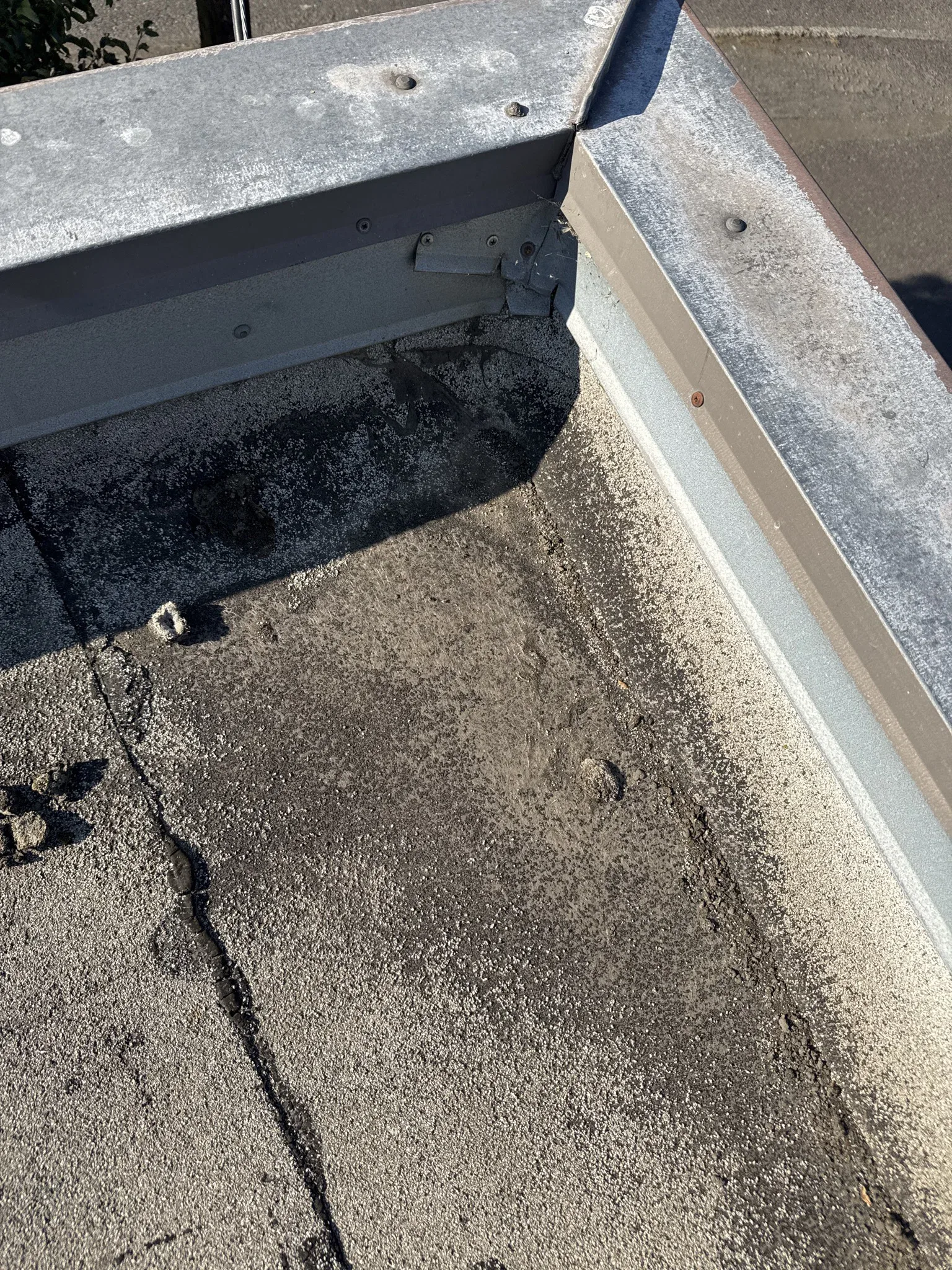
At one corner, the roofing was worn where it met the metal edge. The inspection called for a silicone overlay or patch at that location. This was a specific repair area, rather than a finding that the whole roof surface needed to be removed.
2. The seal around rooftop equipment was cracking
Where equipment passes through a roof, the roofing has to turn up and seal around it. Roofers call this waterproof transition flashing. In the photo below, the old material at that transition is cracked and separating. The granule-covered roofing beside it remained serviceable in FRSG’s assessment.
That difference matters. Repairing the transition addresses a weak point without automatically replacing the sheets around it.
3. Pipe seals also needed attention
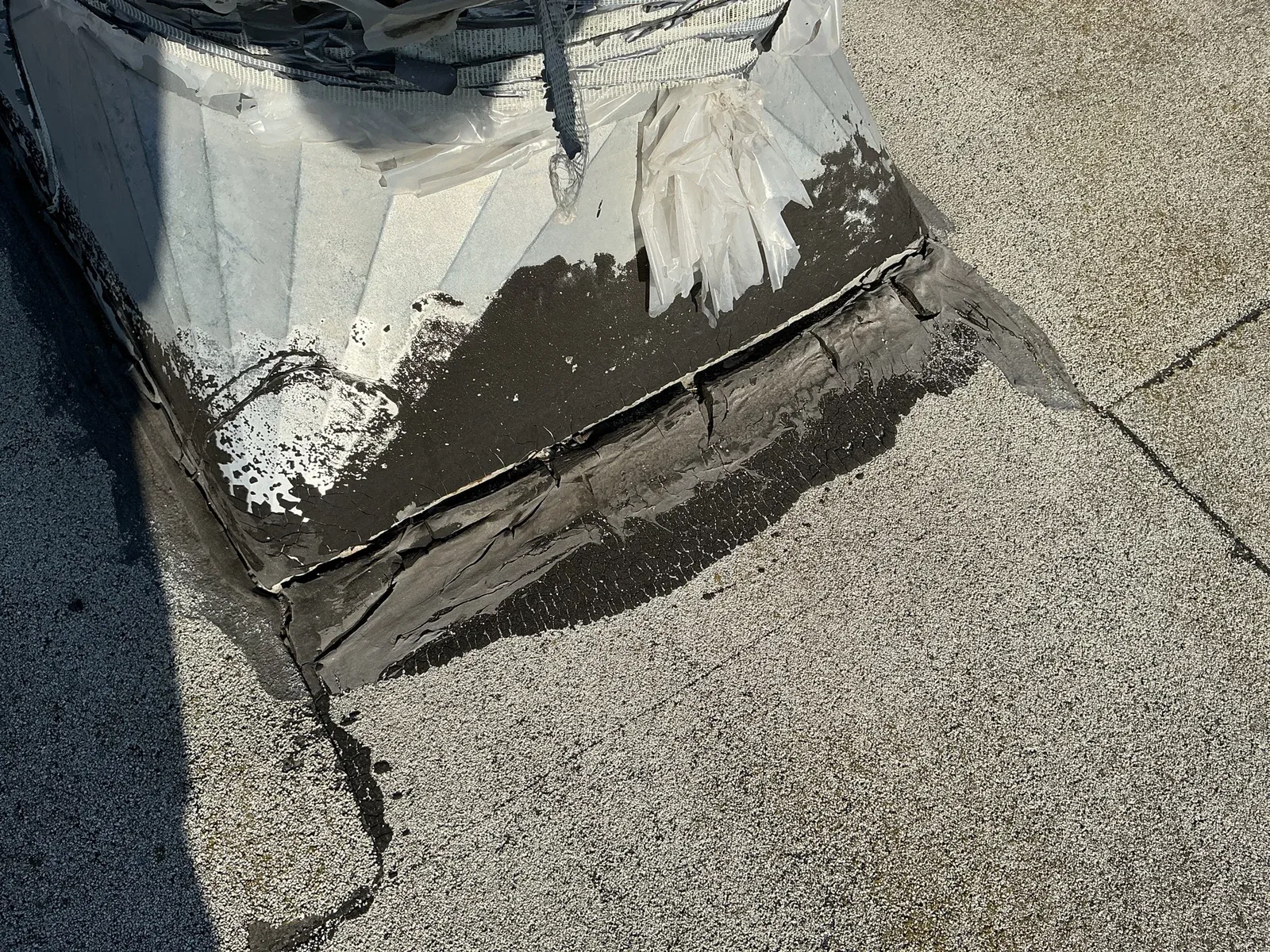
A pipe through the roof creates another connection that has to stay sealed. The old material around this pipe showed cracking and peeling. The repair scope included sealing identified openings with the materials specified for those details.
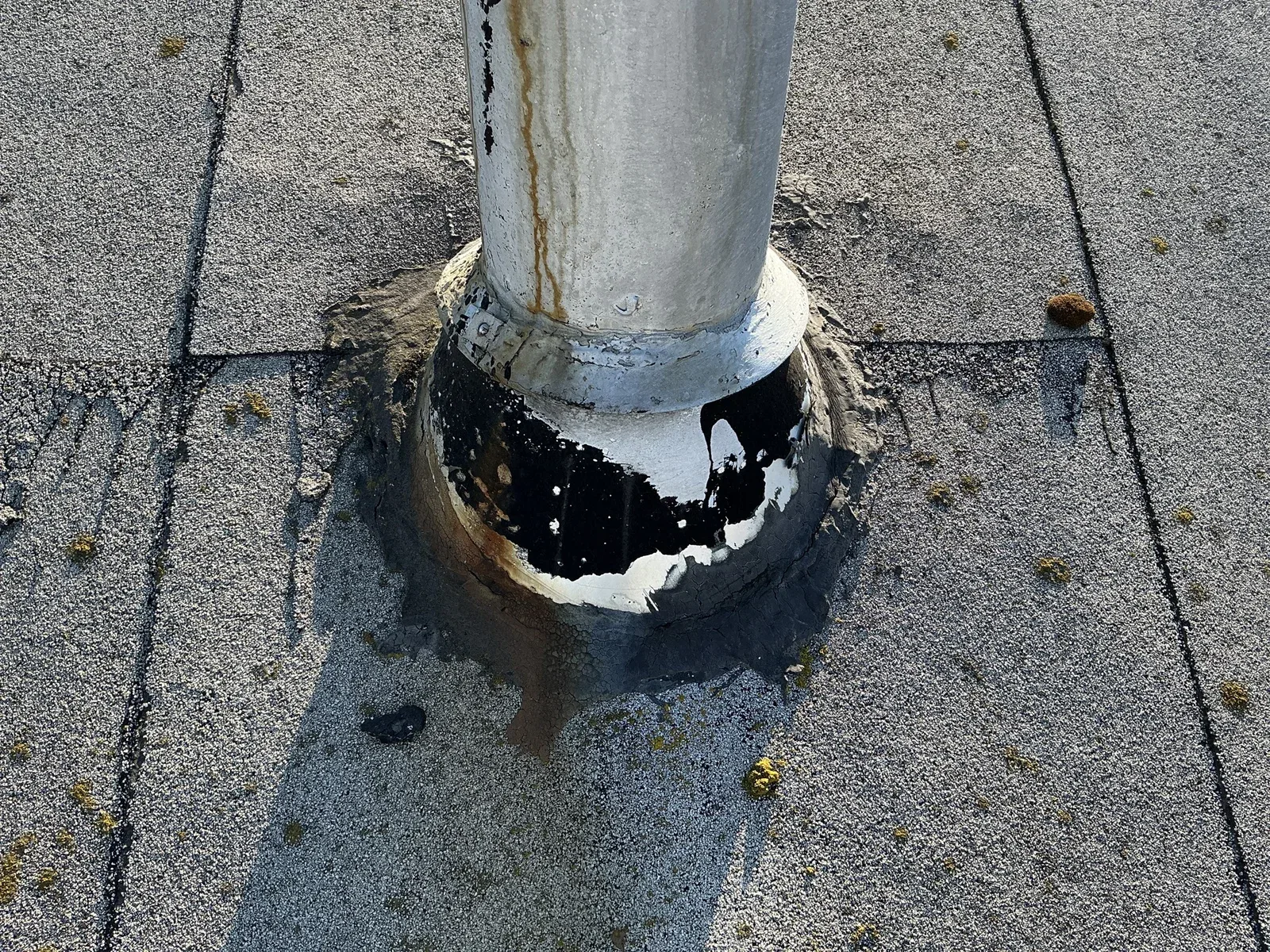
The lesson is not that every cracked pipe seal gets the same product. It is that the repair should match the defect and the material it has to bond to.
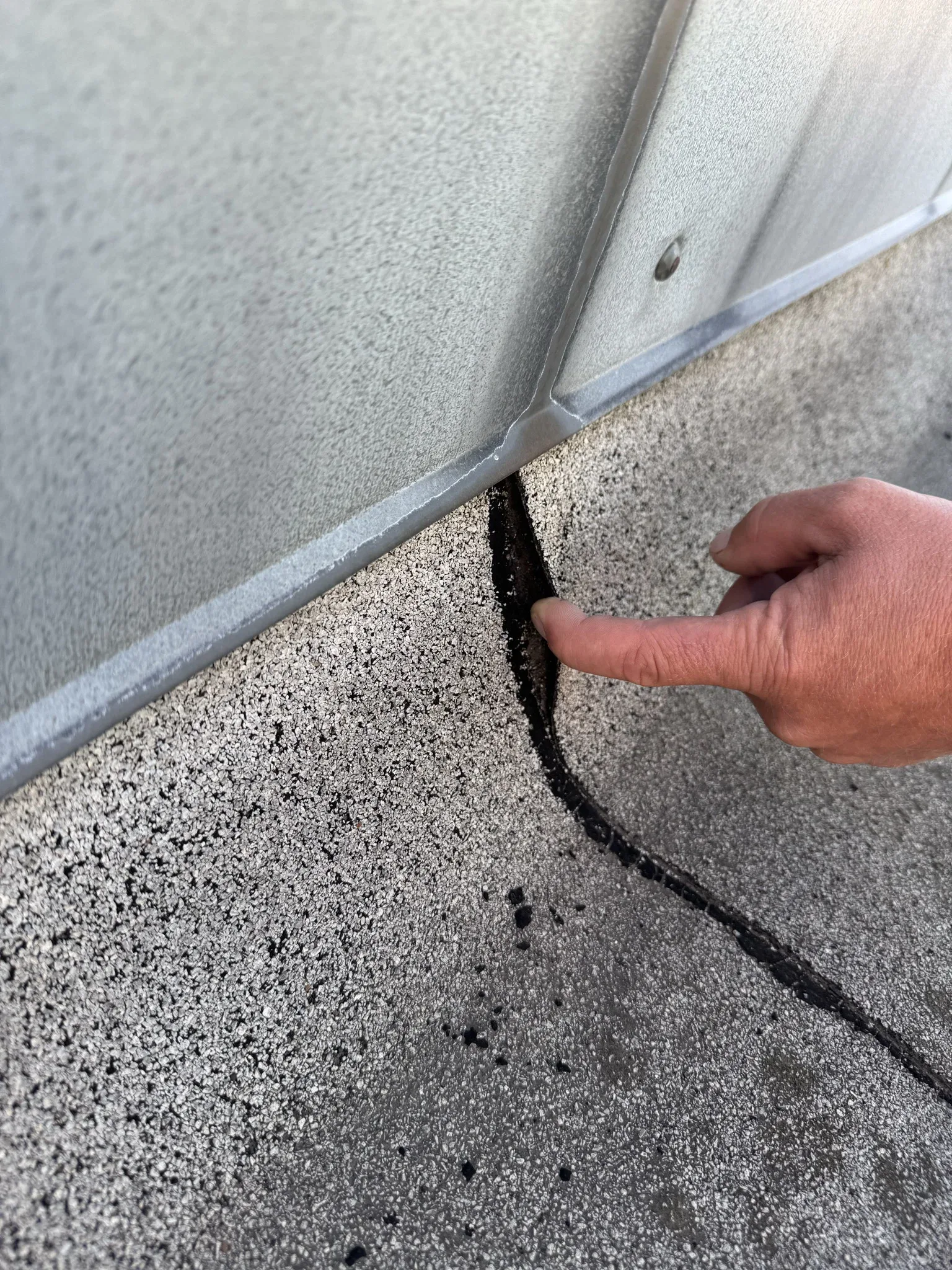
4. Some sheet edges were lifting or separating
Torch-down roofing is installed in overlapping sheets. The overlap is called a seam. The opening photo shows a lifted edge; the close-up below shows separation near the roof edge.
These are visible defects to fix, even when they occur on an aging roof. FRSG’s reasoning was that the joints needed work while the adjacent sheets still had life left. Age explained why an inspection was worthwhile; it did not make an open seam harmless.
What the $4,368 proposal actually covered
The recommended proposal combined work in several roof areas. In the torch-down section, it included:
- Removing debris from the work area.
- Cleaning the problem spots and letting them dry before repairs.
- Using reinforcing mesh and GE Enduris 3500 silicone at identified tears and edge details. The mesh is fabric that reinforces the repair.
- Sealing a vent opening with the specified exterior-grade sealant.
For that section, the estimate allowed 32 labor hours, four 5-gallon buckets of silicone—20 gallons total—and two rolls of reinforcing mesh. These are planned quantities, not a record of materials consumed. Labor hours also do not tell you how many calendar days a crew will be on site.
The same $4,368 total included roof and gutter cleaning, a heat-welded patch on a different roof material, and other localized repairs and debris removal elsewhere on the property. The proposal did not give a separate dollar subtotal for the torch-down work.
That makes $4,368 the price of the combined proposed scope, not the price of coating an entire roof. Dividing it by the property’s total roof area would produce a misleading price per square foot.
Why price a $26,372 coating option too?
The report also included a separate proposal for complete silicone resealing of the designated torch-down section. That broader scope covered cleaning the surface, repairing defects, reinforcing details, applying the coating, and checking the finished coverage.
| Proposal | Scope and status in the written record |
|---|---|
| $4,368: repairs and cleaning | Targeted work across several roof areas. Marked as the recommended option. |
| $26,372: complete silicone resealing | A broader coating scope for the designated torch-down section. Offered as an alternative, not marked as the recommended immediate option. |
The coating proposal included a 10-year material and workmanship warranty for its stated coating scope. That term did not apply to the smaller repair proposal. It also excluded concealed damage such as wet insulation or deteriorated decking, along with correction of existing slope or ponding-water problems.
This was not a repair-versus-replacement price comparison: neither proposal priced a full roof replacement. The totals therefore cannot establish how much replacement would have cost or how much the owner saved. What they do show is a choice between focused work now and a larger coating scope.
Repair now, reassess before restoration
The inspection recommended minor repairs and cleaning in the near term, with a silicone overlay planned for roughly 3–5 years later. FRSG’s explanation was simple: the existing roofing still had useful life, so its localized weak points could be addressed first.
The word restoration can blur two different scopes. A reinforced silicone patch treats a specific problem. A full coating restoration treats the designated roof surface as a system, after preparation and repairs. This case illustrates why an owner should ask which scope is actually being proposed.
The product in the proposal is a roof coating, not ordinary household silicone caulk. Momentive lists Enduris 3500 for substrates including modified-bitumen roofing. Product suitability still depends on the condition and preparation of the surface.
Before a future full coating, the roof needs another assessment. As an example of the checks involved, GAF’s guidance for silicone over asphaltic roofs calls for moisture investigation, adhesion testing, and replacement of wet material. Those are requirements for that manufacturer’s system, not evidence that those tests were completed on this property. The selected system’s requirements govern the work.
Why the wet season makes small defects worth fixing
For regional context, Portland International Airport’s 1991–2020 normals show 36.91 inches of annual precipitation, including 5.45 inches in November, compared with 0.51 inch in July. Those station averages describe the seasonal pattern, not the weather at this anonymous property. Source: National Weather Service Portland climate normals.
A gap that causes little trouble in summer can face repeated rain in fall and winter. That is why “the roof has life left” and “the roof needs repairs soon” can both be true. The remaining serviceable material is worth protecting.
What another building owner can take from this
The useful outcome of this inspection was a clear plan: fix the documented defects, retain the serviceable roofing, and budget for a later reassessment and possible coating. This case does not claim a verified post-repair leak history or a measured number of extra years achieved.
When reviewing your own roof, ask the contractor to show you both the damage and the material they believe is worth keeping. Then ask what the proposal covers, what it excludes, and what would change the recommendation.
Our commercial roof repair vs. restoration vs. replacement comparison explains the broader decision, including when moisture or widespread deterioration makes replacement more appropriate. For an active leak, the flat roof leaks guide covers the first steps.
The principle from this roof is straightforward: repair the weak points while the surrounding roof can still support a durable repair. Replace or restore more of the roof when the findings justify that larger scope.
Thanks for your feedback.
About FRSG
Flat Roof Systems Group (FRSG) is a commercial flat-roof repair contractor serving Property Managers across Oregon and Washington. FRSG stops active leaks, makes permanent Roof Repairs with clear documentation and predictable pricing, and proposes a Full Reroof only when an inspection shows that repairing would cost more than it saves. Every visit ends with a Service Record: the problem reported, the work done, and photographs of the roof as FRSG left it.