Article
Commercial roof repair vs. restoration vs. replacement in the Pacific Northwest
Repair isolated defects, restore a qualifying roof, and replace a failed assembly. Compare moisture findings, costs, and wet-season planning in Oregon and Washington.
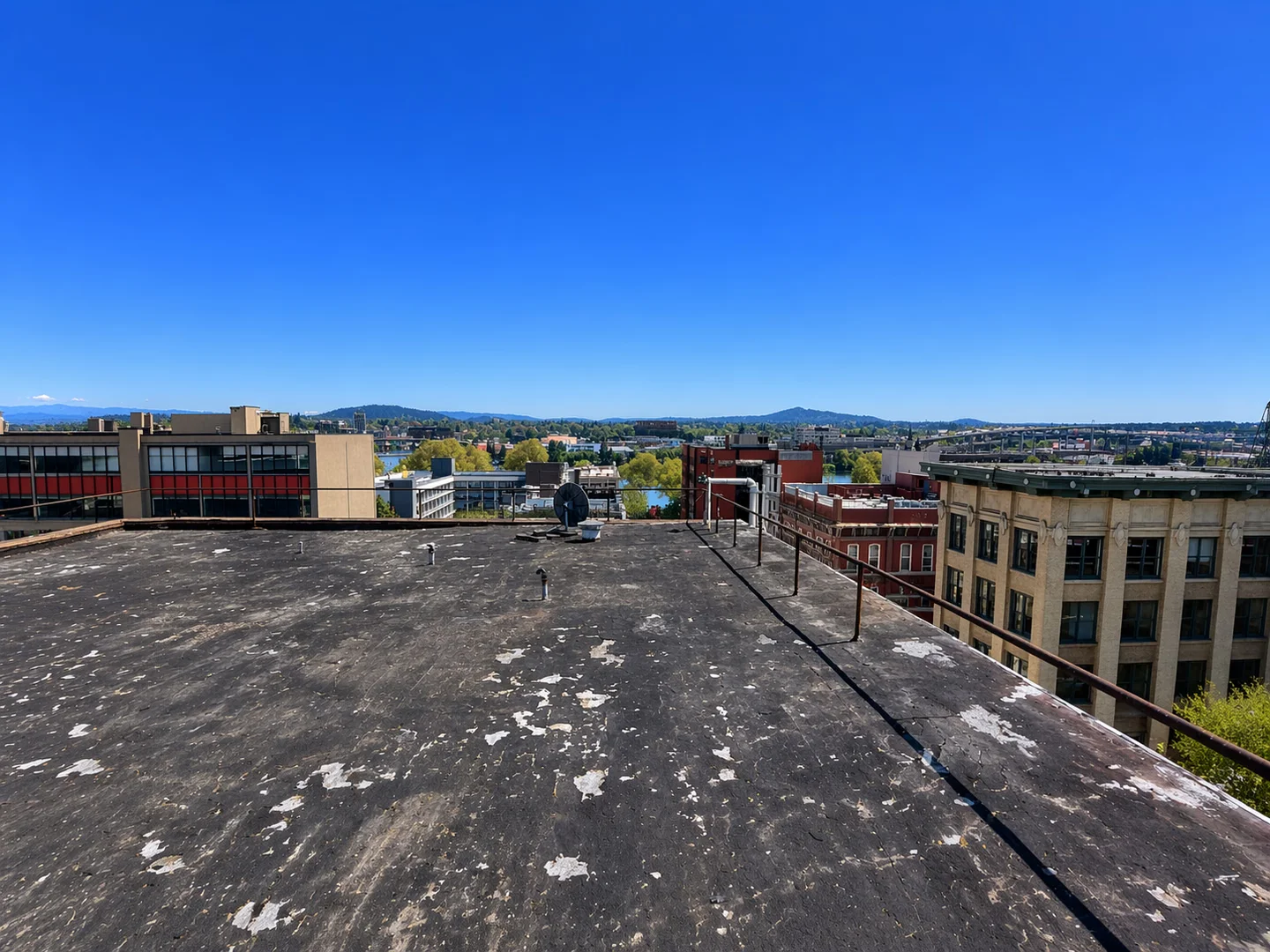
Repair a commercial roof when defects are isolated and the surrounding assembly can hold a durable repair. Restore it when the existing roof is sound enough to retain after preparation and corrective work. Replace it when widespread deterioration, trapped moisture, or deck damage makes preserving it a poor investment. In the Pacific Northwest, the wet season makes finding that dividing line especially important.
A ceiling leak does not tell you which option your building needs. Neither does the roof’s age. The useful question is: how much of the existing roof can you reliably keep, and what evidence supports that recommendation?
For a Property Manager, that answer should connect the inspection findings to a scope of work, a budget, and the period the roof needs to serve the building. Our flat roof leaks guide covers the immediate response to an active leak. This comparison addresses the longer-term decision.
For a real example, read our case study of an aging torch-down roof with 3–5 years of life left. It shows the inspection photos, the recommended $4,368 repair-and-cleaning scope, and a separate $26,372 coating option.
Repair, restoration, and replacement at a glance
| Option | Condition and evidence |
|---|---|
| Roof Repair | An isolated defect with an identified source. The surrounding materials remain repairable. |
| Restoration | A weathered roof worth retaining. Moisture and adhesion tests support the system after defects are corrected. |
| Full Reroof | Widespread failure or an assembly that cannot reasonably be retained. The scope addresses damaged materials, the deck, and drainage. |
These are starting points for an inspection, not diagnoses from a photograph. A single roof can need different treatment in different sections.
When commercial roof repair makes sense
A localized defect on a serviceable roof usually calls for a localized solution. An open seam near one equipment curb does not establish that every seam on the building has failed. A permanent Roof Repair should address the entry point and any affected underlying material, using a detail compatible with the existing roof.
Before approving the work, ask for three things:
- A location: identify the defect on a roof plan and in a close-up photograph.
- A boundary: show whether damage ends at the visible defect or continues into insulation and nearby details.
- A repair method: explain what will be removed, replaced, welded, or sealed and why it will bond to the existing materials.
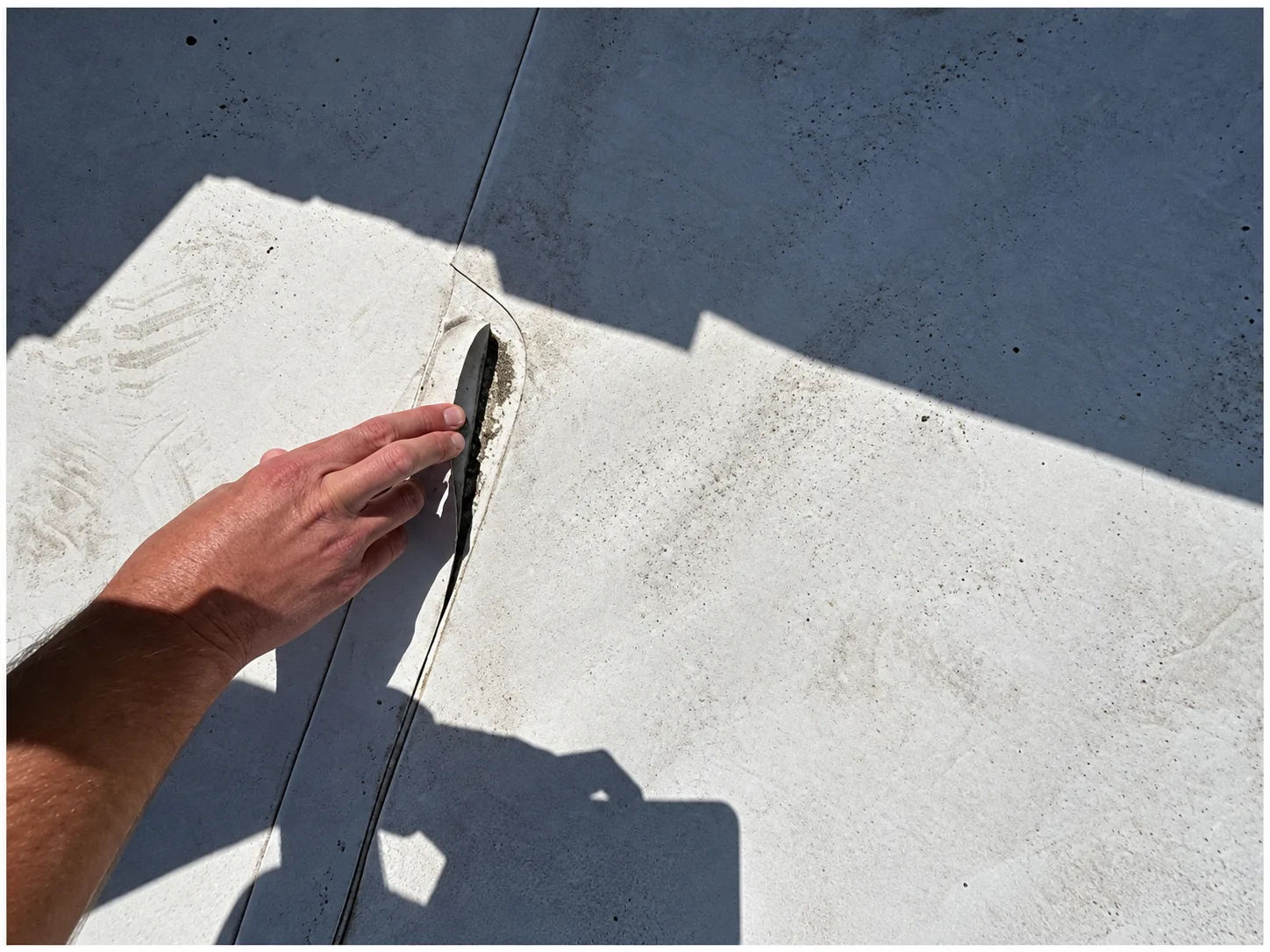
Repeated leaks need a pattern review
Two visits to the same leak area can mean the source was missed. New defects scattered across the roof can point to broader deterioration. Those situations should not automatically receive the same recommendation. See why a flat roof keeps leaking in the same spot for the source-tracing problem.
Review the last 24–36 months of Service Records and invoices as a practical planning exercise. Total the roof work, identify repeat locations, and separate temporary leak control from permanent repairs. This review period is a suggested way to organize your records, not an industry replacement threshold.
When roof restoration is a defensible option
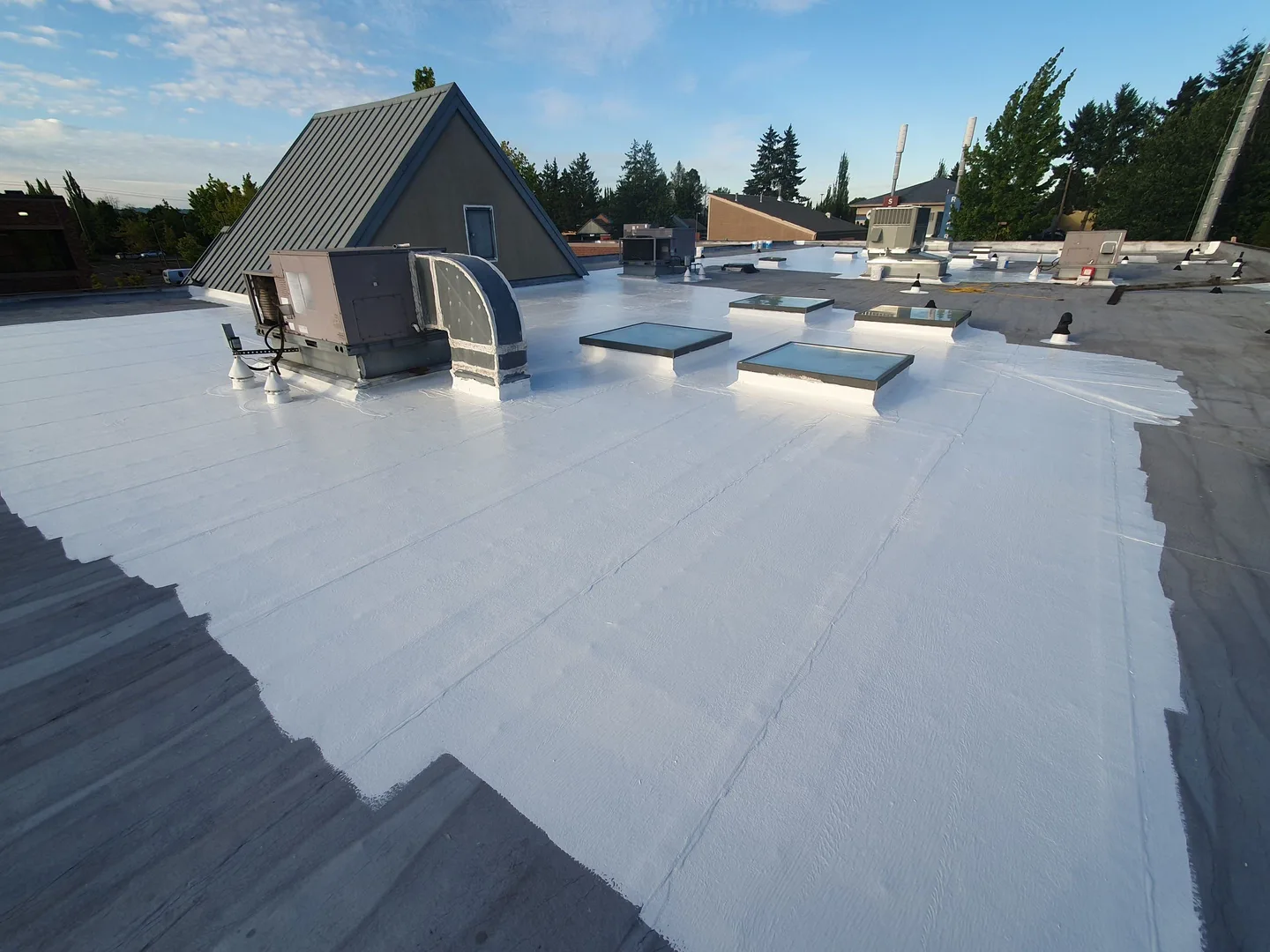
Restoration commonly uses a compatible liquid-applied system over a prepared existing roof. It can preserve useful material and reduce tear-off work. Its success depends on the assembly underneath and the details around seams, drains, parapets, and equipment.
GAF’s silicone-over-asphaltic restoration process calls for moisture investigation and adhesion testing, with wet material replaced before coating. That is guidance for a particular system; the selected manufacturer’s current requirements govern the actual project.
An adequate restoration proposal should identify the existing roof material, wet-area removal, preparation, detail repairs, adhesion results, coating specification, and inspection requirements. A proposal that only names the coating leaves the most consequential work undefined.
What does 25% wet roof area actually mean?
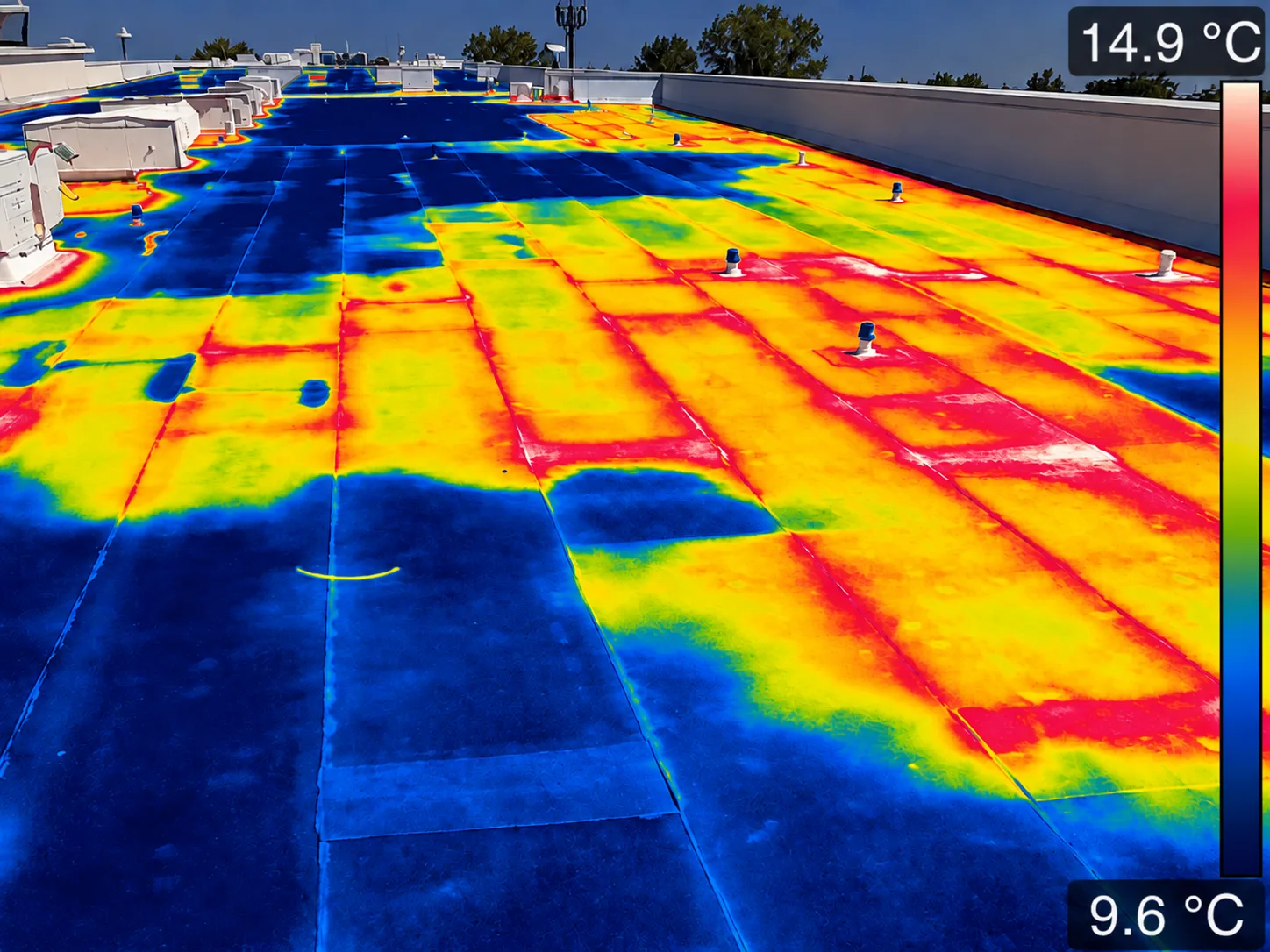
The GAF Liquid-Applied Roofing Manual, version 2.1, page 18, requires complete tear-off when 25% or more of the roof area contains moisture for eligibility for its Liquid-Applied NDL Diamond Pledge Roof Guarantee. It is a requirement for that guarantee, not a universal rule that every roof at 24% can be coated or every roof at 25% must be replaced. Read the GAF manual.
To make the measurement tangible, consider an illustrative 40,000-square-foot roof:
| Confirmed wet area | Share of roof |
|---|---|
| 2,000 square feet | 5% |
| 6,000 square feet | 15% |
| 10,000 square feet | 25% |
The calculation is wet area divided by total roof area. These are examples, not FRSG inspection results. Location matters too: scattered wet sections around equipment may involve a different repair scope from one accessible section of the same area. The investigation method and its limitations should accompany the number.
When replacement becomes the better investment
A Full Reroof becomes more persuasive when the roof cannot support reliable repairs, retained materials are extensively wet, or deterioration is spread across the assembly. Deck damage can change the project substantially: coating does not repair corroded steel, rotten wood, or a structural problem.
Ask the recommendation to distinguish surface deterioration, insulation damage, and deck damage. They are different findings with different consequences. A worn-looking surface is not proof that the deck has failed, and an intact-looking membrane is not proof that everything below it is dry.
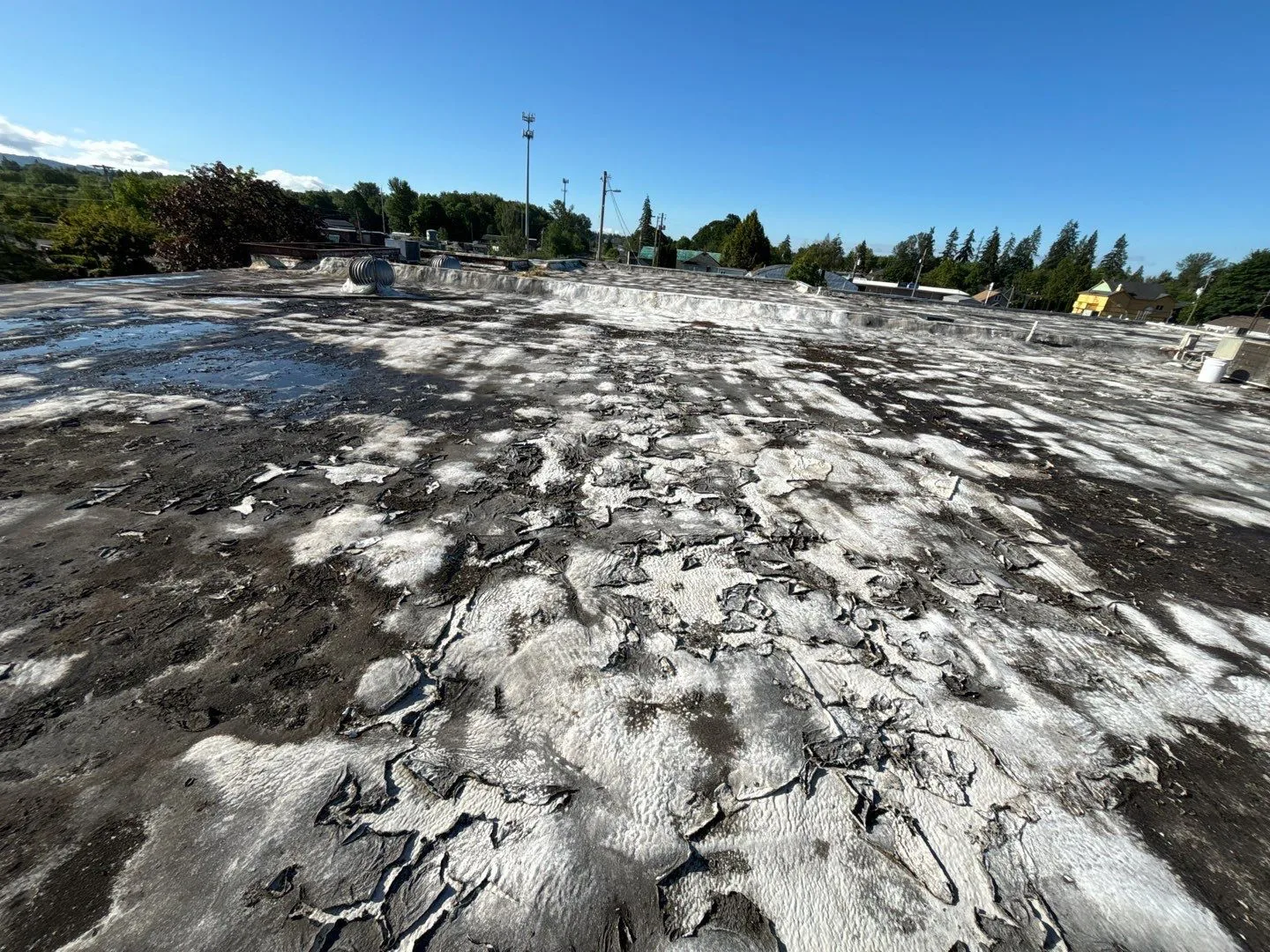
Replacement may mean tear-off or a designed recover, where a new roofing system is installed over eligible existing materials. Recover is different from a coating restoration. The allowable approach depends on the existing layers, loads, material condition, and applicable requirements. The proposal should state exactly what stays and what goes.
What Oregon and Washington weather changes
Western Oregon and western Washington have a pronounced wet season. The 1991–2020 climate normals show 36.91 inches of annual precipitation at Portland International Airport and 39.34 inches at Seattle-Tacoma International Airport. These are station averages, not measurements for every building in either state. Sources: NWS Portland normals and NOAA Sea-Tac normals.
At Sea-Tac, October through March accounts for 29.65 inches, or about 75% of annual precipitation. That percentage is calculated from the NOAA monthly normals: 29.65 ÷ 39.34 × 100. The implication for planning is straightforward: investigate known defects before the wettest months rather than treating a quiet summer as evidence that a leak is fixed.
For a Portland–Vancouver or Puget Sound building, the schedule needs room for investigation, material procurement, preparation, and a suitable application window. Dry-weather averages cannot promise a particular installation date. Rain, dew, substrate moisture, temperature, and curing requirements must be checked against the chosen product and actual conditions.
Make local detail specific to the building
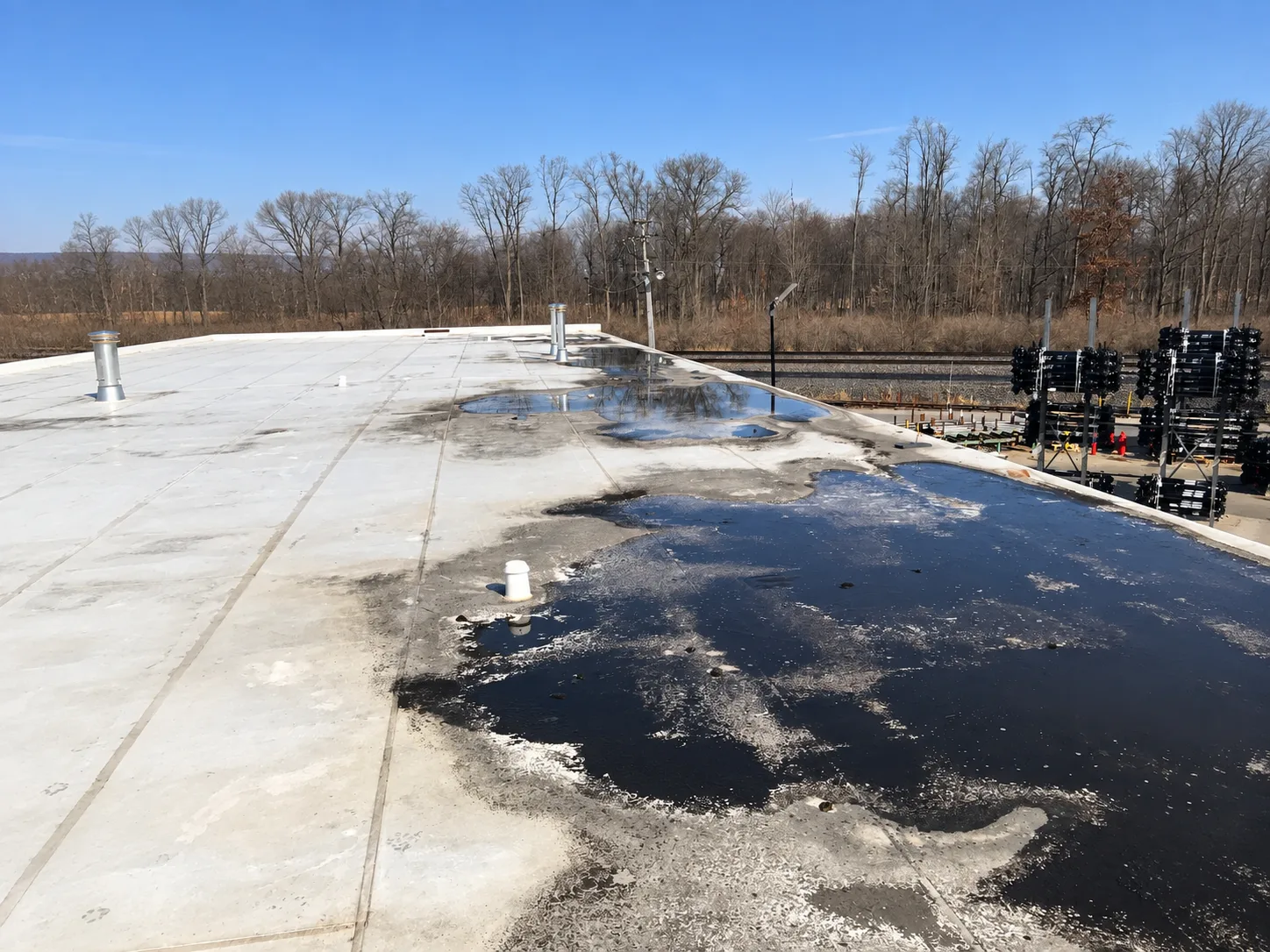
An airport’s rainfall total cannot tell you whether your building’s drains are clear. Record the actual exposure: nearby trees and debris, parapet details, rooftop equipment, recurring ponding locations, and access constraints. Do not apply western airport rainfall figures to an eastern Oregon or Washington property as though the climates were interchangeable.
How to compare costs without a misleading price per square foot
The useful price is for a defined scope on your building. A coating price that excludes wet-insulation replacement cannot be compared directly with a reroof price that includes it. Access, tear-off, equipment details, drainage corrections, and concealed damage can change the total.
For an initial comparison, divide the proposed cost by the period it is expected to serve. These hypothetical figures illustrate the arithmetic; they are not FRSG prices, bids, or service-life promises:
| Hypothetical repair | Assumed additional service | Simple cost per year |
|---|---|---|
| $5,000 | 7 years | About $714 |
| $20,000 | 2 years | $10,000 |
The two examples describe different roof conditions, not competing bids for the same building. The calculation excludes maintenance, future replacement, financing, inflation, and interior damage. It is a way to expose an assumption: what evidence supports the expected years of service? A warranty term is not the same thing as a forecast of roof life.
For actual competing proposals, use the same planning period and list:
- Upfront work and all exclusions.
- Expected maintenance and likely additional repairs.
- Any replacement expected within that period.
- Tenant disruption, access restrictions, and protection of contents.
- Warranty coverage, conditions, and responsibility for follow-up.
Keep documented costs separate from estimates. If one option only bridges the building to a planned renovation, state that explicitly.
What the Roof Inspection should establish
A useful recommendation needs more than a collection of damage photographs. It should explain what was inspected, what remains unknown, and why one option fits better than the others.
Ask for these five decision inputs:
- Existing assembly: material, approximate age, known layers, prior work, and available warranty records.
- Defect map: seams, penetrations, flashings, drainage, and locations of recurring leaks.
- Moisture evidence: investigation method, confirmed affected area, and limits of the findings.
- Repairability: material compatibility, adhesion where relevant, and observable deck concerns.
- Options: what each approach retains, what it removes, its exclusions, and the basis for the expected service period.
Common questions before approving the work
Does a 20-year-old commercial roof automatically need replacement?
No. Age helps frame the investigation, but condition determines whether the roof can be retained. Installation, maintenance, drainage, and the condition of concealed materials all affect the decision. Ask what the inspection found that makes the proposed work necessary.
Can a coating fix a roof that holds water?
A coating does not change the roof’s slope or clear an obstructed drain. Some systems tolerate ponding under specified conditions, but the drainage problem and the assembly beneath the coating still need evaluation. Confirm the selected product’s requirements and the proposed drainage work.
Can part of a roof be replaced while the rest is repaired?
Potentially. Separate sections may have different ages, materials, and moisture conditions. A sectional approach needs workable transitions and drainage details; a roof plan helps establish whether it is practical.
Is restoration always cheaper than replacement?
No. Removing wet areas, rebuilding details, and preparing an unsuitable surface can erode the apparent savings. Compare complete scopes and the period each option is expected to serve. The best recommendation is the one that can explain, with evidence, why the material being retained is worth keeping.
Thanks for your feedback.
About FRSG
Flat Roof Systems Group (FRSG) is a commercial flat-roof repair contractor serving Property Managers across Oregon and Washington. FRSG stops active leaks, makes permanent Roof Repairs with clear documentation and predictable pricing, and proposes a Full Reroof only when an inspection shows that repairing would cost more than it saves. Every visit ends with a Service Record: the problem reported, the work done, and photographs of the roof as FRSG left it.