Article
Why are roof seams opening again after a repair?
Usually because the last repair never rebuilt the bond between the two sheets. It sealed over the seam, skipped steps in the weld, or went onto membrane too old or too wet to take a weld.
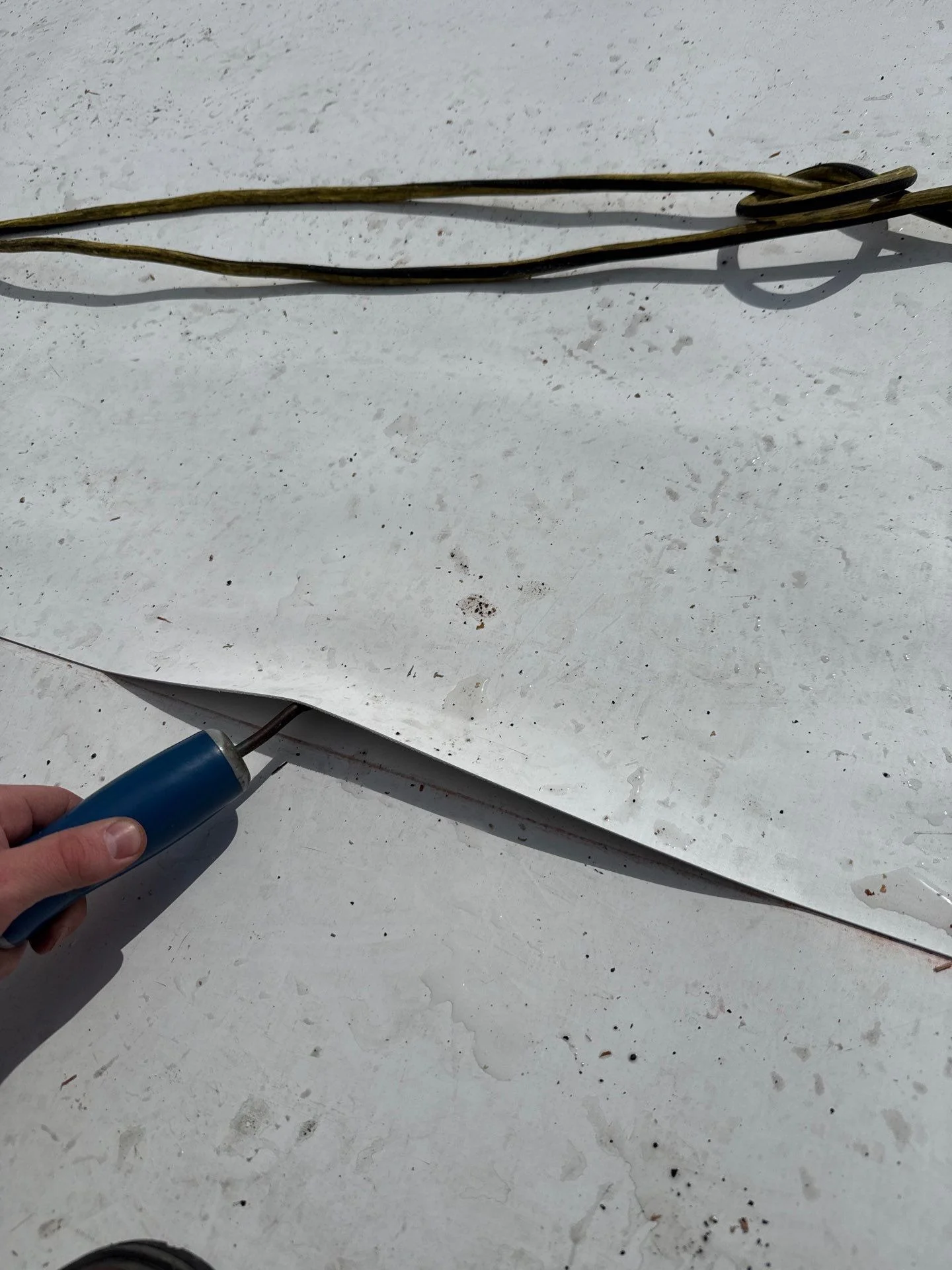
Because the last repair did not join the two sheets back together.
A seam is where two sheets of roofing overlap. On a TPO or PVC roof, the sheets are welded: heated and pressed until they fuse into one piece. When a seam opens, only a new bond fixes it.
Repairs that fail usually skip that bond in one of three ways:
- They cover it. Mastic, caulk, or tape goes over the gap. The sheets underneath are never joined.
- They rush the weld. The seam is welded, but the manufacturer’s cleaning and checking steps are skipped.
- They weld the wrong membrane. The roofing is too old to weld well, or still wet.
Each one looks fine the day the roofer leaves. The seam opens again after a season or two.
How a roofer checks a seam
Roofers check a welded seam with a seam probe, a blunt steel hook. They draw it along the edge of the top sheet. Where the sheets have fused, the probe rides along the edge. Where they have not, it slips in between them.
Carlisle’s guidance on seam probing has installers probe every welded seam once it has cooled. Any spot where the probe gets in is marked and repaired.
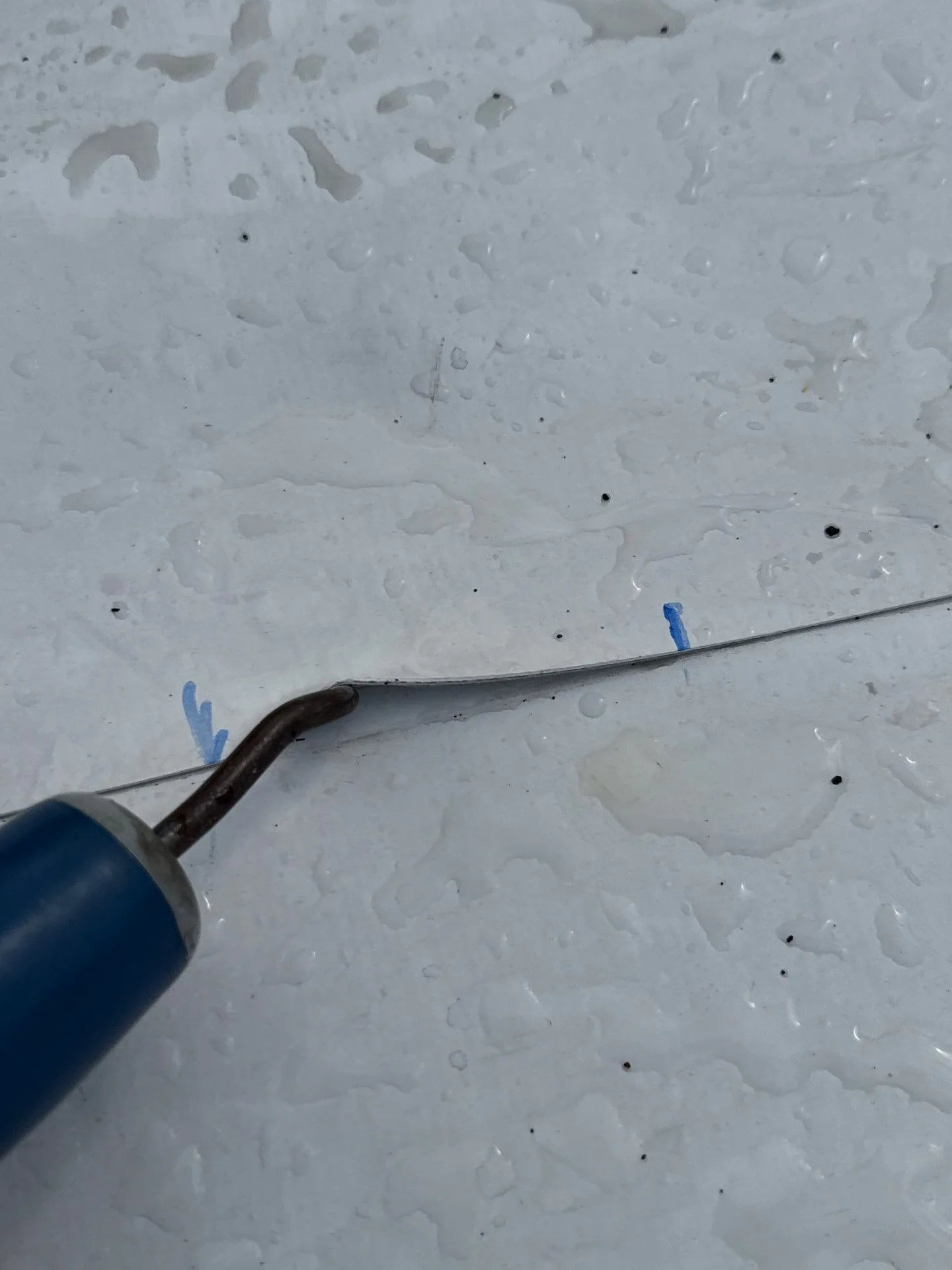
First, make sure it is the seam
On most roofs, the seams are not where the water gets in. Property Managers often point to a seam, and our roofers probe it in front of them to show it is holding. The water more often comes in around pipes, walls, windows, or trim.
This article is about a seam the probe does get into, after it has already been repaired once. If you are still looking for where the water gets in, start with why a flat roof keeps leaking in the same spot.
Mastic over a seam does not close it
The most common temporary fix is mastic, a thick tar-like sealant, spread over the open seam. It is quick, and it stops the water for a while. But it sits on top of the membrane. It does not join the two sheets underneath, and TPO and PVC do not bond well to asphalt-based products. On PVC, Carlisle warns that rubberized asphalt can pull plasticizers out of the sheet and leave it brittle or cracked.
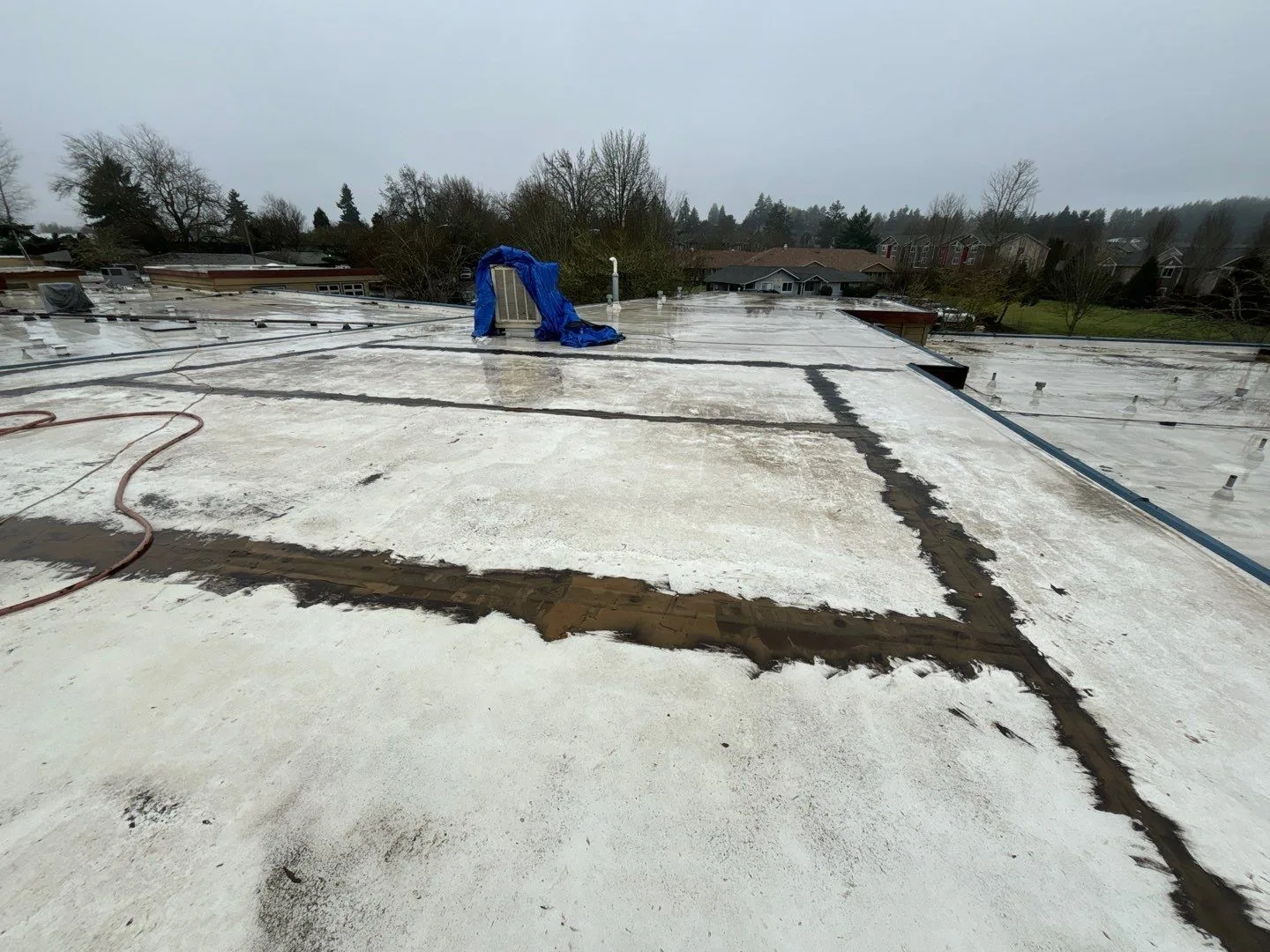
So the seam under the mastic is still open. Once the mastic lets go, water goes straight back in. Mastic also makes the next repair harder: a weld needs clean membrane, so all of it has to come off before the seam can be welded.
What was under the mastic on one roof
The roof in the photo above had mastic over its seams. From the top, it looked like the seams were sealed. When the roofing came up for repair, the plywood deck underneath was soaked and stained across a wide area. In places the plywood and the framing under it had rotted. That was where the water had been getting in.
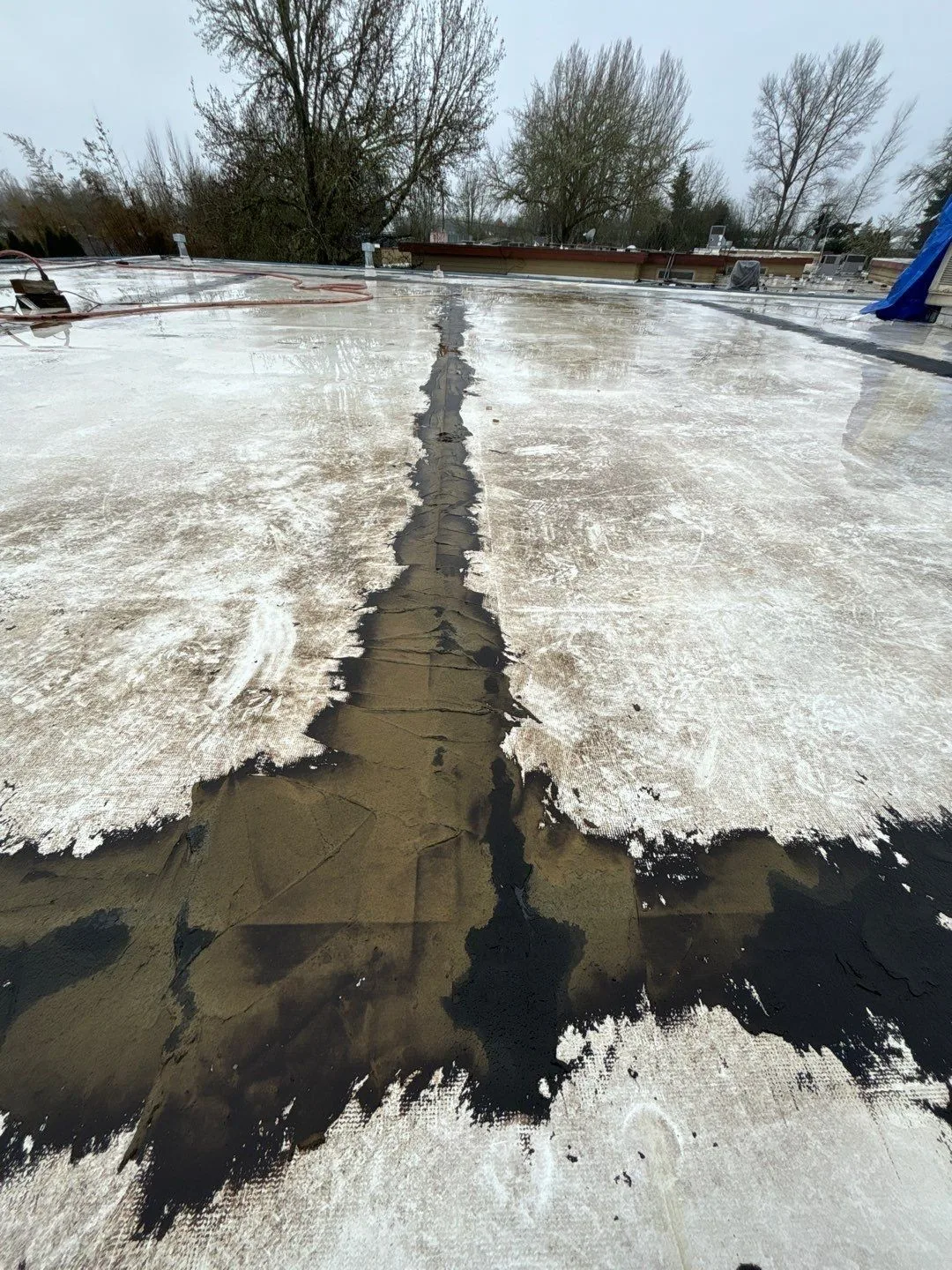
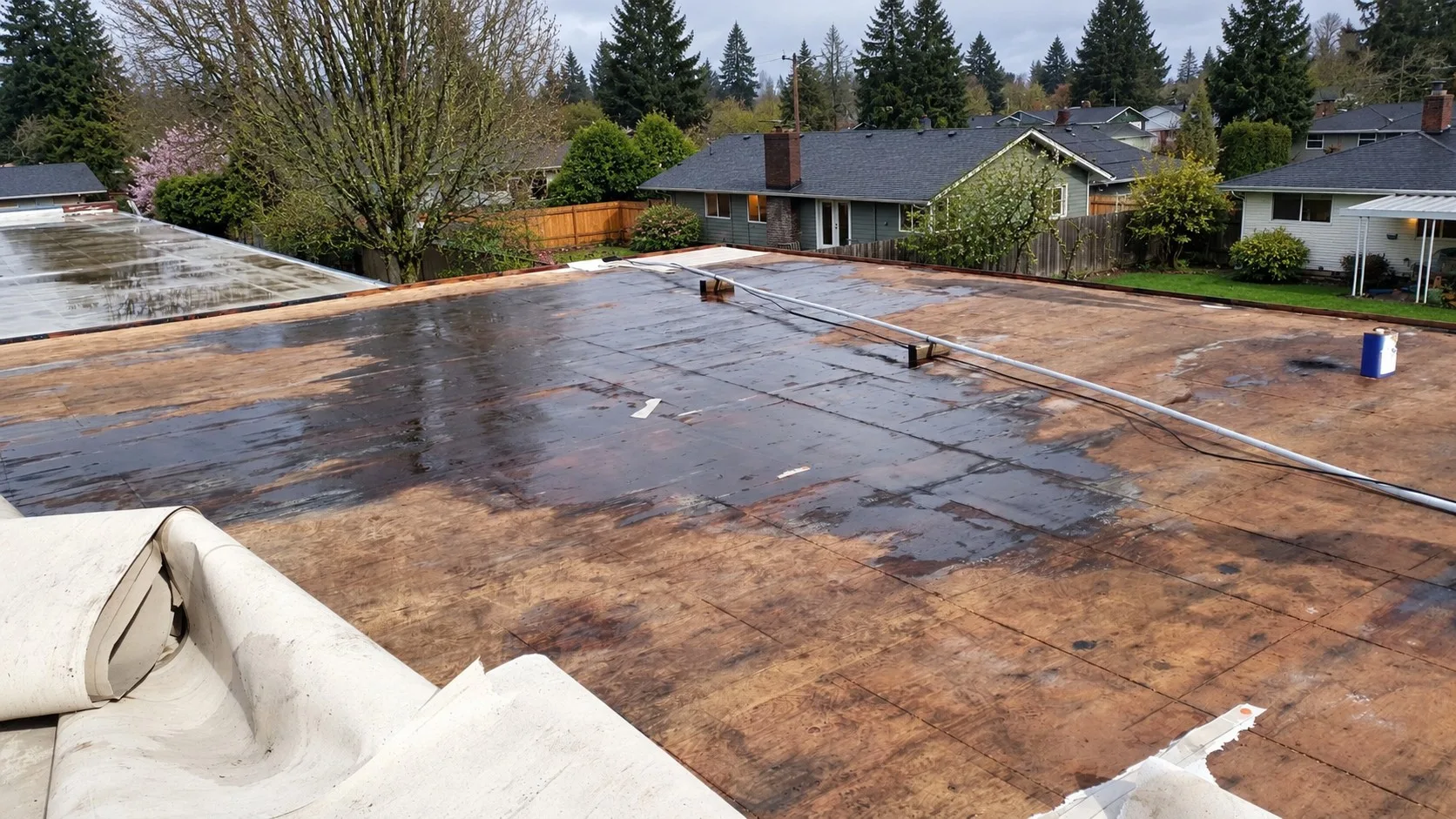
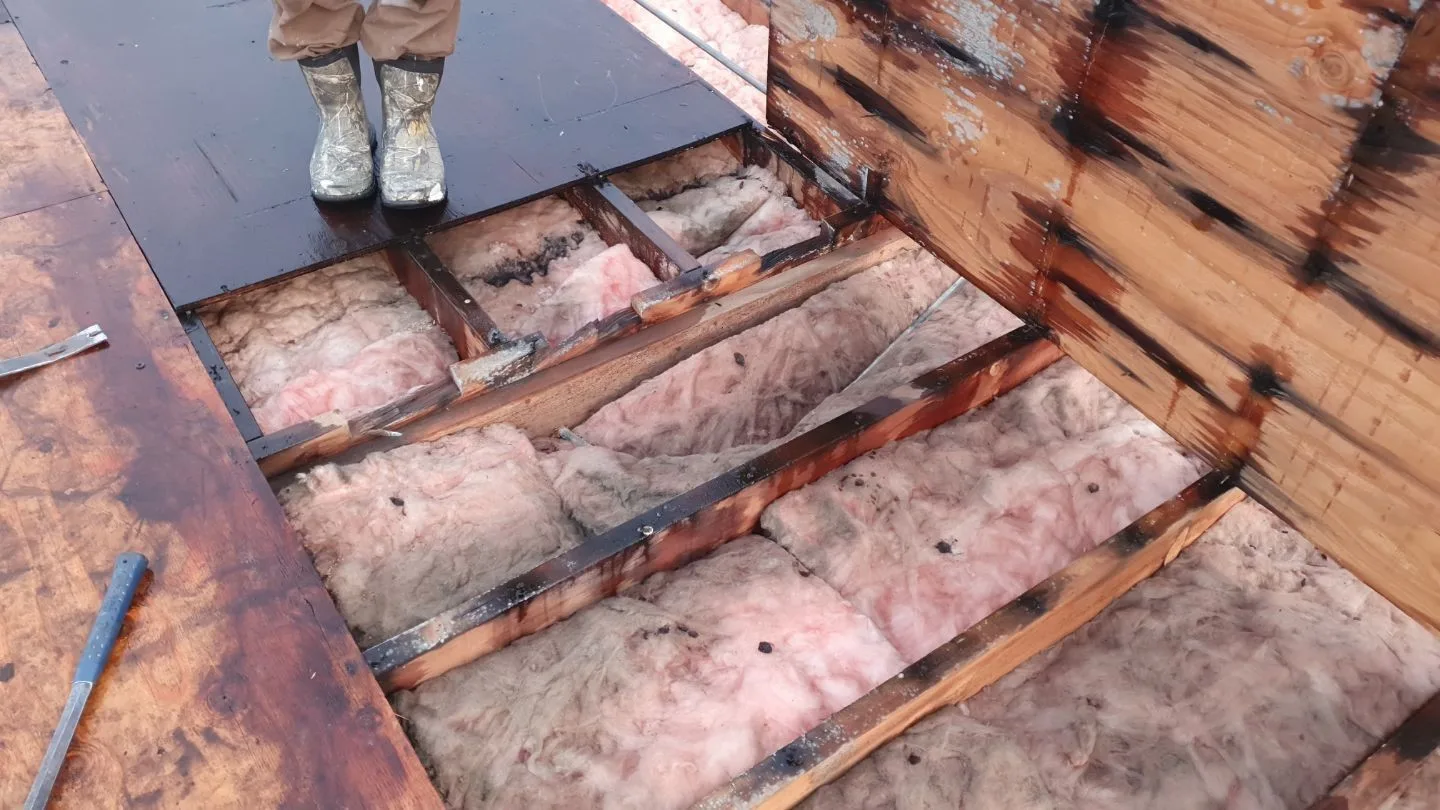
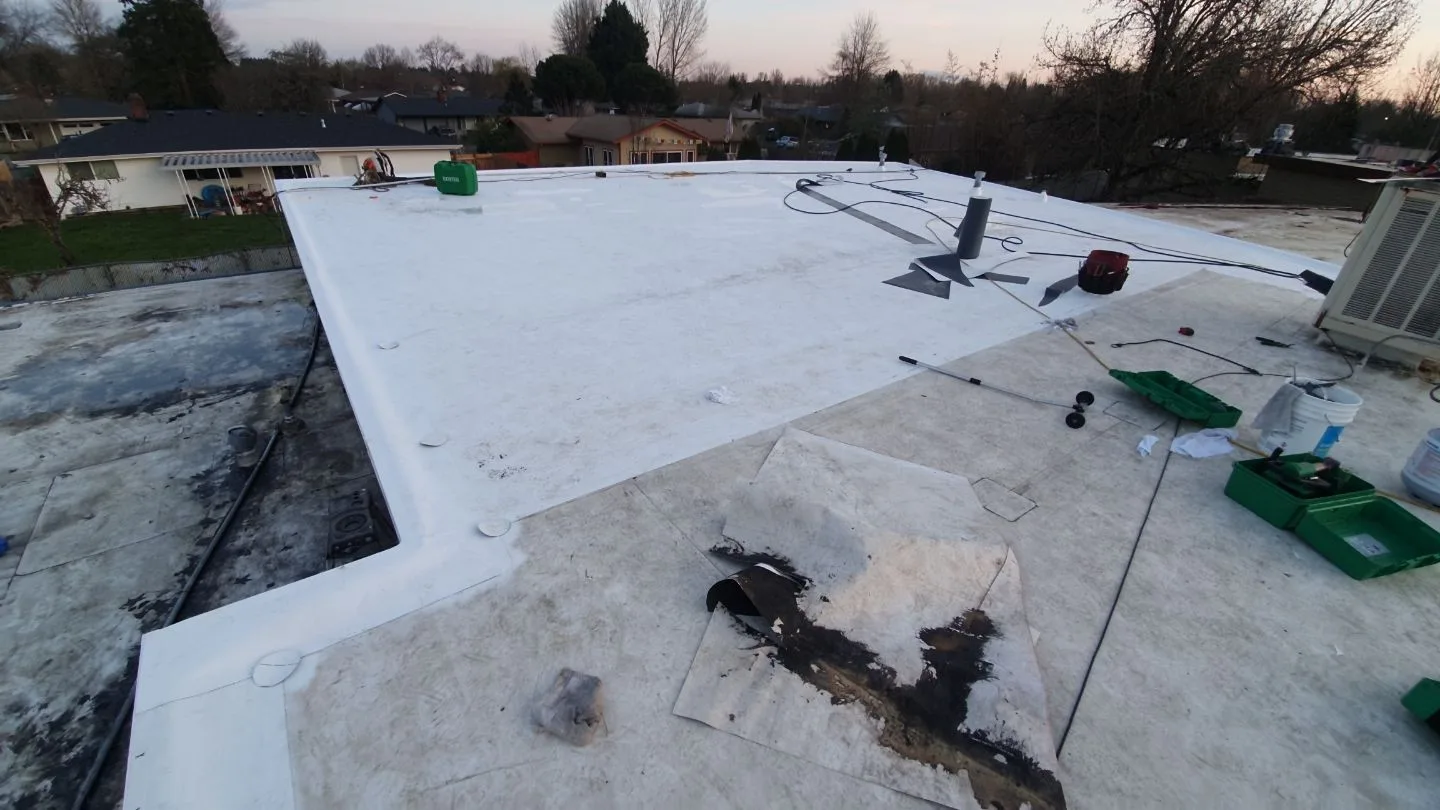
None of that showed from the roof surface. Our roofers have seen the same thing on other roofs: a seam that opened, mastic spread over it, and a deck rotting underneath. The mastic treated the drip, not the open seam.
A weld is only as good as its preparation
Almost every roofer who works on TPO or PVC heat-welds seams. Our roofers see the difference in whether the earlier roofer followed every step in the manufacturer’s instructions. A seam can be welded and still open again if some of those steps were skipped.
The steps are specific. Membrane that has been on a roof for a while carries dirt that stops a weld from taking, so Carlisle makes a cleaner for weathered membrane that gets it back to a surface that can be welded. The roofer cleans the weld area and lets it dry. They run a test weld, which Carlisle asks for every morning and afternoon, to set the welder’s heat and speed. After welding, the seam cools and gets probed. Skip the cleaning and the weld sits on grime. Skip the test weld and the heat is wrong. Skip the probing and nobody knows. Each of those can pass for a good repair on the day it is done.
How a TPO roof patch is heat-welded walks through the full process step by step.
Old or wet membrane will not take a weld
Welding depends on the sheet itself. Once TPO or PVC membrane has been on a roof for somewhere past ten to fifteen years, our roofers find it is often too brittle to weld well. A roofer who welds an aged seam the same way as a new one can get a repair that looks right and does not last.
On membrane that old, our roofers usually repair the seam with silicone instead of a weld. In their experience, silicone bonds better to aged membrane than a new weld does.
Water stops any repair. Nothing sticks to wet membrane: not a weld, not silicone, not tape. Water trapped in the lap or in the insulation under it has to be dried out first. That matters here in the Pacific Northwest, where a repair rushed into a gap between rain showers can go onto a seam that is still damp inside.
What the repair history tells you
Our roofers hear the same story often. The first repair leaks again within six months to a year. The second lasts about two years. After two or three rounds, the owner decides the whole roof needs replacing.
Usually it does not. When the same seam fails after every repair, the problem is the repair, not the roof. So before anyone quotes the next one, find out what the last one was:
- Mastic, caulk, or tape. The seam was never closed. The old material has to come off before the seam can be welded or sealed.
- A weld that opened within a year. Steps were probably skipped. The next weld needs cleaning, a test weld, and probing once it cools.
- A weld on membrane over 10 to 15 years old. The membrane was probably too brittle to weld. Silicone usually holds better.
- Anything done in wet weather. The seam, or the insulation under it, was probably still wet. It has to dry out first.
Every failed round also lets more water into the deck, as it did on the roof above. If the wet area has spread, the question becomes whether repairing still makes sense. Flat roof leaks: what a Property Manager needs to know covers that decision.
Common questions
Does a seam that keeps opening mean I need a new roof?
Not on its own. If the same seam has failed after each repair, look at how it was repaired before looking at the roof. A replacement becomes the question when the membrane is failing across the roof, not at one seam.
Can the old seam just be welded again?
Sometimes. The membrane has to be clean, dry, and young enough to weld. If there is mastic on it, that comes off first. If the membrane is past ten to fifteen years old, a silicone repair is usually the better choice.
Is mastic or tape ever the right call?
As a stopgap in the rain, to keep water out until the seam can be properly repaired, yes. As the repair itself, no. If a roofer puts mastic on a seam, ask when they are coming back to fix it properly.
Why did the last repair hold for a year before failing?
Mastic and poorly prepared welds hold while they are fresh, so they pass a look on the day. Our roofers most often see the first repair fail six months to a year later, and a second attempt last about two years.
What should I ask before approving a seam repair?
Ask what the last repair was, if you do not know. Ask whether the old repair material will be removed, whether the seam will be welded or sealed with silicone and why, and whether the seam will be probed afterward. Ask for photos of the seam before, during, and after the work.
What should I tell the roofer when I call?
Which seam, if you know, and what was done to it before: mastic, tape, a weld, or unknown. When each repair was done and how long it lasted. Whether it leaks in every rain or only heavy, windy storms. Any photos from earlier repairs or earlier roofers help.
Thanks for your feedback.
About FRSG
Flat Roof Systems Group (FRSG) is a commercial flat-roof repair contractor serving Property Managers across Oregon and Washington. FRSG stops active leaks, makes permanent Roof Repairs with clear documentation and predictable pricing, and proposes a Full Reroof only when an inspection shows that repairing would cost more than it saves. Every visit ends with a Service Record: the problem reported, the work done, and photographs of the roof as FRSG left it.