Article
TPO roof leak repair in the Pacific Northwest: when is a patch enough?
A leaking TPO roof may need a welded patch, not replacement. Learn when a patch is enough, what needs checking underneath, and how PNW weather affects repairs.
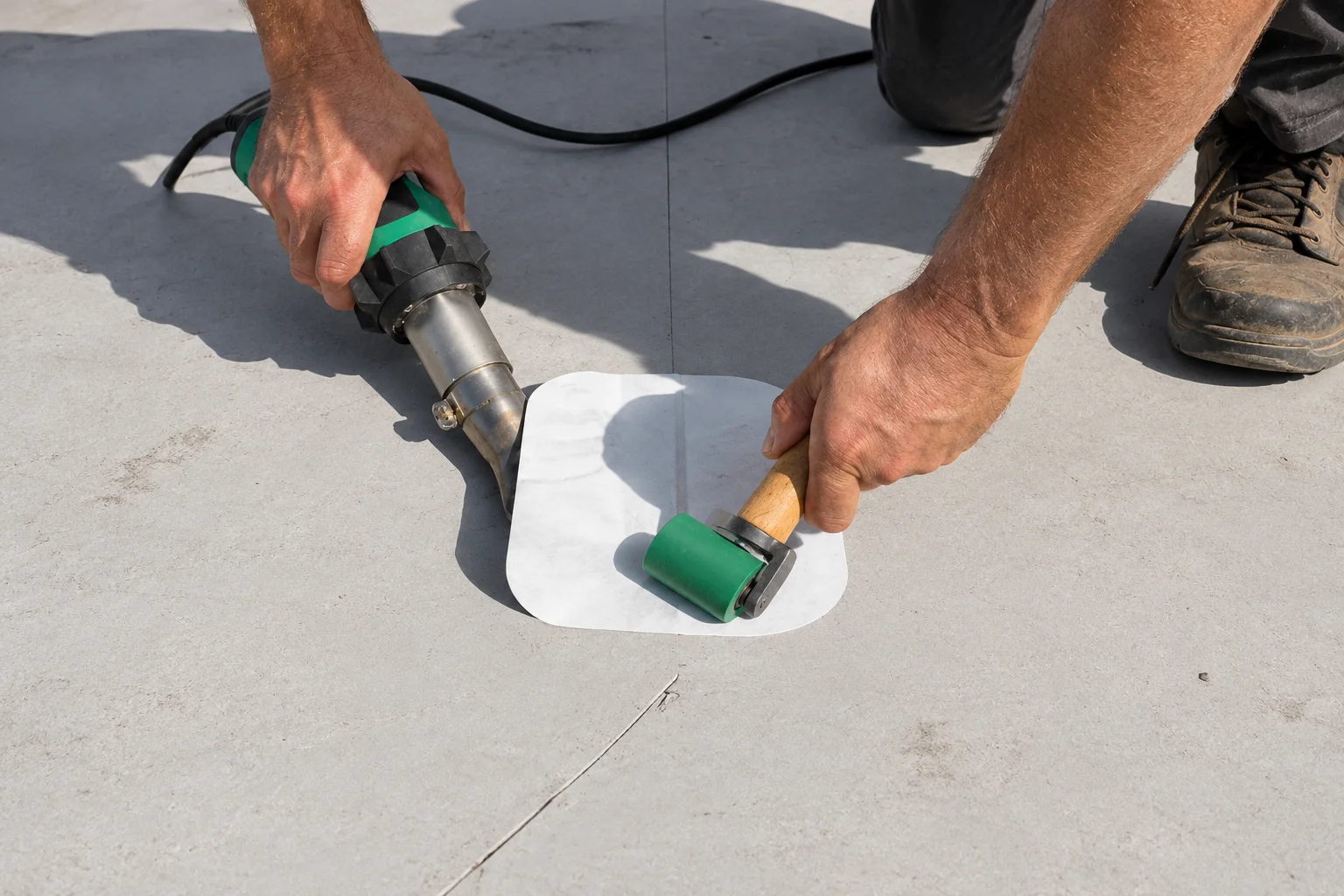
A localized TPO roof leak can often be repaired with compatible membrane heat-welded to the existing roof. A patch is enough only when it addresses the identified defect, connects to suitable surrounding material, and the roof beneath it does not require additional work. TPO is a thermoplastic roofing sheet designed to form welded connections. Carlisle’s TPO membrane information
For a Property Manager, that distinction matters. You need to stop water entering the building, explain the scope to the owner, and understand whether today’s repair leaves something unresolved. The visible size of a patch cannot answer all three questions.
In western Oregon and Washington, there is another practical concern: completing the repair during suitable conditions between periods of rain. The roof findings determine the work; the local weather affects preparation and scheduling.
Why the Pacific Northwest wet season matters
Portland and the Puget Sound region have a pronounced difference between summer and winter precipitation.
| NOAA climate normal, 1991–2020 | Portland International Airport | Seattle–Tacoma International Airport |
|---|---|---|
| Annual precipitation | 36.91 inches | 39.34 inches |
| July precipitation | 0.50 inches | 0.60 inches |
| December precipitation | 5.77 inches | 5.72 inches |
These are station averages, not forecasts or measurements at your building. They describe two western Pacific Northwest locations; coastal, mountain, and inland conditions differ. Sources: Portland airport normals and Seattle–Tacoma airport normals.
At Sea-Tac, October through March account for approximately 75% of normal annual precipitation: 29.65 inches divided by 39.34 inches, calculated from NOAA’s monthly values. November averages 18.4 days with at least 0.01 inch of precipitation. NOAA monthly normals
The practical implication is that an unresolved opening may encounter repeated rain throughout the season. A leak that stops during a dry spell still needs an explanation. Known defects are worth assessing before the wetter months; an active leak needs attention when it appears.
For the first steps when water is already coming inside, the flat roof leaks guide explains what a Property Manager can document and how leak control fits into the larger repair process.
What actually needs repairing on a TPO roof?
TPO stands for thermoplastic polyolefin. The main sheets cover the roof, while flashing details waterproof transitions around equipment, pipes, walls, and drainage outlets. The inspection needs to distinguish damage to a sheet from failure at a connection.
GAF’s single-ply field guide identifies conditions including seam voids, fastening problems, and defects around flashings and drains. A repair should address the actual finding. GAF single-ply field guide
| Finding | What the proposed scope needs to explain |
|---|---|
| Puncture or tear in the main sheet | The damaged area and whether its support underneath needs attention. |
| Opening in a welded seam | How far the failed connection extends and how it will be repaired. |
| Defect around a pipe or equipment curb | Which flashing or connection has failed. |
| Problem at a drain or roof edge | Whether the work includes the full affected connection. |
| Multiple defects | Why isolated repairs remain appropriate, or why a larger scope is needed. |
Ask: “Can you show me the defect and explain why this repair addresses it?” A photograph of a white patch alone cannot answer that question.
The ceiling stain is a starting point
The place water appears indoors is not necessarily where it entered the roof. GAF’s leak-investigation guidance notes that water can migrate along metal deck flutes. It also identifies condensation as a possible source of apparent leaks in some assemblies. The guidance appears in a coating maintenance document, but the diagnostic distinction is relevant: trace the interior symptom to its source before choosing the repair. GAF leak-investigation guidance
Before the visit, gather photos showing the leak’s location in the room, when it appeared, whether it happens during rain or dry weather, previous repair records, and details of recent rooftop equipment work. “Water above the stockroom doorway during the last two storms” gives the contractor a more useful starting point than “the roof leaks near the back.”
Interior observations can help without sending staff onto a wet roof. Leave rooftop investigation to personnel equipped for safe access.
What does a welded TPO patch do?
A compatible patch covers the defect and is heat-welded to suitable surrounding membrane. The roofer heats the contacting surfaces, rolls them together, and checks the cooled connection. Whether that is enough depends on the extent of the defect and the condition of the roof underneath.
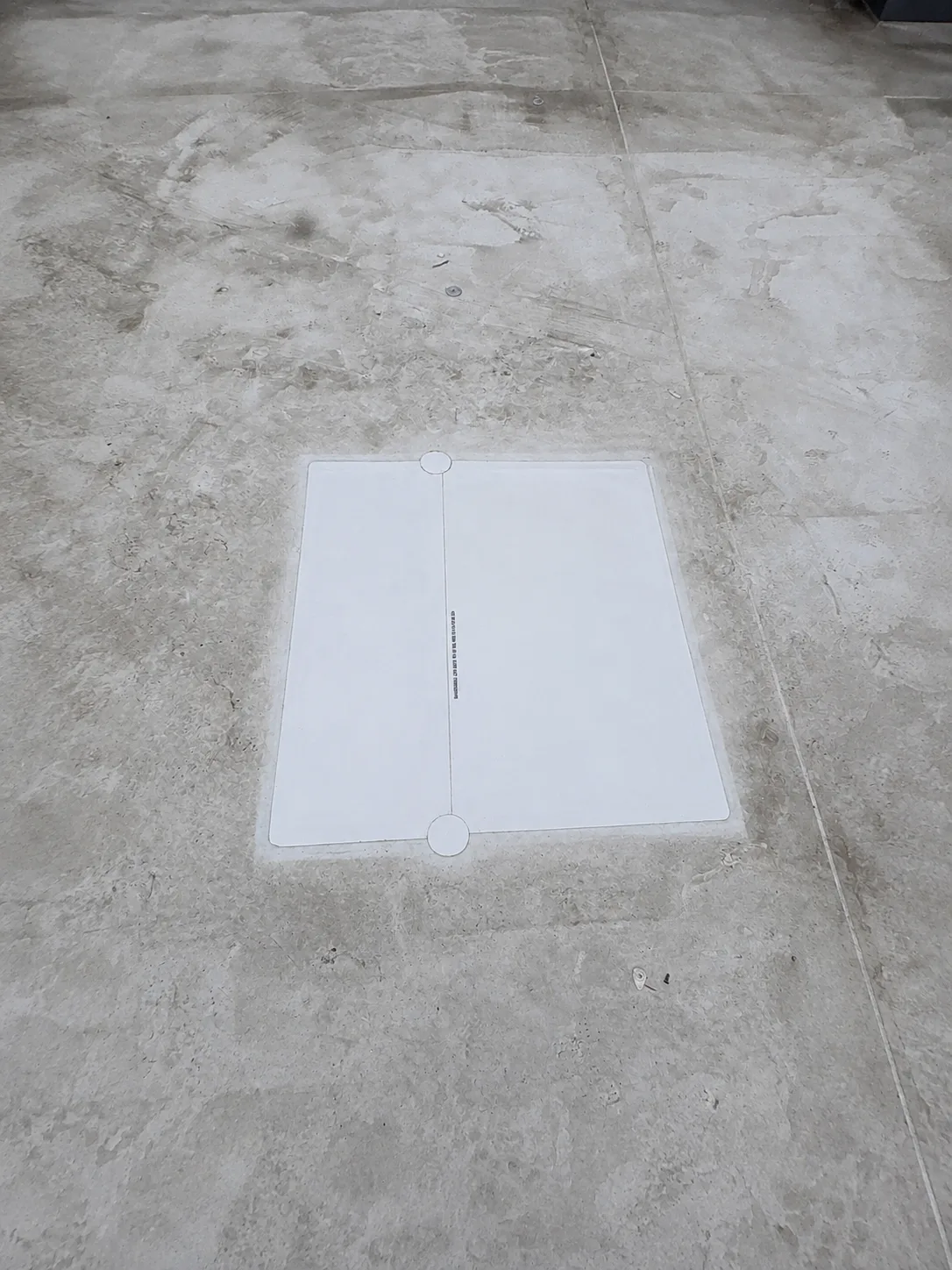
Want to see exactly how the patch is made? Our separate resource, how a TPO roof patch is heat-welded, step by step, explains surface preparation, patch selection, test welds, welding, and the final seam check, with a diagram of the repair.
Can TPO be repaired during a Pacific Northwest winter?
Winter does not automatically mean waiting until spring, but conditions must support the selected repair. A pause in rainfall can still leave dew, frost, or standing water. GAF’s cool-weather guidance requires a clean, dry substrate without ice or water and calls for welding checks after significant weather changes. GAF cool-weather guidance
Distinguish temporary leak control from the completed Roof Repair. If conditions prevent completion, ask what was done on the first visit, whether it is temporary, what remains, and which conditions are needed for the return. That gives you something clear to communicate to the owner and tenants.
When is a local patch enough?
A local repair is worth considering when the investigation identifies a limited defect and the surrounding roof can support the specified repair. Age alone does not settle that question.
GAF studied samples from 20 aged TPO roofs across the United States. Its reported testing supported the ability to make effective repair welds to the sampled aged membranes. That is evidence that older TPO can remain repairable; it is not a Pacific Northwest failure-rate study or a guarantee for every product and roof. GAF aged-TPO study summary
Where moisture below the membrane is suspected, ask how it will be investigated and how the findings would change the proposal. A surface patch addresses an opening; it does not itself establish that concealed materials can remain in place.
Can you use silicone on a TPO leak?
Do not assume that a silicone-and-mesh repair used on torch-down is the appropriate detail for TPO. Our torch-down repair case study concerns a different roofing material and scope.
Manufacturer-designed coatings for aged TPO do exist. GAF’s silicone specification, for example, requires moisture assessment, replacement of wet areas, repairs with like materials, and adhesion testing before coating. Those requirements describe a defined system, not approval for an arbitrary silicone patch. GAF liquid-applied roofing manual, aged-TPO specification
If a proposal recommends coating, ask why it fits the existing membrane, how adhesion will be checked, and how defects will be repaired before the coating goes on.
How much does TPO roof leak repair cost?
A meaningful price starts with a defined scope. The visible patch size is only one part of the work. A regional average cannot tell you whether your proposal includes finding the source, correcting a flashing detail, or addressing concealed damage.
| Proposal item | What you need to understand |
|---|---|
| Investigation and access | How the source will be located and the roof accessed. |
| Membrane repair | Which locations, defects, and materials are included. |
| Flashing or drainage work | Whether connected problems need separate correction. |
| Concealed conditions | What is known and how additional work will be approved. |
| Follow-up | Whether another visit is expected or included. |
| Documentation and warranty | What you receive and which written terms apply. |
An unexplained “patch roof” line gives you little to compare. Ask: “What exactly are we fixing, what remains uncertain, and what could change this price?” For the larger budgeting decision, the repair, restoration, and replacement comparison explains how different findings lead to different scopes.
What if the roof already has a warranty?
Find the issued warranty and follow its leak-reporting and repair requirements. Coverage and procedures depend on that document. Carlisle, for example, provides a dedicated warranty service and leak-reporting portal. Carlisle warranty services
Have the installation information, previous service records, and leak photos ready. Tell the inspecting contractor about any active warranty before the work is selected. Ask which warranty, if any, applies to the proposed repair, rather than assuming the existing roof warranty and new repair terms are the same.
What should you receive after the repair?
A useful Service Record identifies the reported problem, repair location, work completed, photographs, and status when the contractor leaves. It should make any remaining concerns or temporary work understandable.
For a TPO patch, ask for the original defect and completed repair to be documented, along with the checks performed. Follow up on whether water returns during subsequent rain, and keep that information with the building’s roof records.
You should be able to tell the owner what failed, what was repaired, and what still needs attention. The right repair scope starts with that explanation; the patch is the visible result.
Thanks for your feedback.
About FRSG
Flat Roof Systems Group (FRSG) is a commercial flat-roof repair contractor serving Property Managers across Oregon and Washington. FRSG stops active leaks, makes permanent Roof Repairs with clear documentation and predictable pricing, and proposes a Full Reroof only when an inspection shows that repairing would cost more than it saves. Every visit ends with a Service Record: the problem reported, the work done, and photographs of the roof as FRSG left it.