Article
What photos should I send a roofer about a leak?
A few general photos from inside are plenty: where the water is showing up, and what the spot looks like up close. The photos that explain the leak are on the roof, and you get those in the Roof Report.
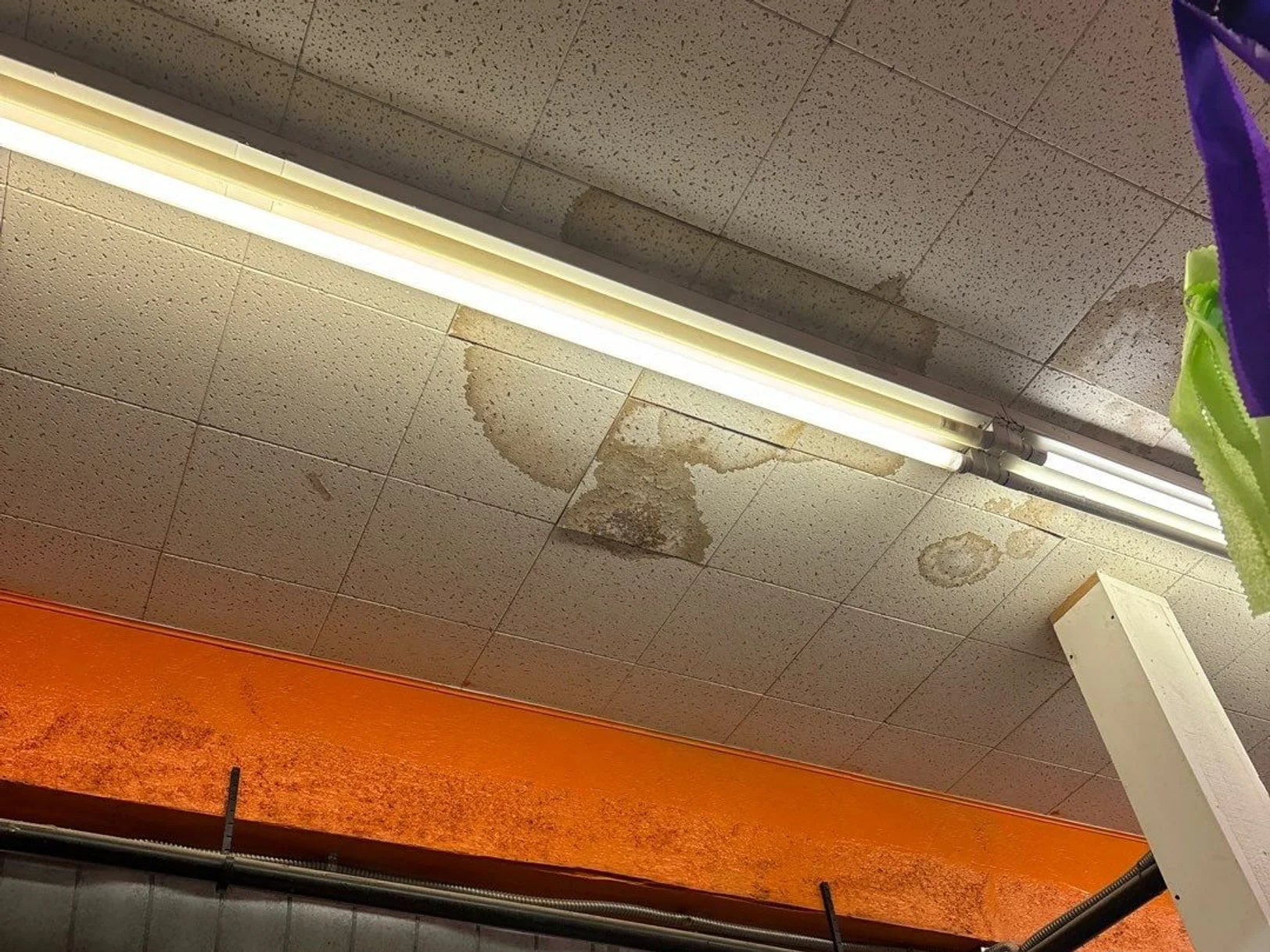
A few general photos from inside the building are plenty. Get one of where the water is showing up, with enough of the room in it to tell where that is, and one a bit closer to the spot itself. They do not need to be good photos. A phone and a minute is enough.
It also helps to mention when it leaks: in every rain, only when it is windy, or on dry days too.
The photos that explain why it is leaking are on the roof. A roofer knows what to look for up there, and you get to see those photos too.
If it is leaking right now
You do not need photos to get a crew out. LeakStop puts a crew on your roof to stop an active leak, for a fixed price you see before you pay. If the leak is still letting water in when they leave, you get a full refund.
There are two ways to book it:
- Emergency: on your roof 2 to 4 hours after you pay, any hour of any day.
- Within 24 hours: on your roof within a day, at a time set with you.
LeakStop covers Portland, Hillsboro, Lake Oswego, Vancouver, Camas, Tacoma, and the cities around them. Emergency arrival is not offered at every address, so enter yours on the LeakStop page to see which options you can book and the exact price.
Once you book, you do not have to manage the visit yourself. A roofing specialist calls you and walks you through the whole process.
When the crew is done, you get a Service Record of the visit, with photos of everything:
- How the crew stopped the leak
- What they found on the roof
- What the technician diagnosed as the cause
- A Roof Report on the condition of the whole roof
If water is coming in now, that is all you need to do. Book it, and the specialist takes it from there. If it can wait, the photos below are a good place to start.
What makes a photo from inside useful
Two things: where the spot is, and what it looks like.
For where, step back and get something in the frame that places it, like a wall, a door, a beam, or a row of lights. A close-up of a brown ring could be anywhere in the building.
For what it looks like, move in a little. If a pipe, duct, vent, or light runs through the ceiling near the stain, get that in the photo too. Anything that goes up through the roof is a common place for water to get in, so it gives the roofer a place to start.
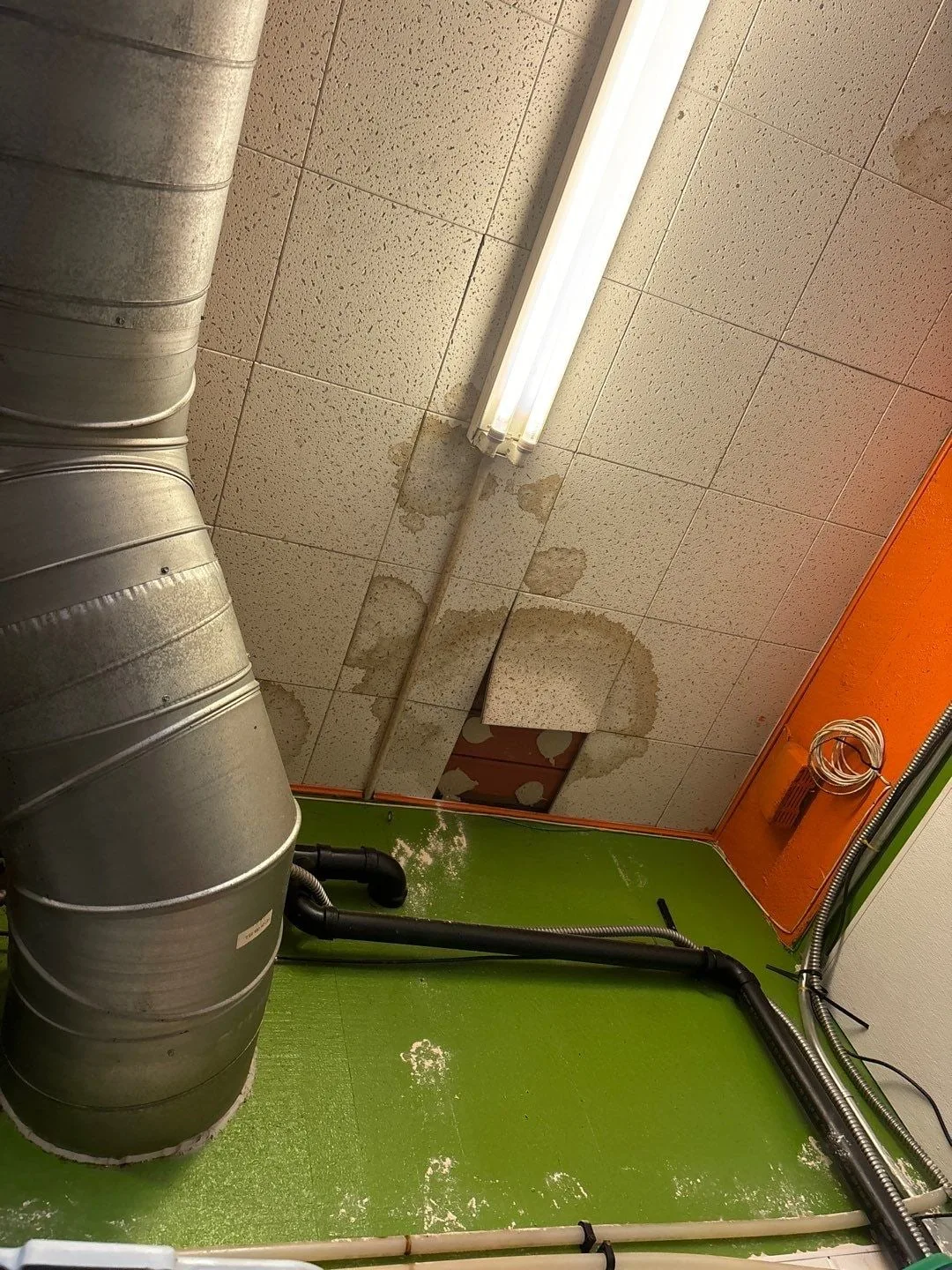
Rings inside rings, like these, usually mean the spot has got wet and dried more than once. The leak may be older than it looks.
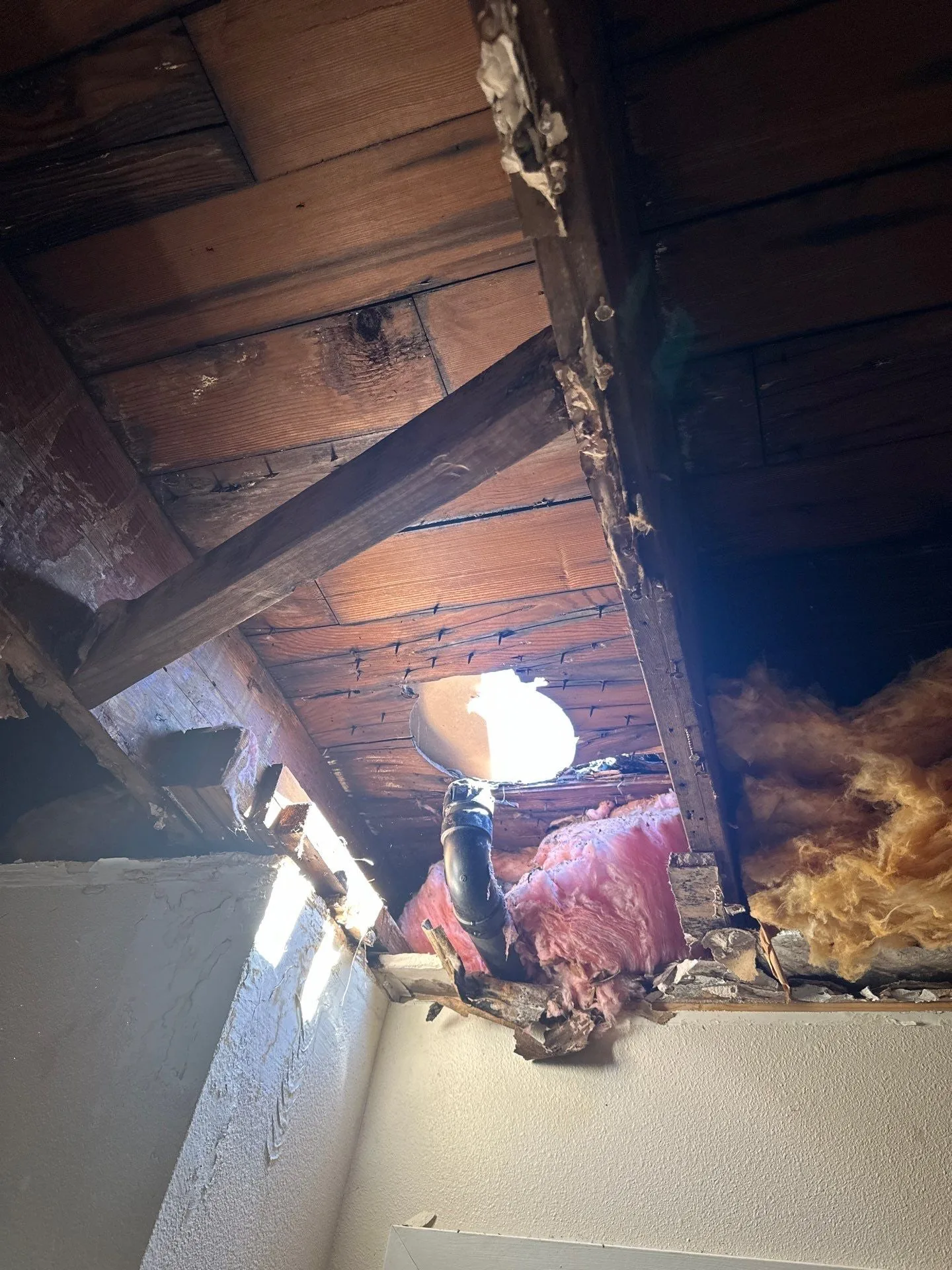
If a tile has already come down, a photo pointing straight up can show a lot.
If water is dripping, a few seconds of video shows how fast it is coming in.
Why a roofer still has to go up
Photos from inside show where the water ends up. They cannot show where it gets in.
Water runs along the roof deck and the insulation before it comes through the ceiling, so the opening can be several feet from the stain. Why does my flat roof keep leaking in the same spot? explains how.
When it leaks helps narrow it down. A leak that only shows up in wind-driven rain points to different places than one that shows up in every rain. A leak on warm, dry days while the air conditioning runs is usually the rooftop HVAC unit, not the roof.
Past that, it takes someone on the roof who knows what they are looking at.
You still see the roof
FRSG photographs the roof and puts those photos in a Roof Report. Each photo comes with a short note on what it shows, and each finding is marked where it sits on a map of the roof. You go through it on your phone, one item at a time, and see what the roofer saw.
A Roof Inspection comes with one, at no charge, within four business days of booking. So does every LeakStop.
Common questions
Should I wait until I have photos before I call?
No. Photos help, but a roofer can find a leak without them. If water is coming in, book LeakStop and let the specialist take it from there.
Do I need to go on the roof to take pictures?
No. Photos from inside are enough to get a roofer started, and the roofer’s photos from up there come to you in the Roof Report.
How many photos should I send?
Two or three for each wet area. More shots of the same stain from the same angle do not add much.
Can a roofer tell what is wrong from my photos?
Not for certain. Your photos show where the water ends up and roughly how long it has been going on. Where it gets in is on the roof.
The stain is dry. Is it still leaking?
A photo cannot tell. Take the same photo from the same spot after the next rain. If the stain has grown or a new ring has appeared, water is still getting in.
Water is coming through a light fixture. Should I photograph it?
From across the room, sure. Keep people out from under it, and leave the fixture to whoever handles your electrical. OSHA’s electrical safety guidance is to have a qualified electrician check wet electrical equipment before it is turned back on.
Thanks for your feedback.
About FRSG
Flat Roof Systems Group (FRSG) is a commercial flat-roof repair contractor serving Property Managers across Oregon and Washington. FRSG stops active leaks, makes permanent Roof Repairs with clear documentation and predictable pricing, and proposes a Full Reroof only when an inspection shows that repairing would cost more than it saves. Every visit ends with a Service Record: the problem reported, the work done, and photographs of the roof as FRSG left it.