Article
How do I know a roof repair worked?
Check the spot that leaked after the next heavy rain. If it stays dry, the repair worked. Until then, the before and after photos show you what was fixed.
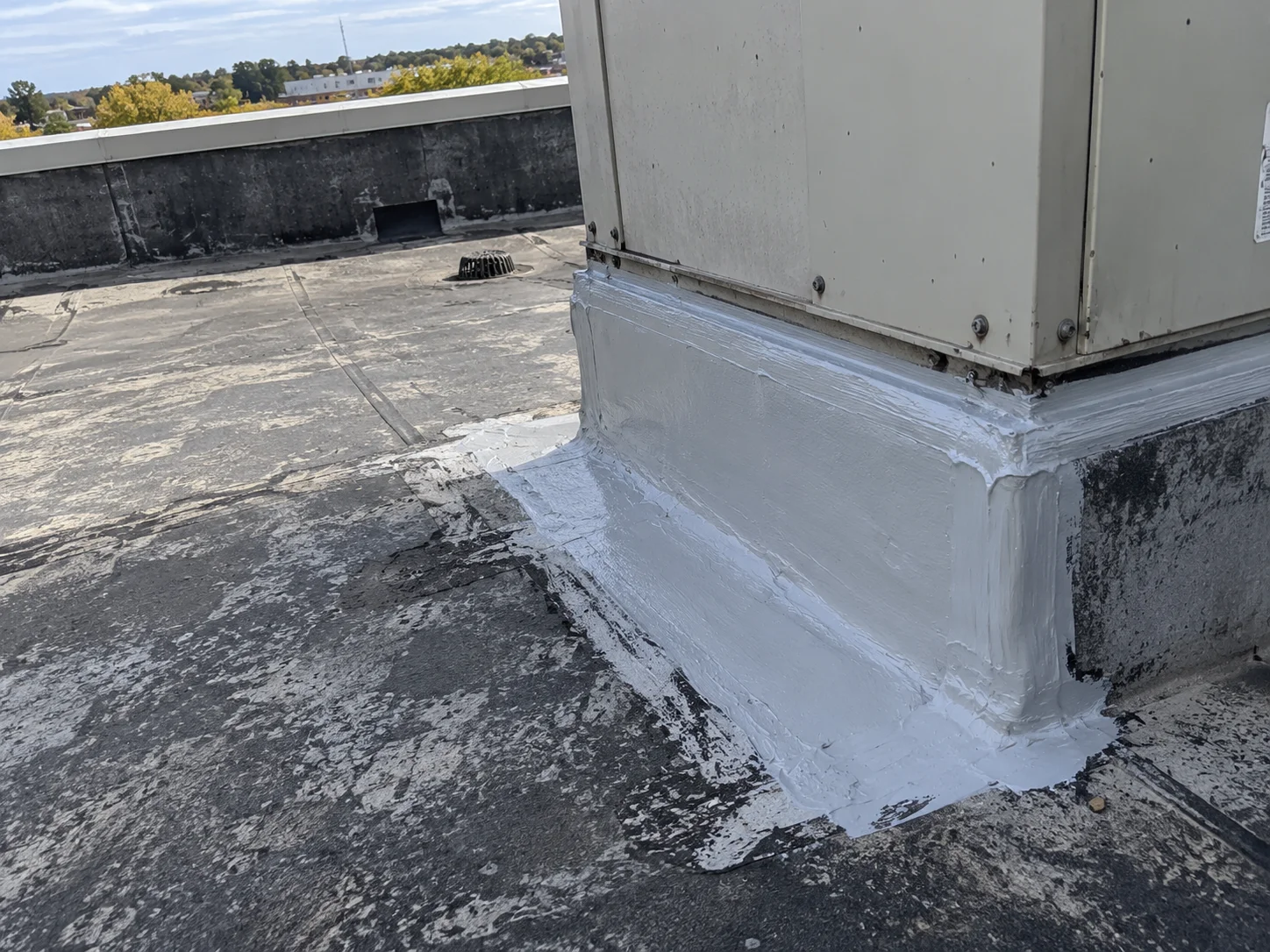
The next heavy rain tells you. After it, go look at the spot that leaked. If it’s dry, the repair worked.
Until then, you have the photos. We send before and after pictures of every repair, so you can see what was wrong and what we did about it without climbing onto the roof yourself.
Wait for the right kind of rain
A dry week doesn’t tell you anything. It just didn’t rain.
The real test is the same weather that caused the leak. If it leaked in a long, heavy storm, a light shower won’t prove much. If it only leaked when wind drove the rain in from one side, wait for that wind. Why a flat roof leaks in wind-driven rain explains why the direction matters.
Here in the Pacific Northwest, that can take a while. A leak fixed in July might not get a real test until the first big storm in the fall.
When the rain does come, check that day or the next morning. Water can take a few hours to work its way down to the ceiling.
Take a photo of the stain today
The day the repair is done, take a picture of the stain from wherever you’re standing. After the next big rain, stand in the same place and take another one.
It sounds like overkill, but a stain you walk past every day can grow without you noticing. Put the two photos side by side and you will.
The stain won’t go away, and that’s fine
Fixing the roof stops new water. It doesn’t erase the old water. A brown ring on the ceiling stays brown, so it doesn’t mean the repair failed. What matters is whether it gets wet again or gets bigger. Touch it after the next heavy rain. If it’s dry, the repair is holding.
The tile or drywall might stay damp for a while after the roof is fixed, and you might notice a musty smell. That’s old water drying out, and a fan on it for a few days usually takes care of it. If the water sat long enough to rot wood, though, stopping the leak doesn’t undo that. Rotted wood is its own repair.
Once the spot has stayed dry through a real storm, go ahead and repaint or swap the tile. Then if a stain ever shows up there again, you’ll know it’s new.
Look at the before and after photos
Some of the most important checks happen on the roof, where you can’t see them. A good roofer makes sure they found where the water gets in, not just where it drips out. Then they make sure the repair is sealed all the way around. On a TPO roof, for example, the patch is welded on with hot air, and once it cools the roofer runs a probe along the edge looking for gaps. How a TPO patch is welded and checked walks through it.
You can’t watch any of that from the parking lot, which is what the photos are for. Every FRSG repair comes with a Service Record: one link with the problem you reported, what we did, and the before and after photos.
You don’t need to know roofing to read it. The before photo should show something actually wrong, like an open seam or a cracked boot around a pipe, not just a stretch of roof. The after photo should show that same spot fixed. And the spot should make sense for your leak. It’s usually above it or close by, since water can run along the roof before it drips through. Why does my flat roof keep leaking in the same spot? explains how far it can travel.
If something in the photos doesn’t add up, ask us. Whoever found the leak should be able to point to where the water was getting in.
If water comes back
Text or call us the day it happens. Send a photo from the same spot you took the first one, and tell us when it started, what the weather was doing, and whether it’s the same spot or a new one.
Our repairs are warrantied for at least a year, in writing. If the spot we fixed leaks again, we come back to it.
If it’s a new spot, it’s most likely a different opening. Our roofer puts it this way: a roof is only as good as its weakest point. A repair fixes one spot. It doesn’t make an old roof new again. If new spots keep opening up, it might be time to look at repair, restoration, or replacement.
Common questions
How long until I know for sure?
One heavy rain like the one that caused the leak is a good first sign. Getting through a whole wet season without a drip is about as sure as it gets.
Do I need to go on the roof to check?
No. Everything you need is in the photos and on your ceiling.
Another roofer did the repair. How do I check it?
The same way. Ask them for before and after photos, and check the ceiling after the next heavy rain. If they can’t show you what they fixed, make a note of that. How to record a recurring roof leak covers what’s worth keeping.
Thanks for your feedback.
About FRSG
Flat Roof Systems Group (FRSG) is a commercial flat-roof repair contractor serving Property Managers across Oregon and Washington. FRSG starts with a free Drone Check, fixes leaks and clears roofs with Roof Service, makes permanent Roof Repairs with clear documentation and predictable pricing, and proposes a Full Reroof only when repairing would cost more than it saves, with RoofCare to look after the new roof for up to 15years. Every repair ends with a Service Record: the problem reported, the work done, and photographs of the roof as FRSG left it.