Article
What roof records are useful before an inspection?
None are required to book. If you have them, the roof's age, warranty, and repair history help the roofer read what they find.
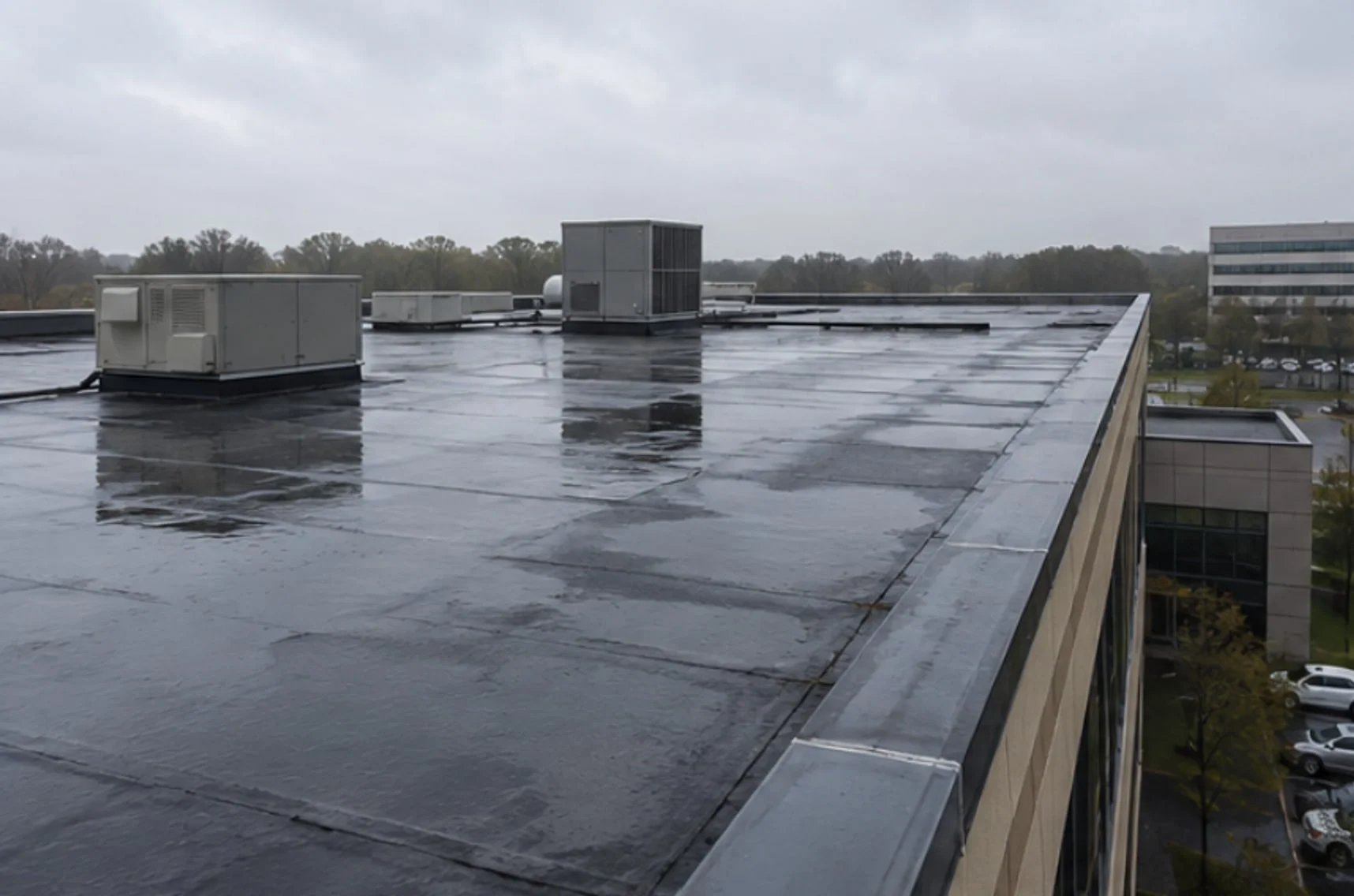
You don’t need any records to order a Roof Report. The inspection looks at the whole roof either way. But if you have any of these, they help the roofer understand what they find:
- The roof’s age, even a rough guess.
- Who installed it.
- The warranty, if there is one.
- Past repairs: when, who did them, what they used, and what they cost.
- Earlier Service Records, Roof Reports, and proposals from any roofer.
- Where and when it has leaked inside the building.
Gather what is easy to find and skip the rest. After you book, a roofing specialist from our team calls you. Tell them what you have on that call.
What each record tells the roofer
| Record | What it tells the roofer | If you don’t have it |
|---|---|---|
| Roof age | Which repairs are realistic | A rough guess is fine |
| Who installed it | Whether repairing makes sense | Check old invoices, or skip it |
| Warranty | Who covers the roof | We can help track it down |
| Past repairs | What was tried and didn’t hold | Tell us what you remember |
| Service Records and Roof Reports | Earlier photos to compare | The inspection photographs it now |
| Other roofers’ proposals | What someone else found | Tell us what they said |
| Leak history | Where water shows up, and when | Tell us what you’ve noticed |
You bring the history, the inspection finds the condition
A Roof Report covers what can be seen on the roof today. We walk the whole roof and photograph every seam, penetration, drain, curb, and edge. Your Roof Report shows what needs attention and what we recommend next.
What the roof can’t show is its past. Our roofer says the backstory is often the most useful thing a customer brings: how long it has leaked, what was tried, and what an earlier roofer said about it. Customers usually tell it without being asked.
So the two halves fit together:
- You supply when the roof went on, who installed it, what has been done to it, and where water has shown up inside.
- The inspection supplies what the roof looks like now, what needs attention, and what we recommend.
Neither replaces the other. A record that says the roof was repaired last year does not tell you whether the repair is holding. And a photo of a patch does not tell you how many times that spot has been patched before.
Past repairs: the record most worth writing down
If you only gather one thing, make it the repair history. Our roofer asks what earlier roofers did and what they said, because a spot that has been repaired again and again is a different problem from a first leak. Why does my flat roof keep leaking in the same spot? explains why.
For each repair, note what you can:
- When it was done, even just the season and year.
- Who did it: a roofer, a handyman, or someone on staff.
- What it cost. Several bills for the same spot is part of the story.
- What they used, if you know: tape, peel-and-stick flashing, a tub of sealant, or a patch on the ceiling inside.
- Whether it stopped, and whether the leak came back after a dry summer.
Patches made from inside the building are worth mentioning too. They hide a stain without changing anything on the roof.
Roof age and who installed it
Age changes which repairs make sense. Our roofer’s experience is that older membrane, past roughly 10 to 15 years, does not take a welded repair as well as newer membrane does. A rough age tells the roofer what to expect before they go up.
Who installed the roof matters more than most people expect. Our roofer says how the previous company installed a roof is the biggest single factor in whether it should be repaired or replaced. That makes the installer’s name worth passing on.
You don’t need a date of installation. “It was here when we bought the building in 2012” is useful. So is “the owner thinks it’s about 20 years old.” Commercial roof repair vs. restoration vs. replacement covers how age feeds into that larger decision.
Warranty and maintenance records
If the roof has a warranty, send a copy. If you can’t find it, tell us who installed the roof, and we can help track the warranty down.
In our roofer’s experience, many owners who believe the roof is under warranty turn out not to be. Manufacturer warranties generally expect the owner to maintain the roof, and sealant around pipes and seams is a maintenance item. Our roofer has seen claims turned down because sealant cracked after years with no maintenance.
That makes a record of past maintenance worth keeping alongside the warranty itself. Some manufacturers reward it: Carlisle, for example, offers a five-year warranty extension for owners who have the roof inspected and maintained regularly.
What a warranty covers, who issues it, and whether it transfers are covered in Can a silicone coating avoid a roof replacement on a building for sale in Portland?
Service Records, Roof Reports, and proposals are different records
Roofers hand over different kinds of paperwork, and each one tells you something different:
- A Service Record describes one visit: the problem reported, the work done, photos, and how things stood when the crew left.
- A Roof Report describes the whole roof: its condition, what needs attention, and what is recommended next.
- A proposal is an offer to do specific work at a price. It shows what that roofer thought needed doing, not what was done.
- A warranty is the written promise of who stands behind the roof or a repair, and on what terms.
Send whichever you have, from any roofer. An earlier proposal is still useful even if nobody went ahead with it. It shows what someone else saw on the roof.
Where it has leaked inside
Note which rooms took water, roughly where in each room, and what the weather was doing. A leak that only shows up in wind-driven rain points somewhere different from one that drips every time it rains.
Keep in mind that water often travels under the roofing before it comes through. Where it shows up inside is where the roofer starts looking, not where the opening has to be. What photos should I send a roofer about a leak? covers the inside photos that help most.
Start the file now
After the inspection, you have a Roof Report: photos and notes on the whole roof. Keep it with the warranty, the repair invoices, and any Service Records in one folder.
The next roofer, the next owner, or the next Property Manager starts from that folder instead of from a guess. It also answers the warranty question before anyone has to ask it.
Common questions
Do I need any records to order a Roof Report?
No. Ordering asks for the building and who to call. Records help if you have them, but the inspection covers the whole roof either way.
When do I hand the records over?
On the call after you book. A roofing specialist from our team calls you, and you can tell them what you know and send what you have.
I can’t find the warranty. What should I do?
Tell us who installed the roof, roughly when, and anything you remember about the warranty. We can help track it down with the contractor or manufacturer that issued it.
I’m new to this building and know nothing about the roof. Is that a problem?
No. Ask the owner or the previous manager what they remember, and check old invoices for a roofer’s name. Anything you can’t find, the inspection works without.
Should I share another roofer’s proposal?
Yes, if you have one. It shows what someone else found and recommended. Our Roof Report gives you our own findings and recommendations to set beside it.
Thanks for your feedback.
About FRSG
Flat Roof Systems Group (FRSG) is a commercial flat-roof repair contractor serving Property Managers across Oregon and Washington. FRSG starts with a free Drone Check, fixes leaks and clears roofs with Roof Service, makes permanent Roof Repairs with clear documentation and predictable pricing, covers roofs all year with RoofCare, and proposes a Full Reroof only when repairing would cost more than it saves. Every repair ends with a Service Record: the problem reported, the work done, and photographs of the roof as FRSG left it.