Article
The roof stopped dripping when the rain ended. What should I do next?
Treat it as a leak that is waiting for the next rain. While it is dry, write down where and when it dripped, dry out the ceiling, tell the owner, and get the roof looked at before the next storm.
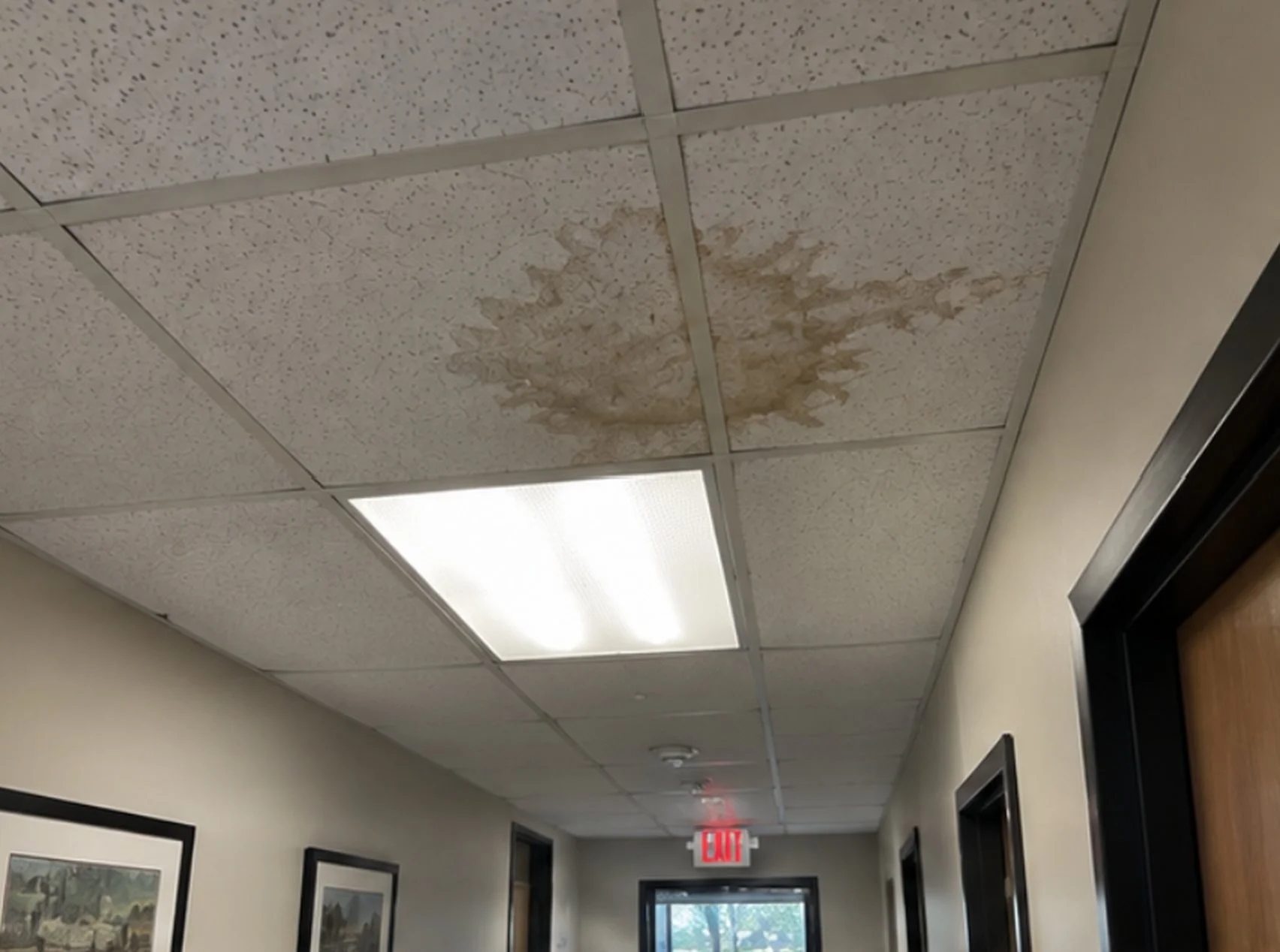
The leak is not fixed. It stopped because the rain did, and whatever let the water in is still there, waiting for the next storm.
While it is dry:
- Write down where it dripped and when, and take photos.
- Dry out the ceiling.
- Tell the owner and the tenants in that space.
- Get the roof looked at before the next rain.
Why a leak stops when the rain does
A roof leak needs water on the roof. When the rain ends, no new water reaches the opening, so the drip slows and stops. It can keep going for a while after the rain, as water that got under the roofing drains out. Then it goes quiet.
Nothing on the roof changed. The opening is the same size it was during the storm.
Our roofer hears this every fall, at the first rain after summer: “Three months ago it leaked… then summer came and there was no rain, and I thought it fixed itself.” In the Pacific Northwest, a leak can stay quiet from spring to the first fall storm. It was waiting, not fixed.
What to write down while you remember
A few lines in a phone note are enough:
- Where: the room, and what the spot is near. “Hallway outside Suite 210, next to the light.”
- When: the date, and what the rain was doing. Heavy, light, or windy.
- How long: did it drip only during the rain, or for hours after?
- How much: a few drops, or a bucket.
- Who has worked on it: if a roofer already repaired this spot, their name and when.
Take one photo with enough of the room to place the spot, and one closer. What photos should I send a roofer about a leak? covers what makes them useful.
The weather detail matters more than it looks. A leak that only shows up in windy rain points a roofer toward one edge of the roof. Why does my flat roof only leak in wind-driven rain? explains why.
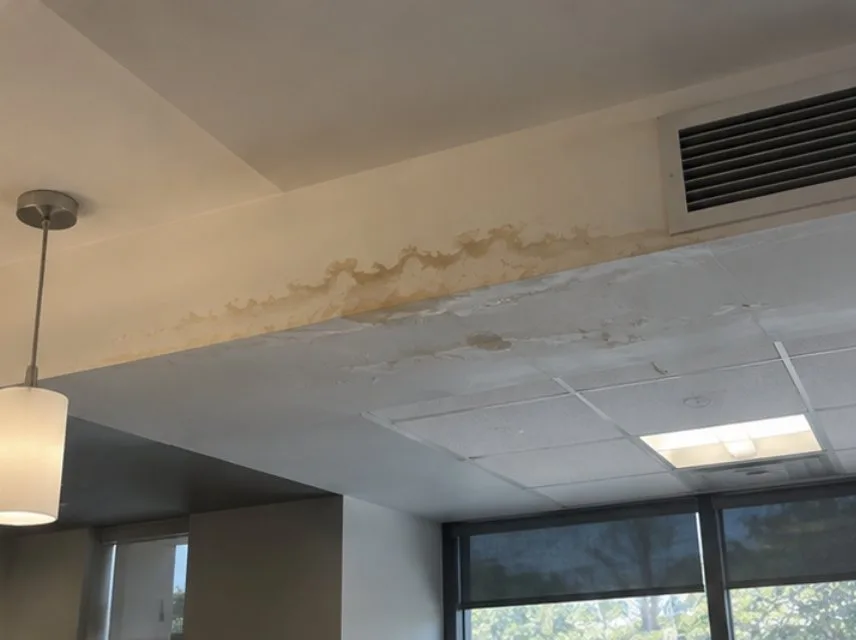
If it dripped on a warm, dry day while the air conditioning ran, it may not be the roof at all. Is the leak coming from the roof or the rooftop HVAC unit? walks through the difference.
If this leak has come and gone more than once, keep the notes in one place. How should I record a recurring roof leak? shows how little it takes.
Dry out the ceiling
Property Managers often worry about moisture trapped above the ceiling. Our roofer’s advice is simple: run a fan on the wet area for a few days.
If the ceiling is closed drywall and air cannot get into the space above it, open it up. Cut out the wet section, about 4 feet by 4 feet, replace the wet insulation, and patch it.
Start soon. The EPA’s guidance on mold is that wet building materials should dry within 24 to 48 hours to avoid mold growth. Wet ceiling tiles can come out of the grid. The EPA also notes that porous materials like ceiling tiles may have to be thrown away if they get moldy.
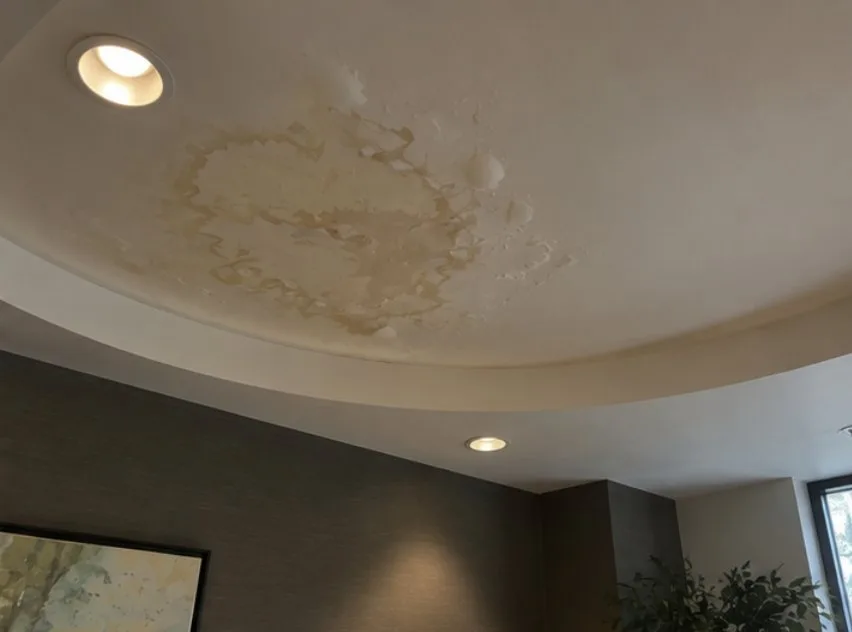
Photograph the stain before you replace a tile or paint anything. Hold off on paint and new tiles until the roof is repaired, or the next rain stains them too.
The part to worry about is above the ceiling
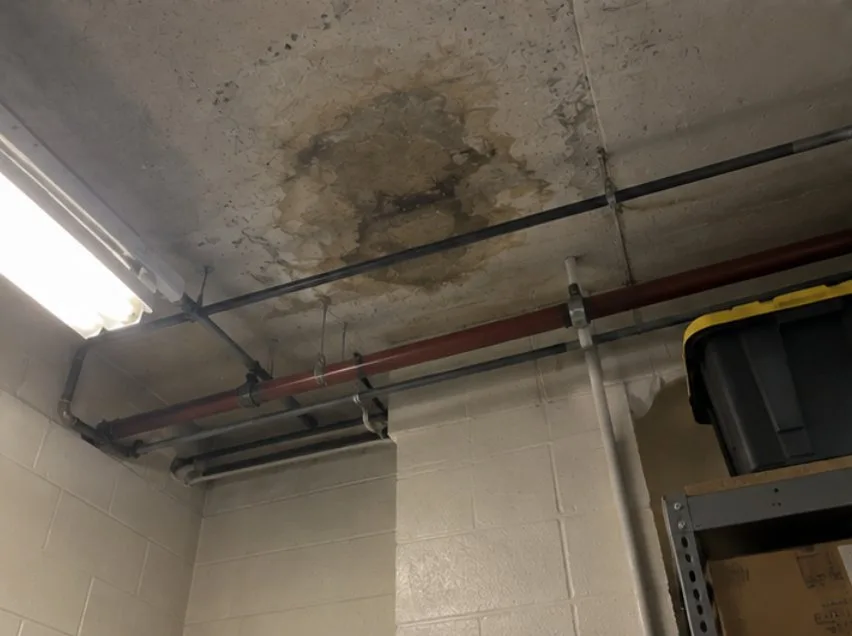
The ceiling is the cheap part. What concerns our roofer is the wood above it. Plywood that stays wet keeps deteriorating, and a fan in the room does not dry the roof deck. Only stopping the water does.
Our roofer saw this at a condo building. The seller told the buyer the roof dripped “only when it rains… no big deal.” A couple of years later, the area around a scupper had rotted. (A scupper is the opening in a roof’s edge wall that lets water off.) A beam had to be replaced, and the floor above it had to be jacked up to do it.
Then the drip came back. In our roofer’s words, “the cause of the problem was never addressed.”
Who to tell
The owner, or whoever approves roof spending. Tell them it leaked, when, and that it stopped only because the rain did. Send the photos. A leak that stopped is easy to forget until the next storm.
The tenants in that space. Ask them to tell you as soon as it drips again, with the time and what the weather was doing.
The roofer. Send your notes and photos. If a roofer already repaired this spot, tell them first.
Here is the kind of message that is enough. This one is made up:
“Hallway outside Suite 210, second floor. Two ceiling tiles stained next to the light, about 3 feet across. Dripped into a bucket during Tuesday’s heavy rain and stopped a few hours after it cleared. Dry since. Photos attached. No one has worked on this spot before.”
Get the roof looked at while it is dry
Dry weather is the time to find and fix it. A roofer can see the roof clearly, and a repair holds best on a dry roof. Nothing sticks to a wet flat roof.
There is no number of dry days that makes it safe to wait. The leak comes back with whichever rain reaches the opening next. Our roofer hears the cost of waiting from customers: “We know we should have done this three years ago or five years ago… we were putting it off.”
The roofer starts inside at the stain and works outward on the roof. The opening is often not straight above the stain, because water runs under the roofing before it comes through. Why does my flat roof keep leaking in the same spot? explains how water travels.
Start with FRSG’s free Drone Check: we fly your roof and send you photos and a short summary of what we see. For the full picture, a Roof Report arrives within four business days of payment: the roof’s condition, how many years it has left, and what repairs or replacement will cost. Your notes and photos tell us where to start.
If it starts dripping again first
Put a bucket under it, add the date to your note, and call. Do not wait for the Drone Check.
Roof Service is FRSG’s visit for an active leak: $395 for 2 hours of work, with sealant and small patches included. A technician can be on your roof within 6 hours, day or night, for $250 more.
Common questions
It only leaked once. Is it worth calling anyone?
Yes. Once is enough to show there is an opening. It stopped because the rain did, not because the roof closed it.
How long until it leaks again?
No one can say. It depends on the next rain that reaches the opening: how hard, how long, and which way the wind blows. It might be the next storm, or the first one in the fall.
Should I paint over the stain or replace the tiles now?
Dry it now and photograph it. Leave the paint and new tiles until the roof is repaired, or the next rain stains them too.
The seller says the roof only drips when it rains. Is that a problem?
Every roof leak only drips when it rains. Ask what was done about the cause, and have the roof looked at before you rely on the answer.
A roofer already fixed this spot, and it leaked again. What now?
Tell that roofer first, with the date and photos. A repair that did not hold often means the water is getting in somewhere other than where the patch went.
Thanks for your feedback.
About FRSG
Flat Roof Systems Group (FRSG) is a commercial flat-roof repair contractor serving Property Managers across Oregon and Washington. FRSG starts with a free Drone Check, fixes leaks and clears roofs with Roof Service, makes permanent Roof Repairs with clear documentation and predictable pricing, and proposes a Full Reroof only when repairing would cost more than it saves, with RoofCare to look after the new roof for up to 15years. Every repair ends with a Service Record: the problem reported, the work done, and photographs of the roof as FRSG left it.